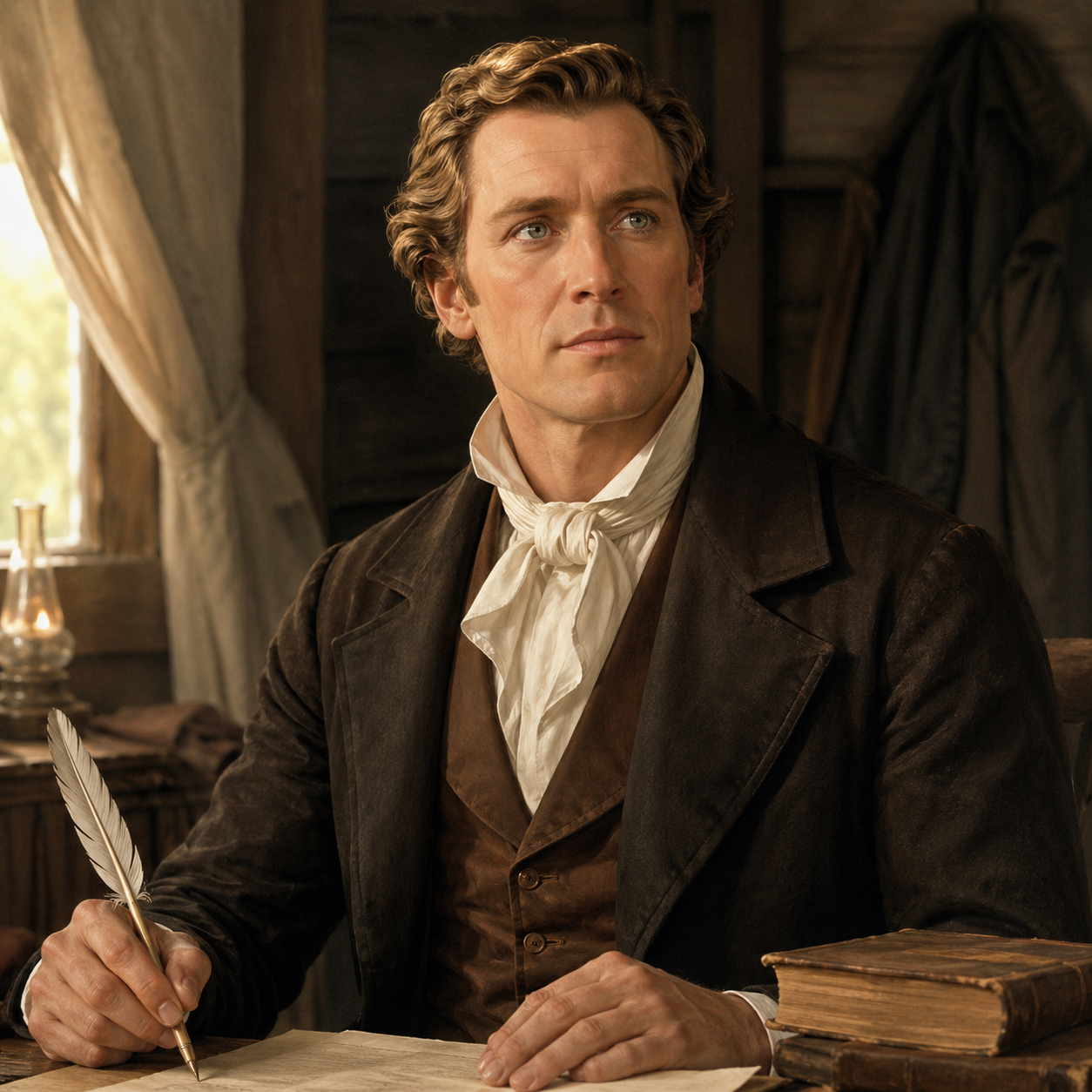
Joseph Smith — "I have seen the Lord, and he has talked with me face to face."
I have seen the Lord, and he has talked with me face to face.
I have seen the Lord, and he has talked with me face to face.
Click any product to generate a realistic preview. Up to 3 at a time.
* Initial load can take up to 90 seconds — revising the preview in another color is nearly instant.
"God himself was once as we are now, and is an exalted man, and sits enthroned in yonder heavens! That is the great secret. If the vail was rent today, and the great God who holds this world in its orb…"
"I was answered that I must join none of them [the religious sects of the day], for they were all wrong; and the Personage who addressed me said that all their creeds were an abomination in his sight; …"
"I have done more than any man living to destroy the power of the devil."
"I am the only prophet that has ever been able to keep a church together since the days of Adam."
"I have more to boast of than ever any man had. I am the only man that has ever been able to keep a whole church together since the days of Adam. A large majority of the whole have stood by me. Neither…"
Found in 1 providers: grok
1 source checked
This claims direct, personal divine encounter — not prayer, not scripture, but an actual face-to-face meeting with God. It asserts God is not distant or abstract but personally accessible and willing to speak to individuals. The speaker grounds spiritual authority not in institutional hierarchy but in lived experience. At its core: I didn't read about God — I met him. It's a declaration of prophetic witness demanding to be taken literally.
Joseph Smith reported this vision — called the First Vision — as a fourteen-year-old in 1820 in Palmyra, New York, claiming God the Father and Jesus Christ appeared to him in a grove of trees. That experience became the founding moment of the Latter-day Saint movement and the basis of his prophetic authority. His entire ministry depended on claimed direct revelations; he later produced the Book of Mormon and formally organized the Church of Christ in 1830.
The early 1820s American frontier was defined by the Second Great Awakening — competing denominations, emotional revival meetings, and widespread anxiety about which church held authentic truth. Western New York, known as the Burned-over District, was saturated with new religious movements and prophetic figures. In that climate of institutional fragmentation and spiritual hunger, a claim of direct divine visitation carried enormous resonance among people dissatisfied with inherited churches and desperate for authoritative, firsthand revelation.
AI-generated insights based on extensive research and information for context. Factual errors? Email [email protected].
Your cart is empty