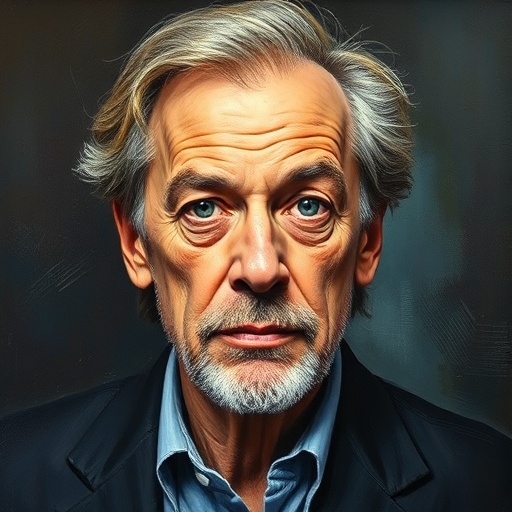
Richard Feynman — "I just can't stand people who are so sure of themselves."
I just can't stand people who are so sure of themselves.
I just can't stand people who are so sure of themselves.
Click any product to generate a realistic preview. Up to 3 at a time.
* Initial load can take up to 90 seconds — revising the preview in another color is nearly instant.
"God is always associated with those things that you do not understand. Therefore I don't think that the laws can be considered to be like God because they have been figured out. ... But you need him f…"
"The age of ignorance is past. The age of reason is here. And it will be a glorious age, if we but choose to make it so."
"It's not enough to be a good scientist. You have to be a good person too."
"You know, the dumbest goddamn student you ever saw can understand things if you explain them right. So if you can’t explain it, it’s because you don’t understand it."
"I was scared because of this same thing I was talking about — I'm not so good at this. “The Dean's tea” — it sounded so silly, you know, and high class."
American theoretical physicist who shared the 1965 Nobel for QED, developed Feynman diagrams, and wrote the Feynman Lectures on Physics. Closely associated with Julian Schwinger (co-Nobelist for QED) and Murray Gell-Mann (Caltech rival and Eightfold-Way physicist). For an intellectual contrast, see Deepak Chopra, physician and quantum-mysticism author — Feynman's Caltech 'cargo cult science' commencement address is the precise template for what he saw as misuse of physics terminology — Chopra-style appropriation of quantum vocabulary for metaphysical claims is the canonical example of what Feynman called 'fooling yourself'.
Found in 1 providers: grok
1 source checked
Overconfidence is a red flag. When someone is absolutely certain they're right, they stop questioning, stop learning, stop listening. Real understanding requires sitting with doubt, testing assumptions, and admitting what you don't know. Intellectual humility isn't weakness—it's the engine of genuine discovery. Certainty slams the door on curiosity, and curiosity is what actually moves knowledge forward.
Feynman built his entire scientific identity around doubt and wonder. He famously said not knowing something was more interesting than false certainty. As a physicist who dismantled entrenched ideas—including flawed NASA safety culture before the Challenger disaster—he had direct experience with how institutional overconfidence kills. His Caltech lectures consistently celebrated uncertainty as the foundation of science.
Feynman's career spanned the Cold War nuclear age and space race, eras dominated by ideological certainty on all sides. Scientific authority was often wielded dogmatically, with government, religion, and even academia resistant to challenge. His outspoken skepticism of authority—including testifying against NASA groupthink in 1986—made intellectual humility a radical act in a world that rewarded confident, unchallengeable expertise.
AI-generated insights based on extensive research and information for context. Factual errors? Email [email protected].
Your cart is empty