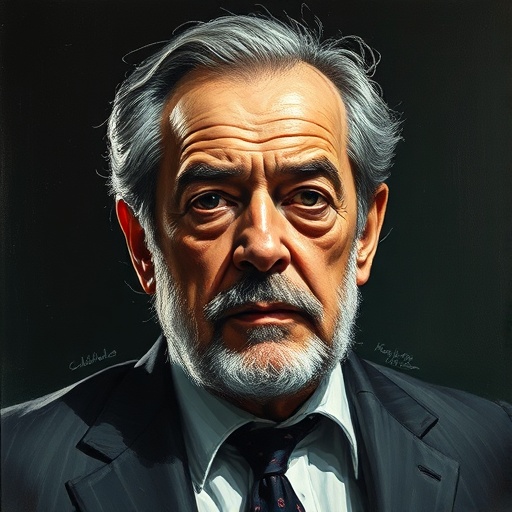
Stanley Kubrick — "I never learned anything at all in school and didn't read a book for pleasure un…"
I never learned anything at all in school and didn't read a book for pleasure until I was 19 years old.
I never learned anything at all in school and didn't read a book for pleasure until I was 19 years old.
Click any product to generate a realistic preview. Up to 3 at a time.
* Initial load can take up to 90 seconds — revising the preview in another color is nearly instant.
"The greatest truth a man can learn is that there is no greatest truth."
"I have always been interested in the question of how to be human."
"I do not know what I may appear to the world, but to myself, I seem to have been only like a boy playing on the seashore, and diverting myself in now and then finding a smoother pebble or a prettier s…"
"I think that the greatest works of art are the ones that are the most ambiguous, that can be interpreted in many different ways."
"The problem with most people is that they're not willing to take risks. They want to play it safe, and that's why they never achieve anything great."
American filmmaker (2001: A Space Odyssey, Dr. Strangelove, The Shining) whose perfectionist year-long shoots and 100-take method redefined auteurist cinema. Closely associated with Orson Welles (auteur predecessor and Citizen Kane director) and Steven Spielberg (younger collaborator (A.I. Artificial Intelligence)). For an intellectual contrast, see Quentin Tarantino, postmodern American filmmaker — Kubrick's films erase influences into singular monolithic vision; Tarantino's foreground every reference as a deliberate tribute. The two opposite ways auteurist cinema can be made.
Your cart is empty