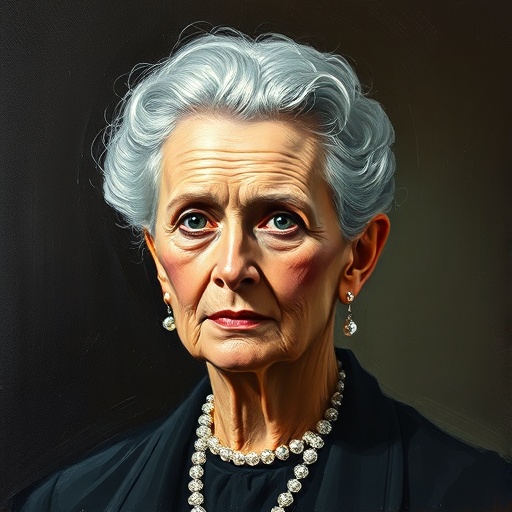
Marie Curie — "I never saw myself as a woman in science. I saw myself as a scientist. And I am …"
I never saw myself as a woman in science. I saw myself as a scientist. And I am proud of it.
I never saw myself as a woman in science. I saw myself as a scientist. And I am proud of it.
Click any product to generate a realistic preview. Up to 3 at a time.
* Initial load can take up to 90 seconds — revising the preview in another color is nearly instant.
"We must believe that we are gifted for something, and that this thing, at whatever cost, must be attained."
"The way of progress was neither swift nor easy."
"It was in the little shed that we passed the best and happiest years of our life."
"Radium is not to enrich any one. It is an element; it is for all people."
"First principle: never to let one's self be beaten down by persons or by events."
Found in 1 providers: grok
1 source checked
The speaker rejects being defined by gender within their profession. Instead of accepting the label 'woman in science,' which frames women as exceptions or outsiders, they claim the simple identity of scientist. Their worth comes from the work itself, not from being unusual for doing it. Pride attaches to the discipline and its results, not to overcoming stereotypes, and they refuse to let others reduce their achievements to a gender narrative.
Curie earned two Nobel Prizes, in Physics (1903) and Chemistry (1911), discovered polonium and radium, and coined the term radioactivity. She was the first woman professor at the Sorbonne and faced constant scrutiny, from the French Academy's refusal to admit her to tabloid attacks during the Langevin affair. She consistently deflected gender framing toward the research, working in a cold shed isolating radium from tons of pitchblende alongside her husband Pierre.
In the late 19th and early 20th centuries, European universities barred or restricted women, scientific societies excluded them, and married women often lost legal autonomy. Curie studied at the Sorbonne because Russian-ruled Poland denied women higher education. Suffrage movements were gaining ground, but female scientists were treated as curiosities. Newspapers covered Curie's appearance and personal life more than her discoveries, making her insistence on being a scientist, not a woman scientist, a quiet act of professional defiance.
AI-generated insights based on extensive research and information for context. Factual errors? Email [email protected].
Your cart is empty