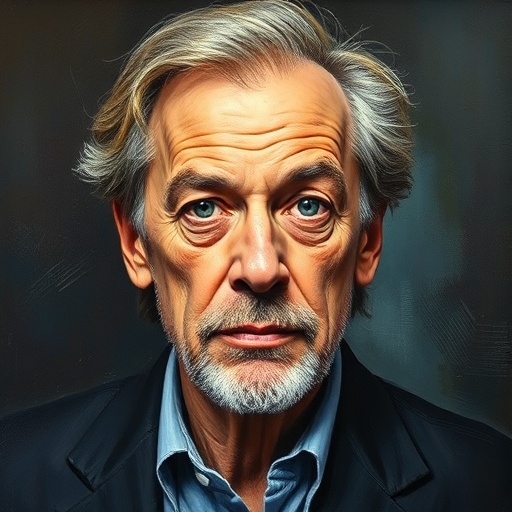
Richard Feynman — "I simply want to find out more about the world, and I find that the best way to …"
I simply want to find out more about the world, and I find that the best way to do that is to do science.
I simply want to find out more about the world, and I find that the best way to do that is to do science.
Click any product to generate a realistic preview. Up to 3 at a time.
* Initial load can take up to 90 seconds — revising the preview in another color is nearly instant.
"I have an attitude that I'm supposed to amuse myself, and I don't have to be serious all the time."
"Nature uses only the longest threads to weave her patterns, so each small piece of her fabric reveals the organization of the entire tapestry."
"I asked him once, 'How do you tell when a mathematical argument is correct?' He said, 'If it's beautiful, it's correct.'"
"The purpose of computing is insight, not numbers."
"I'm not interested in science for the sake of science. I'm interested in science for the sake of understanding the world."
American theoretical physicist who shared the 1965 Nobel for QED, developed Feynman diagrams, and wrote the Feynman Lectures on Physics. Closely associated with Julian Schwinger (co-Nobelist for QED) and Murray Gell-Mann (Caltech rival and Eightfold-Way physicist). For an intellectual contrast, see Deepak Chopra, physician and quantum-mysticism author — Feynman's Caltech 'cargo cult science' commencement address is the precise template for what he saw as misuse of physics terminology — Chopra-style appropriation of quantum vocabulary for metaphysical claims is the canonical example of what Feynman called 'fooling yourself'.
Found in 1 providers: grok
1 source checked
Pure curiosity drives this statement — the speaker wants to understand reality as it actually is, not as tradition or authority claims. Science is framed not as a career or duty but as the most reliable tool for satisfying that hunger. It strips away prestige and reduces science to its honest core: a method for learning true things about how the universe works.
Feynman was famously driven by childlike wonder rather than ambition. He kept toy puzzles on his desk, played bongo drums, cracked safes at Los Alamos for fun, and once said he could not work on problems he found boring. His Nobel Prize in quantum electrodynamics grew from genuine fascination with how light and electrons interact — never from careerism. This quote is essentially his autobiography in one sentence.
Feynman worked through mid-20th century physics — the Manhattan Project, Cold War arms race, and the space age — when science was increasingly institutionalized, militarized, and grant-driven. Researchers faced pressure to produce results with strategic value. Feynman's insistence on pure curiosity as motivation was a quiet rebuke of that culture, defending basic research and intellectual freedom at a time when both were under institutional pressure.
AI-generated insights based on extensive research and information for context. Factual errors? Email [email protected].
Your cart is empty