Saint Paul — "If any man seem to be contentious, we have no such custom, neither the churches …"
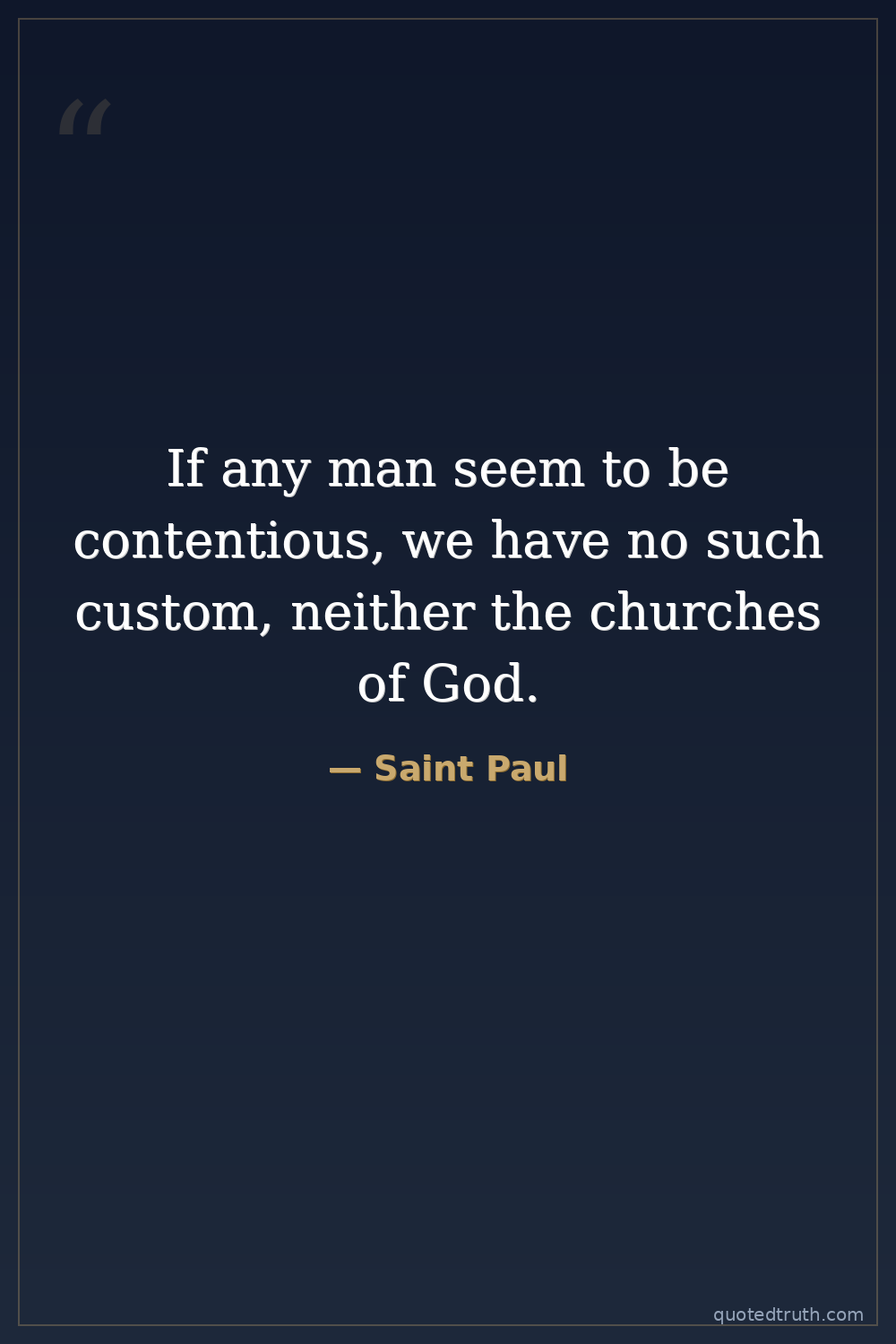
If any man seem to be contentious, we have no such custom, neither the churches of God.
If any man seem to be contentious, we have no such custom, neither the churches of God.
Click any product to generate a realistic preview. Up to 3 at a time.
* Initial load can take up to 90 seconds — revising the preview in another color is nearly instant.
"For he that eateth and drinketh unworthily, eateth and drinketh damnation to himself, not discerning the Lord's body."
"But I say to the unmarried and to widows, it is good for them if they remain even as I am."
"Let your women keep silence in the churches: for it is not permitted unto them to speak; but they are commanded to be under obedience, as also saith the law."
"I say then, walk in the Spirit, and you shall not fulfill the lust of the flesh."
"But God chose the foolish things of the world to shame the wise; God chose the weak things of the world to shame the strong."
Found in 1 providers: gemini
1 source checked
Paul is shutting down an argument about hair length and head coverings in worship. He essentially says: if someone wants to keep fighting about this after hearing my reasoning, drop it. There's no universal practice among Christian communities that supports endless quarreling over secondary customs. Unity and shared practice matter more than winning a debate over disputed traditions, and stubborn contrarianism isn't a virtue worth defending.
Paul constantly navigated disputes across the scattered churches he planted, from Corinth to Galatia. As a trained Pharisee turned apostle, he knew rabbinical argument culture intimately but rejected it when it fractured congregations. His letters repeatedly prioritize communal harmony over personal vindication, and he often appealed to the shared practice of all churches as a tiebreaker, reflecting his role as a traveling organizer holding a fragile movement together.
First-century Corinth was a wealthy, cosmopolitan Roman port where Greek rhetorical culture prized public debate and status contests. New house churches mixed Jews, Greeks, slaves, and wealthy patrons, each bringing clashing customs around gender, dress, and worship. Roman religion was highly ritualized, so Gentile converts obsessed over proper forms. Paul wrote amid real risk that these tiny communities would splinter over etiquette before they could survive Roman suspicion and internal factionalism.
AI-generated insights based on extensive research and information for context. Factual errors? Email [email protected].
Your cart is empty