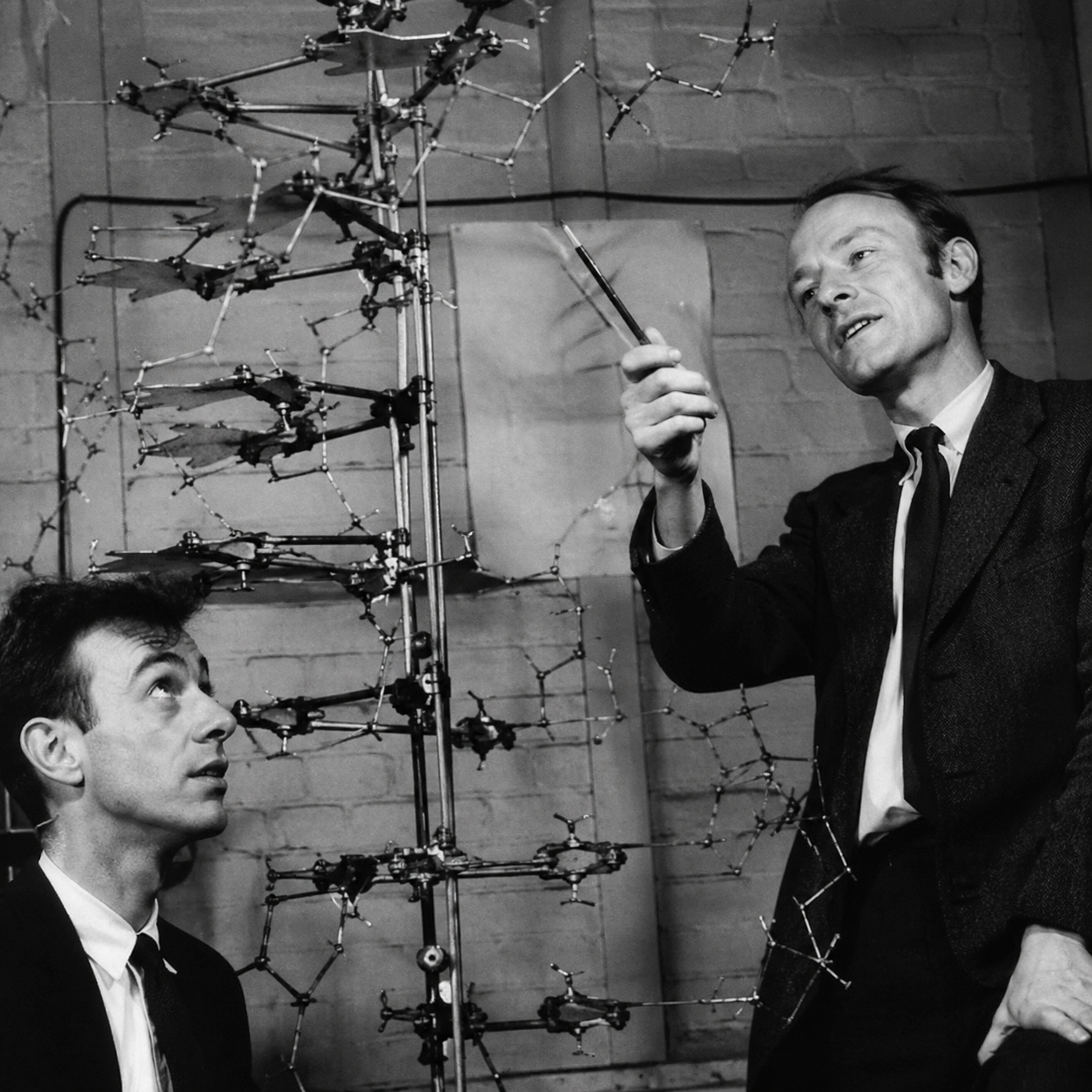
Francis Crick — "It is always a good thing to be slightly eccentric."
It is always a good thing to be slightly eccentric.
It is always a good thing to be slightly eccentric.
Click any product to generate a realistic preview. Up to 3 at a time.
* Initial load can take up to 90 seconds — revising the preview in another color is nearly instant.
"It is essential to be a bit arrogant to do good science."
"The human brain is a wonderful thing. It starts working the moment you are born and never stops until you stand up to speak in public."
"The human brain is a very complicated machine."
"The belief that we have immortal souls is a superstition."
"One of the most striking features of the human mind is its ability to believe what it wants to believe."
Found in 1 providers: grok
1 source checked
Deviating a little from mainstream thinking or social convention is an advantage, not a flaw. Being slightly eccentric means trusting your own curiosity and judgment over what others expect of you. People who think slightly differently notice what conformists overlook, ask questions others consider impolite or pointless, and pursue ideas that consensus would dismiss. That small degree of non-conformity is often the gap between ordinary work and genuine discovery.
Crick embodied this throughout his career. He trained as a physicist before pivoting to biology — an unconventional leap in the 1940s. Known for his booming laugh, relentless questioning, and willingness to challenge established scientists, he and Watson pursued DNA structure through model-building when most researchers used purely experimental methods. Later he abandoned molecular biology for consciousness research, again crossing disciplinary boundaries most scientists considered outside their proper domain.
The 1950s scientific world was deeply hierarchical and increasingly specialized. Post-war academia rewarded disciplinary conformity — staying within your field and deferring to senior figures like Linus Pauling. Cold War culture broadly pressured conformity in public life. Crick and Watson's freewheeling model-building approach to DNA was genuinely unorthodox in a field dominated by X-ray crystallographers. Their success validated the eccentric outsider's ability to outmaneuver more conventionally credentialed competition.
AI-generated insights based on extensive research and information for context. Factual errors? Email [email protected].
Your cart is empty