Francis Crick — "If you want to be a scientist, you have to be prepared to be wrong a lot."
If you want to be a scientist, you have to be prepared to be wrong a lot.
If you want to be a scientist, you have to be prepared to be wrong a lot.
Click any product to generate a realistic preview. Up to 3 at a time.
* Initial load can take up to 90 seconds — revising the preview in another color is nearly instant.
"It is notoriously difficult to get rid of a really bad idea."
"No important discovery is ever made without a 'mad' guess."
"The universe is not benign."
"The most important thing for me is to understand."
"A good scientist is a person with original ideas. A good engineer is a person who makes a design that works."
Found in 1 providers: grok
1 source checked
Real scientific work means making guesses, testing them, and watching most of them fail. Progress comes not from being right immediately but from accepting that mistakes, dead ends, and discarded hypotheses are the normal cost of discovery. Anyone who cannot tolerate frequent failure, public correction, or having a favorite idea proven false will not last in research. Errors are not signs of incompetence; they are how knowledge actually advances.
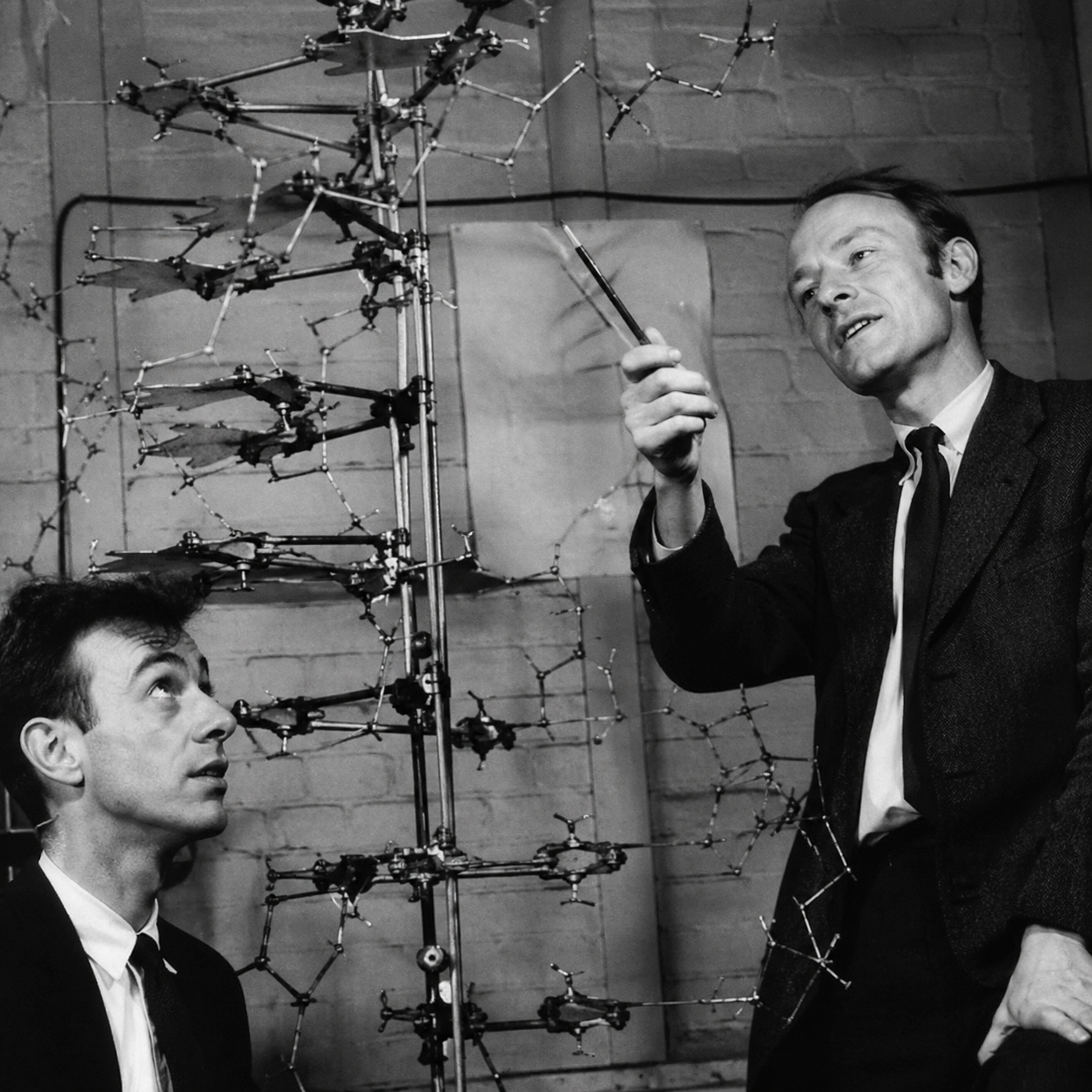
Crick spent years chasing wrong DNA models before he and Watson landed on the double helix in 1953, including a flawed triple-helix attempt that Rosalind Franklin publicly demolished. He later pivoted entirely from physics to biology, then again from molecular biology to consciousness research at the Salk Institute, repeatedly abandoning ideas. His career embodied the willingness to be corrected, revise, and start over that this remark describes.
Crick worked through the mid-twentieth-century explosion of molecular biology, when X-ray crystallography, sequencing, and the genetic code were rewriting biology in real time. Competing labs at Cambridge, King's College, Caltech, and Cold Spring Harbor raced on overlapping problems, and published models were routinely overturned within months. Postwar science also expanded rapidly under government funding, drawing in physicists and chemists who had to learn new fields publicly, making intellectual humility a practical job requirement.
AI-generated insights based on extensive research and information for context. Factual errors? Email [email protected].
Your cart is empty