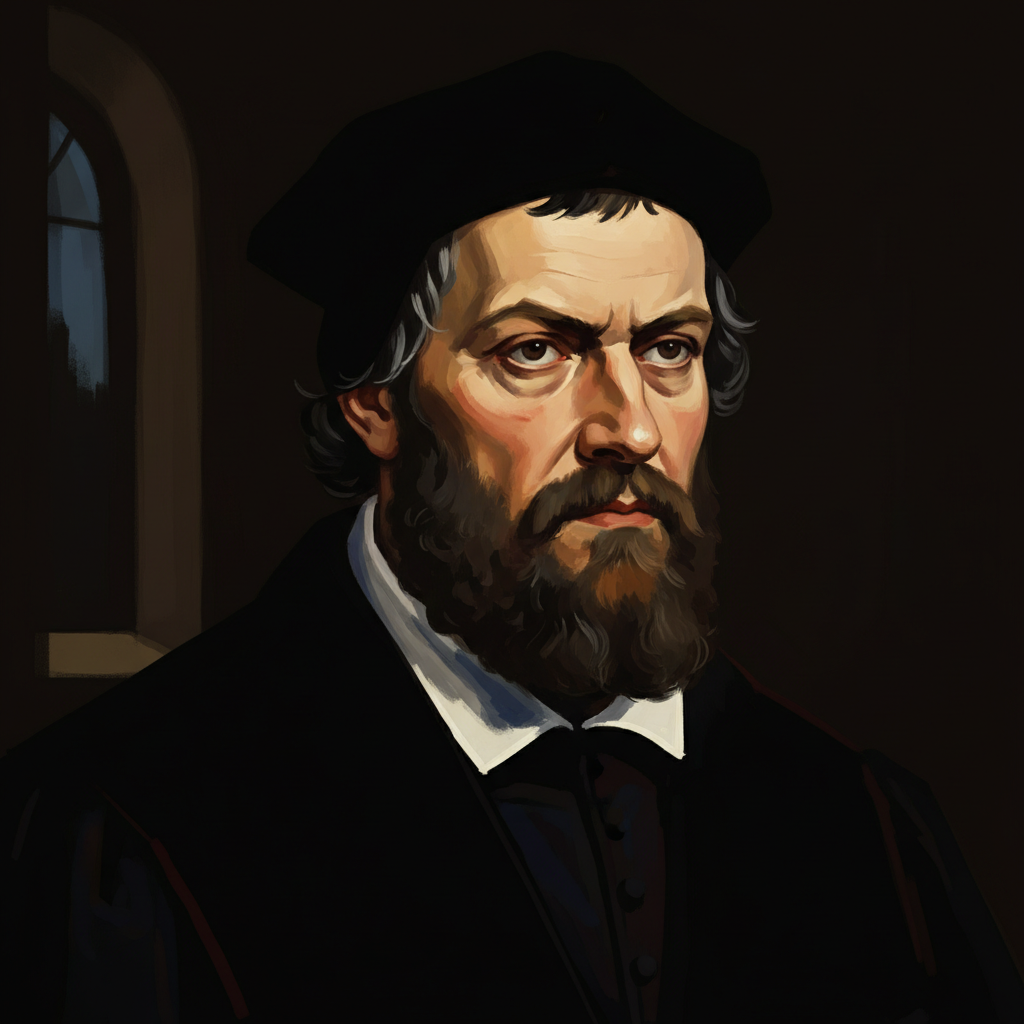
Martin Luther — "If you want to have a good laugh, read the Papal Bulls. They are so full of nons…"
If you want to have a good laugh, read the Papal Bulls. They are so full of nonsense that they will make you split your sides.
If you want to have a good laugh, read the Papal Bulls. They are so full of nonsense that they will make you split your sides.
Click any product to generate a realistic preview. Up to 3 at a time.
* Initial load can take up to 90 seconds — revising the preview in another color is nearly instant.
"I feel much freer now that I am certain the pope is the Antichrist."
"The more one reads the Bible, the more one loves it."
"I have had many struggles with the devil, and I know him well."
"If I am to be a Christian, I must be a Jew."
"My conscience is captive to the Word of God. I cannot and I will not recant anything, for to go against conscience is neither right nor safe. Here I stand, I can do no other. God help me. Amen."
German theologian whose 95 Theses (1517) launched the Protestant Reformation and broke the Catholic Church's monopoly on Western Christianity. Closely associated with Philipp Melanchthon (Lutheran systematizer) and John Calvin (later Reformer who built on Luther's break). For an intellectual contrast, see Pope Leo X, Renaissance pope (1513-1521) — Leo X's indulgence sales triggered Luther's break and Leo excommunicated him in 1521 — Luther's entire Reformation is structured as a direct answer to the indulgence-funded Vatican Leo represented.
Found in 1 providers: gemini
1 source checked
Luther is mocking official papal decrees, saying they are so absurd and illogical that reading them is genuinely funny. He suggests anyone wanting entertainment should pick one up, because the contradictions, overreach, and hollow reasoning inside will make a reader burst out laughing. It is a blunt dismissal of documents many Europeans treated as sacred authority, reframing them as unintentional comedy rather than binding spiritual law.
Luther built his career attacking papal authority, starting with the 95 Theses in 1517 and escalating when Pope Leo X issued the bull Exsurge Domine threatening excommunication. Luther publicly burned that bull in Wittenberg in 1520. As a trained theologian and biblical scholar, he read these decrees closely and concluded they contradicted scripture. Ridicule was a core weapon in his pamphlets, alongside serious exegesis, and this line fits his crude, combative rhetorical style.
In early modern Europe, papal bulls carried legal and spiritual force across Christendom, backed by the threat of excommunication and political pressure on princes. The printing press let Luther's German-language mockery spread faster than Rome could respond, turning private theological disputes into mass public opinion. The Reformation era saw unprecedented challenges to Church authority, and humor, vernacular pamphlets, and woodcut caricatures became tools that reshaped how ordinary people viewed the Vatican.
AI-generated insights based on extensive research and information for context. Factual errors? Email [email protected].
Your cart is empty