Neil deGrasse Tyson — "I'm an agnostic. I'm not an atheist, because I don't know enough to be an atheis…"
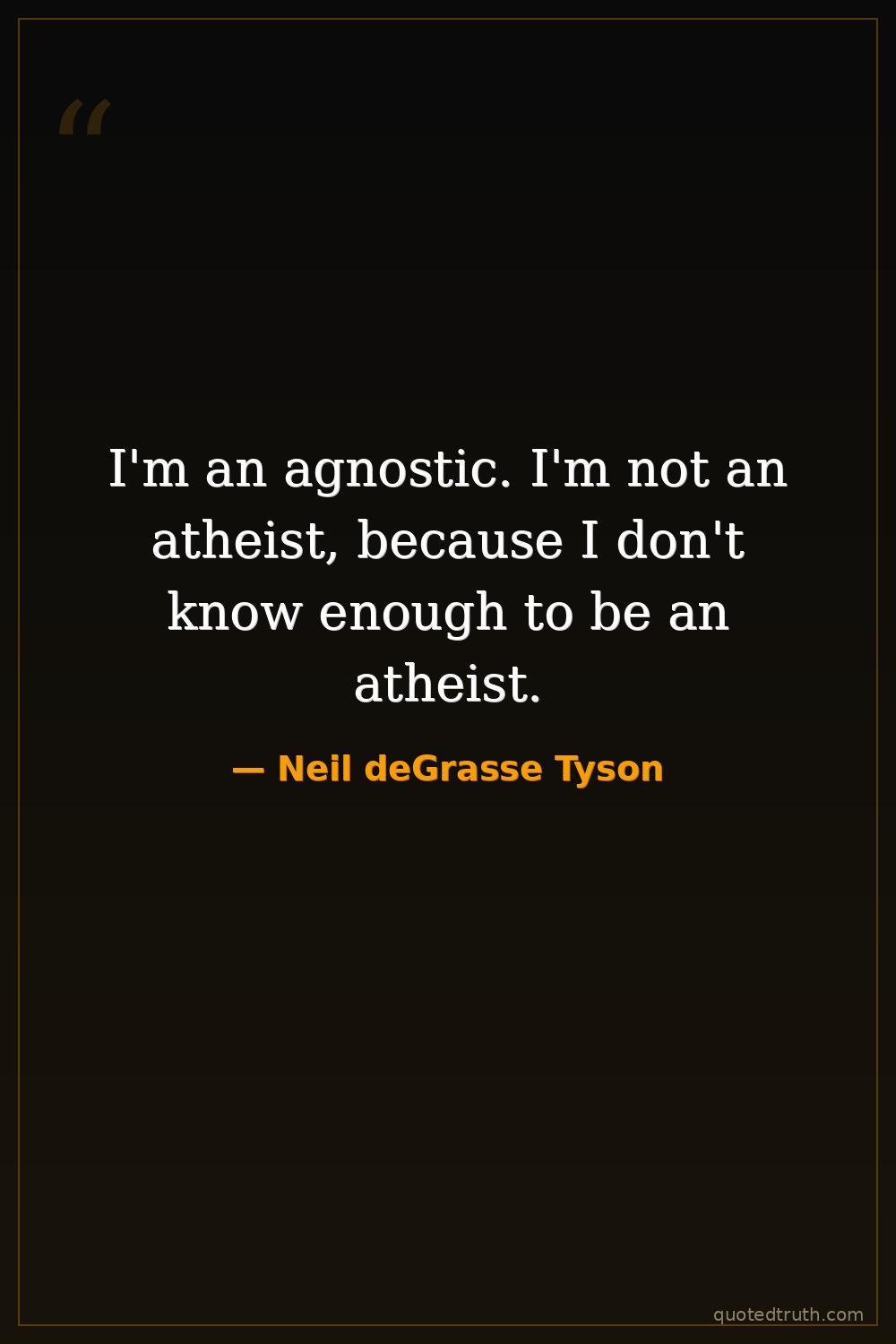
I'm an agnostic. I'm not an atheist, because I don't know enough to be an atheist.
I'm an agnostic. I'm not an atheist, because I don't know enough to be an atheist.
Click any product to generate a realistic preview. Up to 3 at a time.
* Initial load can take up to 90 seconds — revising the preview in another color is nearly instant.
"The problem with 'alternative medicine' is that once it's proven to work, it's just called medicine."
"I don't have a problem with people believing in God. I have a problem with people who believe in God and use that as an excuse to be ignorant."
"My favorite color is the color of the universe, which is a kind of beige-white."
"I'm not saying there are no aliens. I'm just saying the evidence is insufficient for me to conclude it."
"If aliens ever visit us, I think the outcome would be much as when Columbus landed in America, which didn't turn out very well for the Native Americans."
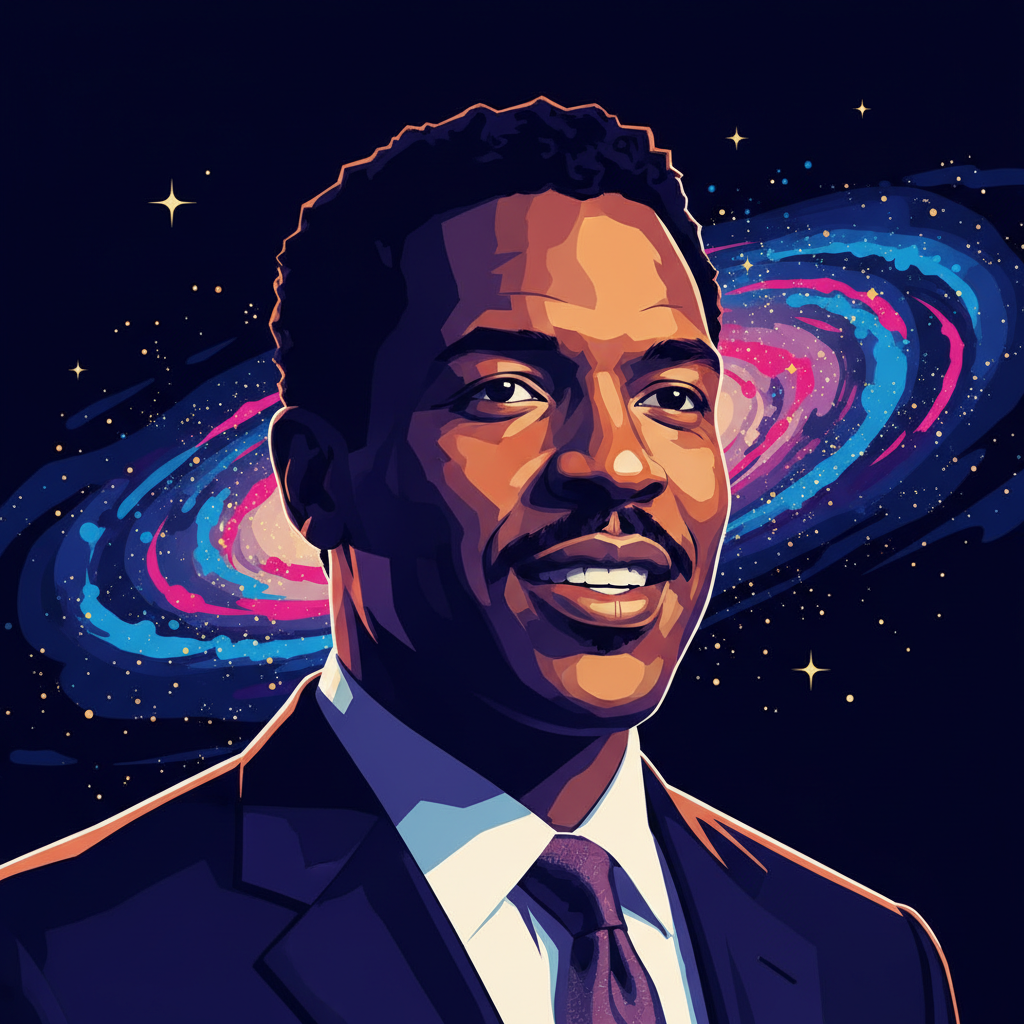
American astrophysicist, Hayden Planetarium director, and Cosmos: A Spacetime Odyssey host who carries the Carl Sagan public-science mantle. Closely associated with Bill Nye (fellow science communicator) and Brian Greene (theoretical physicist and string-theory popularizer). For an intellectual contrast, see Ken Ham, founder of Answers in Genesis and the Creation Museum — Ham's career has been organized around defending biblical 6-day creationism — exactly the science-education position Tyson's mainstream-science communication is structured to refute.
Found in 1 providers: grok
1 source checked
Tyson draws a precise distinction: agnosticism means suspending judgment because proof is absent, while atheism requires confident certainty that no god exists. He treats certainty as something that must be earned through evidence. Rather than claiming God doesn't exist, he claims only that he lacks sufficient knowledge to make that assertion. It's a position rooted in epistemic humility — the same intellectual standard he applies to any scientific claim.
Tyson, director of New York's Hayden Planetarium and host of Cosmos, has spent his career bridging science and public audiences without unnecessary conflict. Unlike contemporaries Richard Dawkins or Christopher Hitchens, he deliberately avoided the combative atheist label. He has stated this position across numerous interviews and debates. His scientific identity is built on evidence-based reasoning — making claims only where data supports them, including questions about the divine.
The 2000s–2010s saw the rise of New Atheism — Dawkins, Hitchens, Harris, and Dennett publicly arguing religion was harmful and irrational. Intelligent design battles in American schools (Kitzmiller v. Dover, 2005) intensified the science-religion divide. Science communicators faced pressure to take sides in a polarized culture war. Tyson's agnostic stance offered a deliberate third path, preserving scientific credibility while avoiding the alienation that came with atheism's more confrontational brand.
AI-generated insights based on extensive research and information for context. Factual errors? Email [email protected].
Your cart is empty