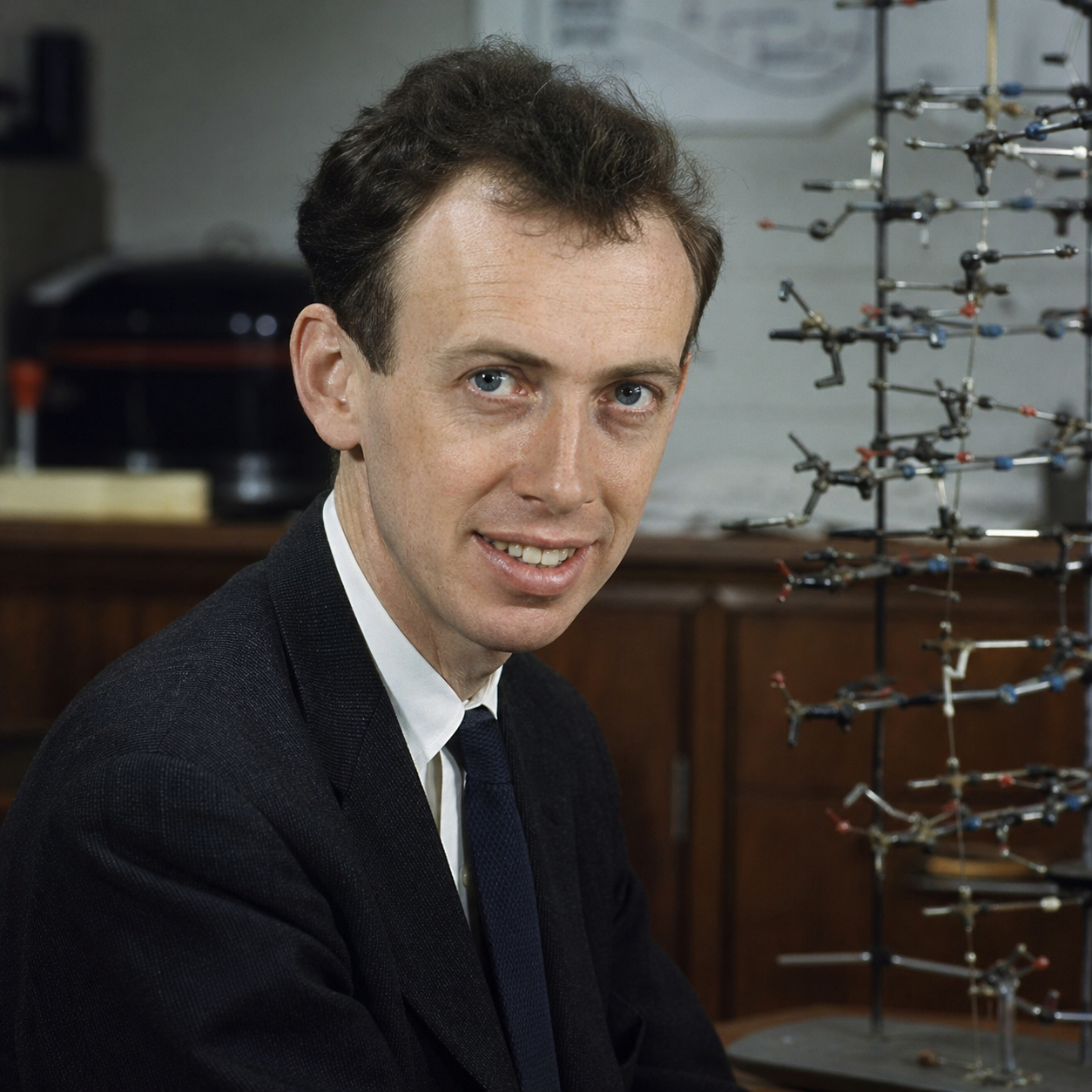
James Watson — "I’m an optimist. I think we can make better human beings."
I’m an optimist. I think we can make better human beings.
I’m an optimist. I think we can make better human beings.
Click any product to generate a realistic preview. Up to 3 at a time.
* Initial load can take up to 90 seconds — revising the preview in another color is nearly instant.
"I'm a very impatient person."
"Some anti-Semitism is justified. Just like some anti-Irish sentiment is justified."
"There is no firm reason to anticipate that the intellectual capacities of peoples geographically separated in their evolution should prove to have evolved identically. Our wanting to reserve equal pow…"
"It's all about the genes."
"If you're not offending someone, you're not doing your job."
Found in 1 providers: grok
1 source checked
Watson expresses forward-looking scientific optimism—that humanity isn't fixed but improvable through deliberate intervention, specifically genetic science. He frames genetic engineering not as hubris but as rational progress, the natural extension of medicine. The statement implies that understanding DNA gives scientists both the power and the obligation to reduce suffering, disease, and human limitation. It's a declaration that science should actively shape human biology, not merely observe it.
Watson co-discovered DNA's double helix in 1953 and later directed the Human Genome Project, making him genetics' most prominent architect. His career was defined by aggressive scientific optimism—and controversy. He publicly endorsed genetic screening, gene editing, and improvement of human traits, views that ultimately cost him his honorary titles in 2019 after discriminatory remarks. This quote encapsulates his core belief that genetics is a tool for betterment, not just discovery.
Watson made such statements during the post-genomic revolution—after the Human Genome Project's 2003 completion and amid rising CRISPR gene-editing capabilities. The era saw intense ethical debate about designer babies, genetic screening, and eugenics-adjacent science. Bioethics conferences multiplied; governments drafted regulations on genetic modification. Watson's optimism clashed with widespread concern about who decides what 'better' means, raising questions about inequality, consent, and the boundary between treatment and enhancement.
AI-generated insights based on extensive research and information for context. Factual errors? Email [email protected].
Your cart is empty