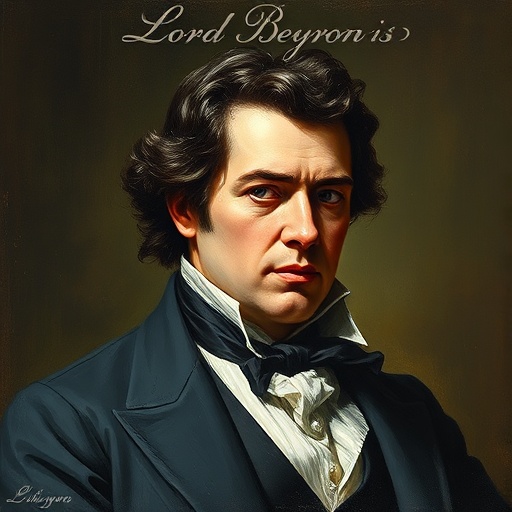
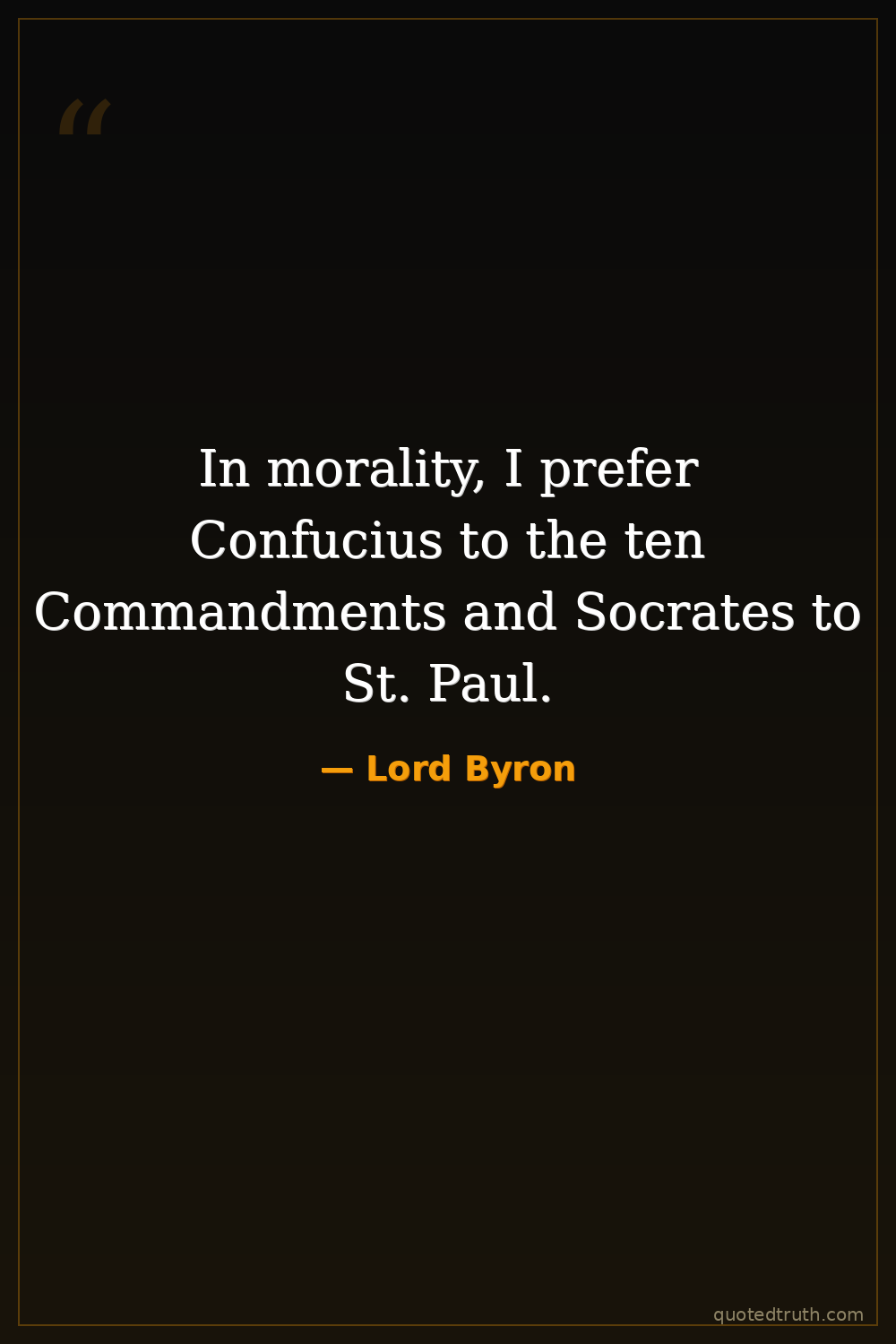
Lord Byron — "In morality, I prefer Confucius to the ten Commandments and Socrates to St. Paul…"
In morality, I prefer Confucius to the ten Commandments and Socrates to St. Paul.
In morality, I prefer Confucius to the ten Commandments and Socrates to St. Paul.
Click any product to generate a realistic preview. Up to 3 at a time.
* Initial load can take up to 90 seconds — revising the preview in another color is nearly instant.
"The great object of life is sensation- to feel that we exist, even though in pain."
"What is love? 'Tis not hereafter; present bliss is all we know."
"Like other parties of the kind, it was first silent, then talky, then argumentative, then disputatious, then unintelligible, then altogethery, then inarticulate, and then drunk."
"I have a great love for suffering, and I believe it is a source of strength."
"I am of a very peculiar constitution of mind, I am never happy but when I am miserable."
English Romantic poet whose Childe Harold's Pilgrimage (1812-18) and Don Juan (1819-24) made him a continent-wide celebrity; died at Missolonghi fighting for Greek independence. Closely associated with Percy Bysshe Shelley (Geneva summer companion and fellow second-generation Romantic) and John Keats (younger Romantic Byron mocked but later admired). For an intellectual contrast, see William Wordsworth, Lake Poet of pious nature-worship — Byron's mockery of 'the Lakers' Wordsworth, Coleridge, and Southey runs through Don Juan as a sustained literary feud across hundreds of stanzas. The cleanest Romantic-internal split between sincere-pastoral and cynical-worldly poetics.
Your cart is empty