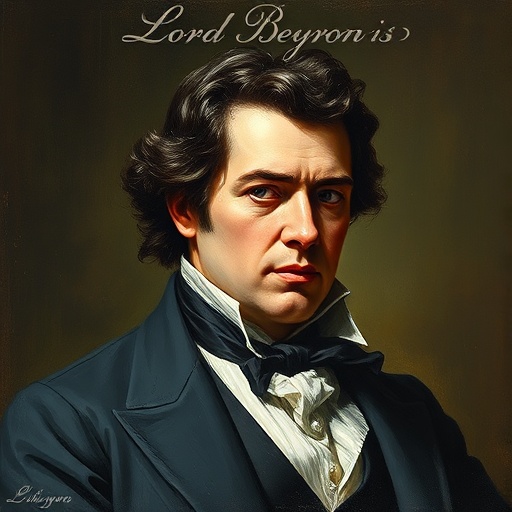
Lord Byron — "What men call gallantry and gods adultery Is much more common where the climate'…"
What men call gallantry and gods adultery Is much more common where the climate's sultry.
What men call gallantry and gods adultery Is much more common where the climate's sultry.
Click any product to generate a realistic preview. Up to 3 at a time.
* Initial load can take up to 90 seconds — revising the preview in another color is nearly instant.
"What is hope? Nothing but the paint on the face of Existence; the least touch of truth rubs it off, and then we see what a hollow-cheeked harlot we have got hold of."
"Sorrow is knowledge: they who know the most must mourn the deepest o'er the fatal truth, the Tree of Knowledge is not that of Life."
"Reason is so unreasonable, that few people can say they are in possession of it."
"I have a great mind to believe in Christianity for the mere pleasure of fancying I may be damned."
"I am a very solitary man, and I prefer the company of books to that of men."
English Romantic poet whose Childe Harold's Pilgrimage (1812-18) and Don Juan (1819-24) made him a continent-wide celebrity; died at Missolonghi fighting for Greek independence. Closely associated with Percy Bysshe Shelley (Geneva summer companion and fellow second-generation Romantic) and John Keats (younger Romantic Byron mocked but later admired). For an intellectual contrast, see William Wordsworth, Lake Poet of pious nature-worship — Byron's mockery of 'the Lakers' Wordsworth, Coleridge, and Southey runs through Don Juan as a sustained literary feud across hundreds of stanzas. The cleanest Romantic-internal split between sincere-pastoral and cynical-worldly poetics.
Your cart is empty