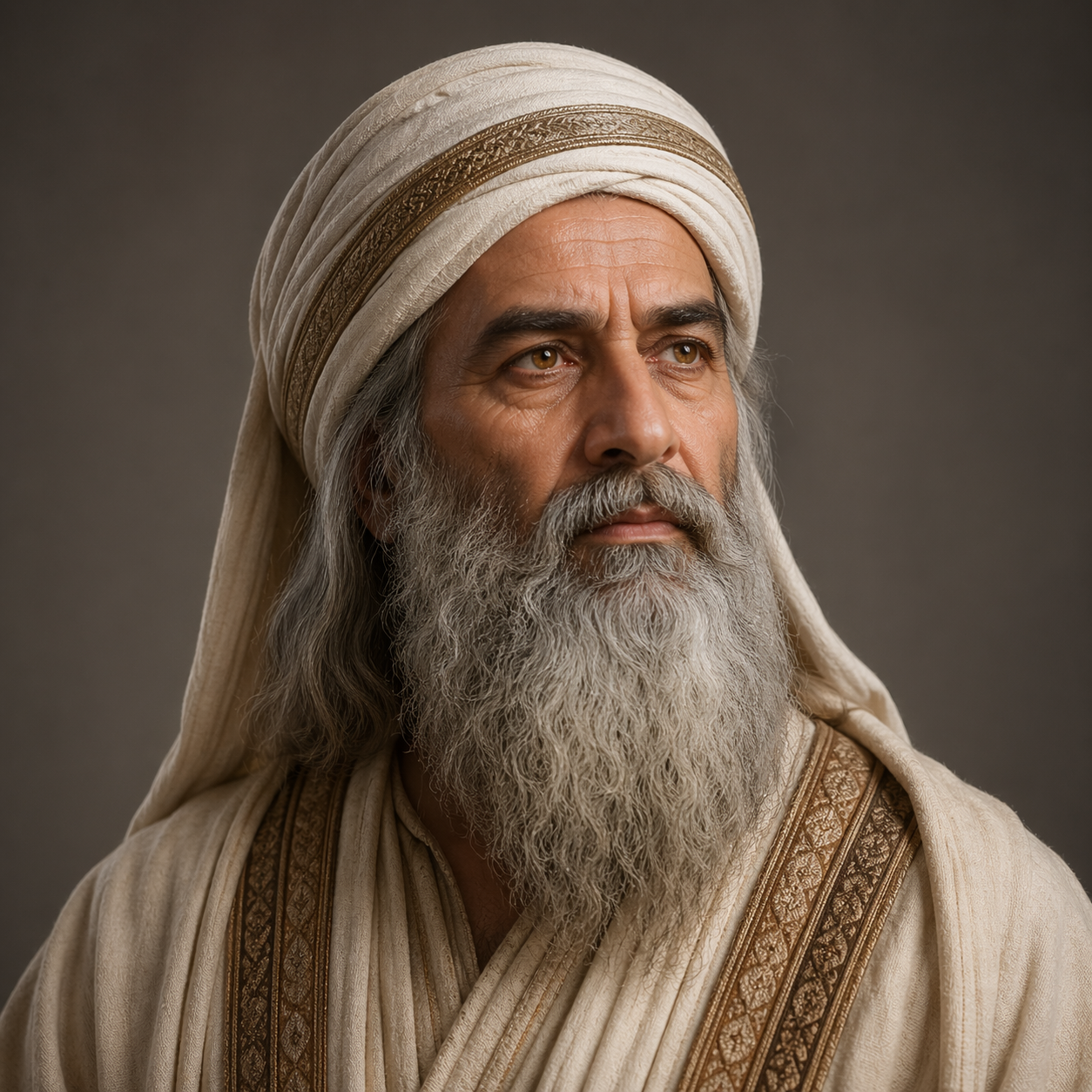
Zoroaster — "Indeed, the highest wisdom is to choose righteousness through good thought."
Indeed, the highest wisdom is to choose righteousness through good thought.
Indeed, the highest wisdom is to choose righteousness through good thought.
Click any product to generate a realistic preview. Up to 3 at a time.
* Initial load can take up to 90 seconds — revising the preview in another color is nearly instant.
"He who thinks evil, speaks evil, does evil, him Ahura Mazda will cast down from the bridge of judgment."
"Indeed, I shall speak forth concerning this world’s two spirits, of which the one is good, the other evil, as to thought, as to word, as to deed. Between these two, the discerning have chosen aright, …"
"By what signs wilt thou appoint the days for questioning about thy possessions and thyself? Thus to the Lord doth Asha, the Truth, reply: 'No guide is known who can shelter the world from woe, None wh…"
"The evil shall be destroyed, but the good shall flourish."
"I know, O Wise One, that I am powerless; I have few cattle and few men."
Iranian prophet who founded Zoroastrianism, the first major religion of cosmic dualism between good (Ahura Mazda) and evil (Angra Mainyu). Closely associated with The Buddha (near-contemporary Eastern moral-cosmological revolutionary). For an intellectual contrast, see Friedrich Nietzsche, German philosopher of 'beyond good and evil' — Nietzsche appropriated Zarathustra's name for Thus Spoke Zarathustra (1883) precisely to invert the original's moral cosmology — the historical Zoroaster founded the good-versus-evil framework Nietzsche's character announces the end of.
Found in 1 providers: gemini
1 source checked
True wisdom is not about cleverness or knowledge alone. It means actively choosing to do what is right, and that choice begins in the mind. Before any good action happens, there must be a good thought behind it. The quote argues that moral character starts with disciplined thinking, and the wisest thing a person can do is direct their mind toward honesty, fairness, and ethical behavior as a deliberate decision.
Zoroaster built his entire religion around this idea, teaching the triad of Good Thoughts, Good Words, Good Deeds as the path to follow the wise god Ahura Mazda. As a prophet and reformer, he rejected the ritualistic priesthood of his time and insisted that personal moral choice, starting in the mind, was the core of spiritual life. The quote captures his signature teaching that righteousness is chosen freely, not inherited or performed mechanically.
Zoroaster lived in ancient Persia, likely between 1500 and 1000 BCE, during a period of polytheistic worship, animal sacrifice, and priest-controlled ritual. Tribes worshipped many gods through ceremonies that ordinary people could not perform themselves. By teaching that each individual could choose righteousness through their own thoughts, Zoroaster broke with this priest-dominated system. His emphasis on personal ethics and cosmic dualism between truth and lie shaped later Judaism, Christianity, and Islam.
AI-generated insights based on extensive research and information for context. Factual errors? Email [email protected].
Your cart is empty