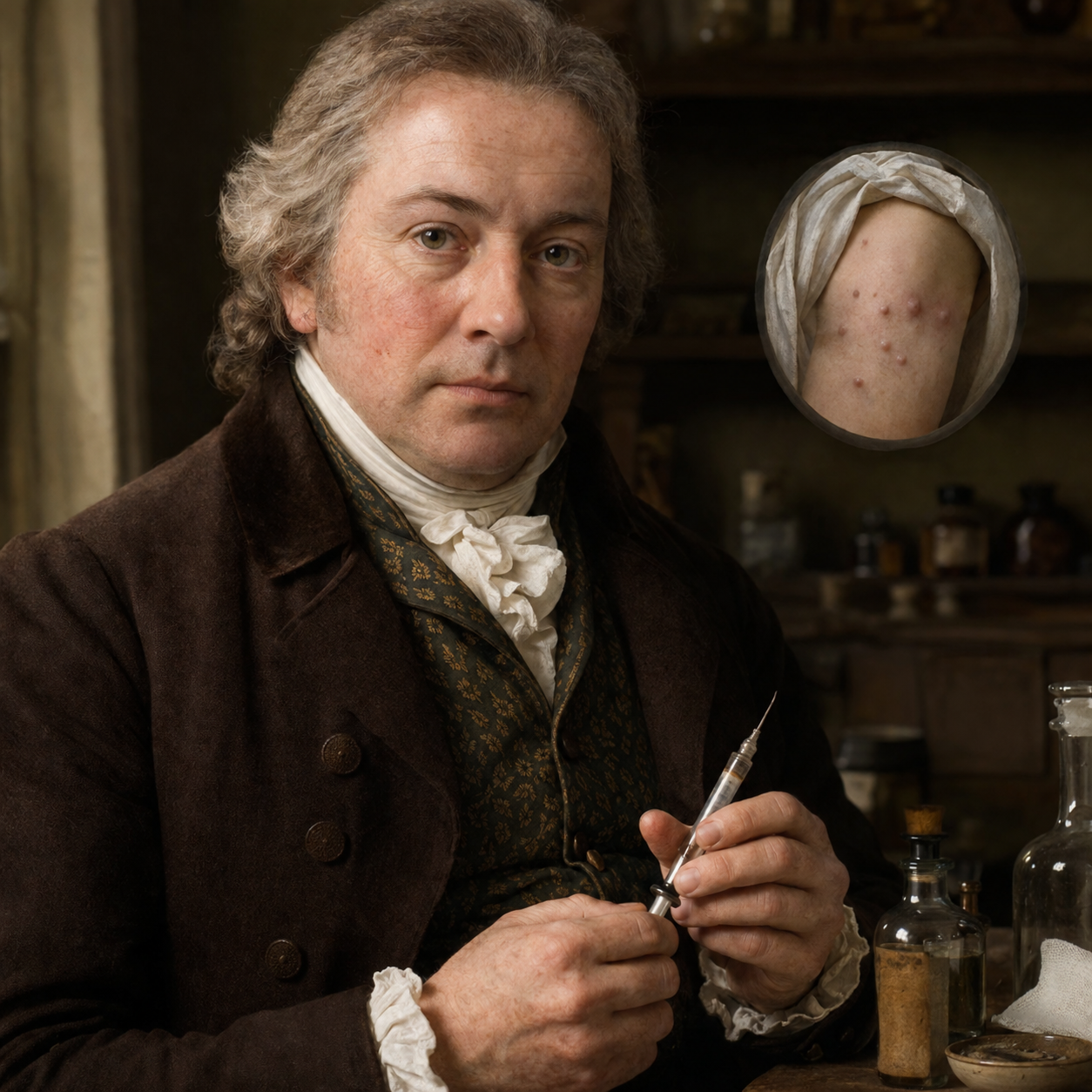
Edward Jenner — "It is a pity that the practice of inoculation has not been more generally adopte…"
It is a pity that the practice of inoculation has not been more generally adopted; for if it had, many lives might have been saved.
It is a pity that the practice of inoculation has not been more generally adopted; for if it had, many lives might have been saved.
Click any product to generate a realistic preview. Up to 3 at a time.
* Initial load can take up to 90 seconds — revising the preview in another color is nearly instant.
"The cow-pox is a mild disease, and never fatal; the small-pox is a formidable one, and often fatal. The cow-pox is not infectious; the small-pox is highly so."
"Did you make a convert of the obstinate antivaxinist at Lello?"
"It is a fact well known to many, that persons who have had the Cow Pox, are for ever after secure from the infection of the Small Pox."
"I have often thought that if mankind were more generally enlightened, they would be more virtuous."
"It is not, that I am an enemy to the practice of inoculation; on the contrary, I am a warm friend to it, and have been so for many years. But I am convinced, that the present mode of conducting it is …"
Found in 1 providers: grok
1 source checked
Widespread adoption of inoculation could have prevented countless deaths. The speaker laments that a proven, life-saving medical practice remained underused due to resistance, ignorance, or limited access—meaning preventable suffering occurred simply because people did not embrace what was already known to work.
Jenner spent decades developing and championing vaccination against smallpox, facing fierce skepticism from the medical establishment and public alike. This frustration reflects his lived experience: he possessed a powerful tool to eliminate a devastating disease yet watched adoption lag behind the science, knowing every delay cost real human lives.
In late 18th-century England, smallpox killed roughly 10% of the population and left survivors scarred or blind. Variolation—deliberate infection with mild smallpox—predated Jenner's vaccine and proved effective but remained controversial. Religious objections, distrust of physicians, and lack of coordinated public health infrastructure kept life-saving practices from reaching the masses.
AI-generated insights based on extensive research and information for context. Factual errors? Email [email protected].
Your cart is empty