Martin Luther — "It is a sin to be sad."
It is a sin to be sad.
It is a sin to be sad.
Click any product to generate a realistic preview. Up to 3 at a time.
* Initial load can take up to 90 seconds — revising the preview in another color is nearly instant.
"It is enough to know simply that there is a certain inscrutable will in God, and as to what, why, and how far it wills, that is something we have no right whatever to inquire into, hanker after, care …"
"No other sin exists in the world save unbelief."
"Heretics are not to be disputed with, but to be condemned unheard, and whilst they perish by fire, the faithful ought to pursue the evil to its source, and bathe their heads in the blood of the Cathol…"
"I am a worm and no man."
"Let us therefore be rid of the Mass and all that pertains to it, and let us use the holy Supper of Christ in its simplicity."
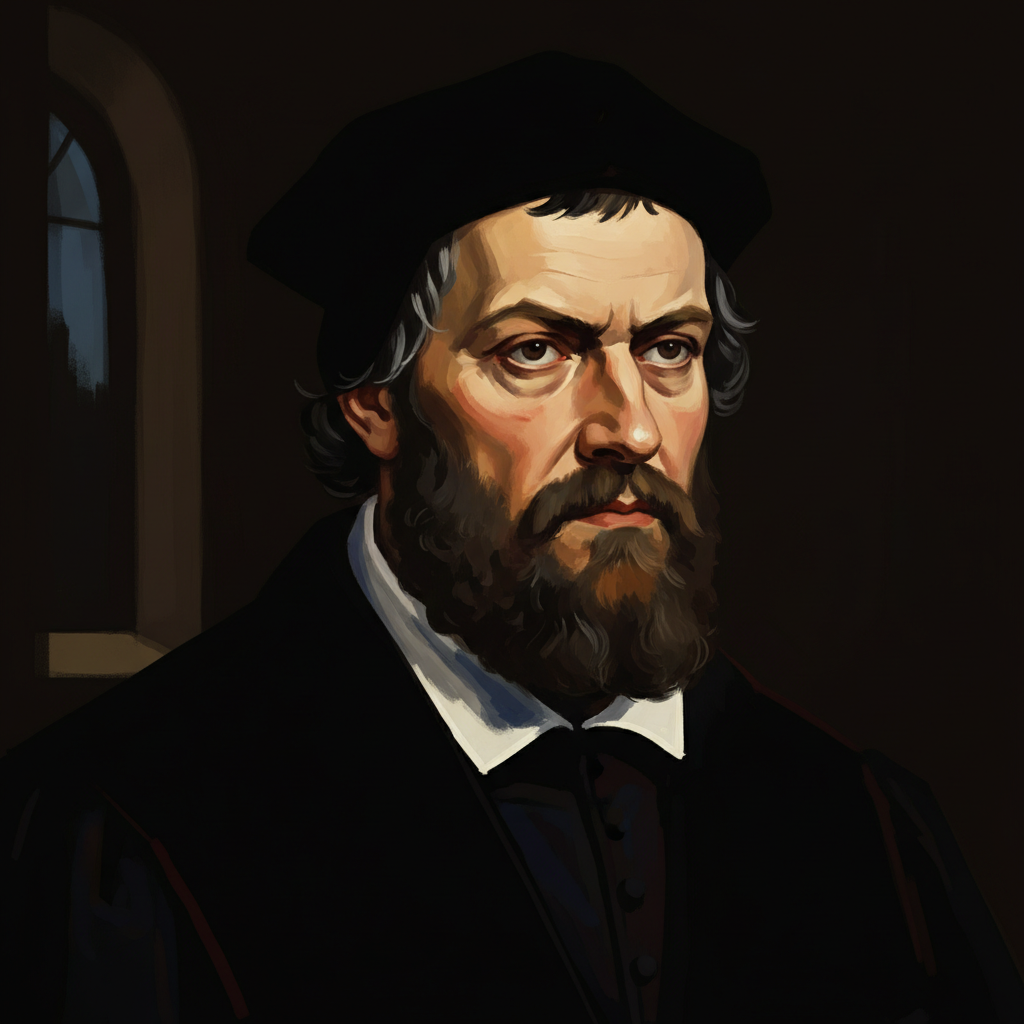
German theologian whose 95 Theses (1517) launched the Protestant Reformation and broke the Catholic Church's monopoly on Western Christianity. Closely associated with Philipp Melanchthon (Lutheran systematizer) and John Calvin (later Reformer who built on Luther's break). For an intellectual contrast, see Pope Leo X, Renaissance pope (1513-1521) — Leo X's indulgence sales triggered Luther's break and Leo excommunicated him in 1521 — Luther's entire Reformation is structured as a direct answer to the indulgence-funded Vatican Leo represented.
Found in 1 providers: grok
1 source checked
Persistent sadness or despair is not simply a mood but a moral failing. Refusing to find joy in life doubts that existence has value and rejects gratitude for what has been given. Choosing gloom over hope treats the world as worthless and shuts out the good that surrounds us. The saying urges people to resist melancholy, cultivate cheerfulness, and recognize that a heavy, bitter spirit actively harms both the self and those nearby.
Luther battled crushing bouts of depression he called Anfechtungen, dark attacks of doubt and despair. As a former Augustinian monk who rejected monastic self-punishment, he came to believe joy, music, beer, marriage, and laughter were gifts to be embraced, not shunned. He urged melancholy friends to sing, eat well, and enjoy company. For a theologian who preached salvation by grace alone, stubborn sadness signaled distrust of that promise.
In early sixteenth-century Europe, medieval piety glorified suffering, fasting, and bodily penance as paths to holiness, while the bubonic plague, peasant wars, and constant religious upheaval made grief a daily reality. Monastic culture treated cheerfulness with suspicion. Luther's Reformation, launched with the 1517 Ninety-Five Theses, attacked this gloom-soaked spirituality, insisting that ordinary life, family, food, and laughter were sacred. Declaring sadness sinful was a radical break from centuries of penitential Christianity.
AI-generated insights based on extensive research and information for context. Factual errors? Email [email protected].
Your cart is empty