Alexander Fleming — "It is a wonderful thing to be able to save lives with a simple substance."
It is a wonderful thing to be able to save lives with a simple substance.
It is a wonderful thing to be able to save lives with a simple substance.
Click any product to generate a realistic preview. Up to 3 at a time.
* Initial load can take up to 90 seconds — revising the preview in another color is nearly instant.
"My greatest satisfaction comes from knowing that my work has saved countless lives."
"We must be careful not to create a race of penicillin-resistant superbugs."
"When I woke up just after dawn on September 28, 1928, I certainly didn't plan to revolutionize all medicine by discovering the world's first antibiotic, or bacteria killer. But I suppose that was exac…"
"I was not a great scientist, but I was a careful observer."
"I have been asked to say a few words about the discovery of penicillin. I must confess that I have been asked to do this so often that I am beginning to be a little tired of it."
Found in 1 providers: grok
1 source checked
Something profound can come from the simplest source. Fleming is expressing genuine awe that a single, uncomplicated substance holds the power to keep people alive — that nature offered up an elegant solution to a massive human problem. The scale of the outcome, saving lives, seems almost disproportionate to the modesty of the means. It is a meditation on simplicity as a form of scientific grace.
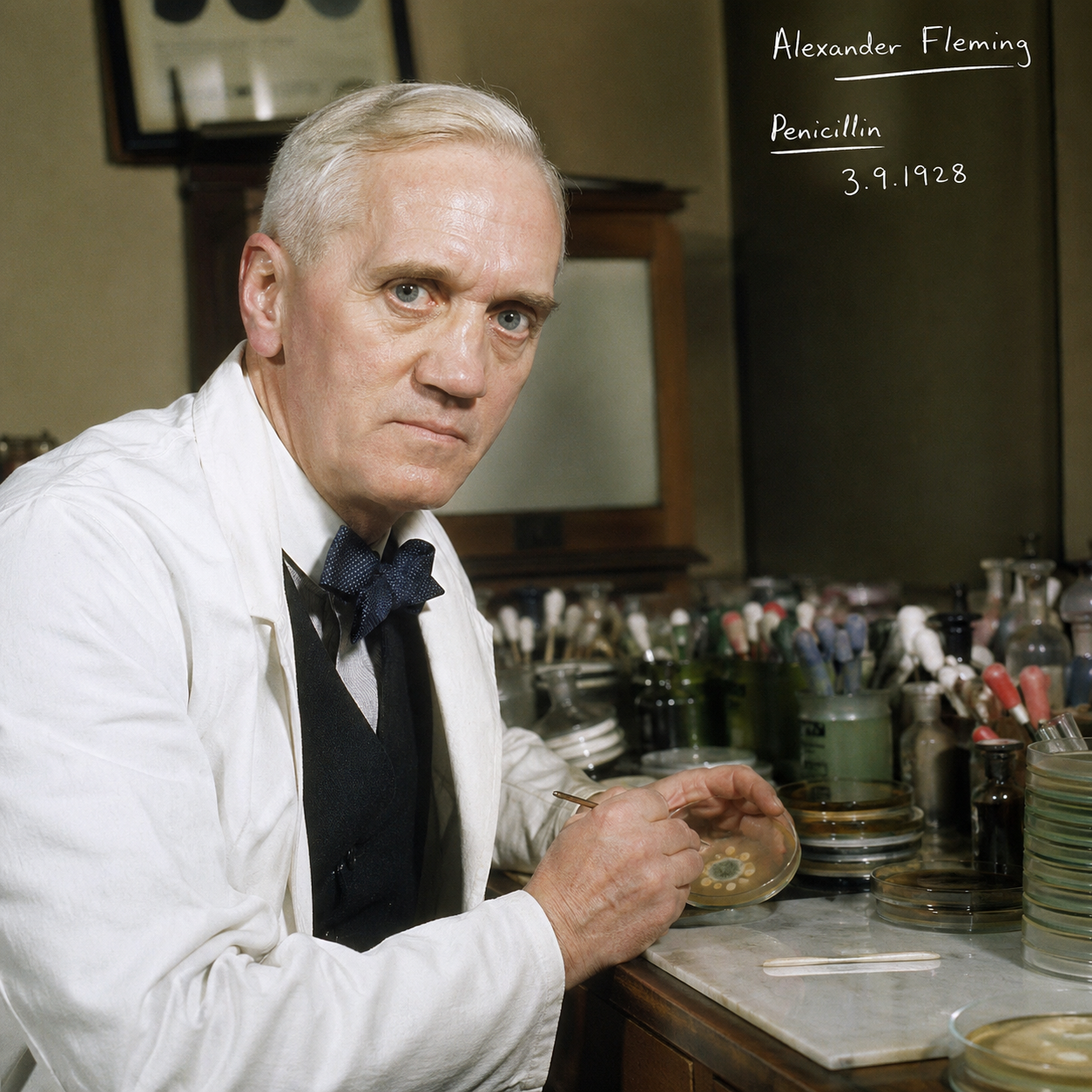
Fleming discovered penicillin in 1928 almost by accident, watching a mold contaminant kill bacteria in a petri dish. A humble Scottish bacteriologist, he spent years unable to convince others of its value before Florey and Chain developed it into a battlefield drug during WWII. The quote captures his lifelong character: quiet wonder rather than ego, marveling that one serendipitous observation in a cluttered London lab had quietly rewritten the terms of human survival.
Before penicillin, bacterial infections were routinely fatal. Sepsis killed more WWI soldiers than combat wounds directly, and pneumonia, scarlet fever, and syphilis had no reliable cures. Fleming made his discovery in 1928; by WWII, mass-produced penicillin was saving thousands of Allied lives. For a generation that had watched people die from infected cuts, the antibiotic era felt genuinely miraculous — a substance so simple it grew on bread had ended medicine's longest losing streak.
AI-generated insights based on extensive research and information for context. Factual errors? Email [email protected].
Your cart is empty