Alexander Fleming — "The future of chemotherapy lies in the intelligent use of these new antibacteria…"
The future of chemotherapy lies in the intelligent use of these new antibacterial agents.
The future of chemotherapy lies in the intelligent use of these new antibacterial agents.
Click any product to generate a realistic preview. Up to 3 at a time.
* Initial load can take up to 90 seconds — revising the preview in another color is nearly instant.
"My greatest satisfaction comes from knowing that my work has saved countless lives."
"The therapeutic value of penicillin is enormous, but its indiscriminate use could lead to disaster."
"The medical profession has a great responsibility in seeing that penicillin is used wisely."
"I was just a dirty old man who left his dishes unwashed."
"We must be careful not to create a race of penicillin-resistant superbugs."
Found in 1 providers: grok
1 source checked
Antibacterial drugs — then a new category — would only fulfill their promise if physicians and scientists used them judiciously, not indiscriminately. 'Chemotherapy' here means chemical treatment of disease broadly, not cancer care. The warning: new drugs create the illusion of unlimited power, but reckless application accelerates bacterial resistance and wastes a finite resource. Real progress requires matching the right drug, dose, and duration to each infection with precision and restraint.
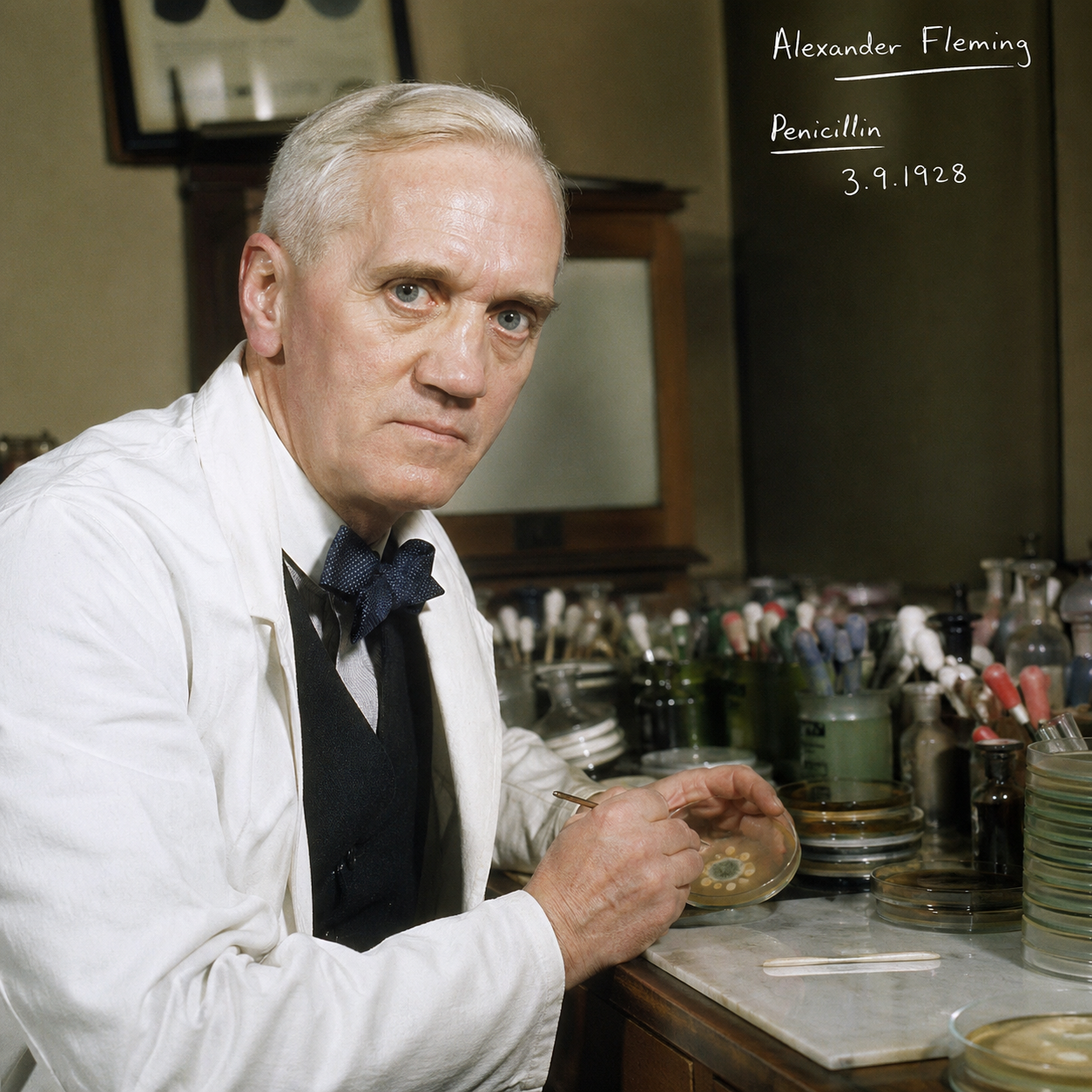
Fleming discovered penicillin in 1928 when a mold contaminant killed bacteria on an abandoned petri dish. Throughout his career he stressed that the drug's value was fragile — misuse would breed resistance. His 1945 Nobel Prize lecture explicitly warned that patients taking insufficient doses could cause bacterial mutation. This quote distills his core conviction: scientific discovery is only the first step; responsible stewardship of that discovery is the harder, more consequential work.
By the 1940s penicillin had been mass-produced for WWII, saving soldiers from infections that killed millions in WWI. The public treated antibiotics as miracle cures and demanded them freely. Yet resistant staphylococcus strains were already appearing in British hospitals by 1946. Fleming watched a culture of uncritical enthusiasm take hold just as bacterial evolution began catching up. His insistence on discipline was a minority voice against an era of near-religious faith in pharmaceutical progress.
AI-generated insights based on extensive research and information for context. Factual errors? Email [email protected].
Your cart is empty