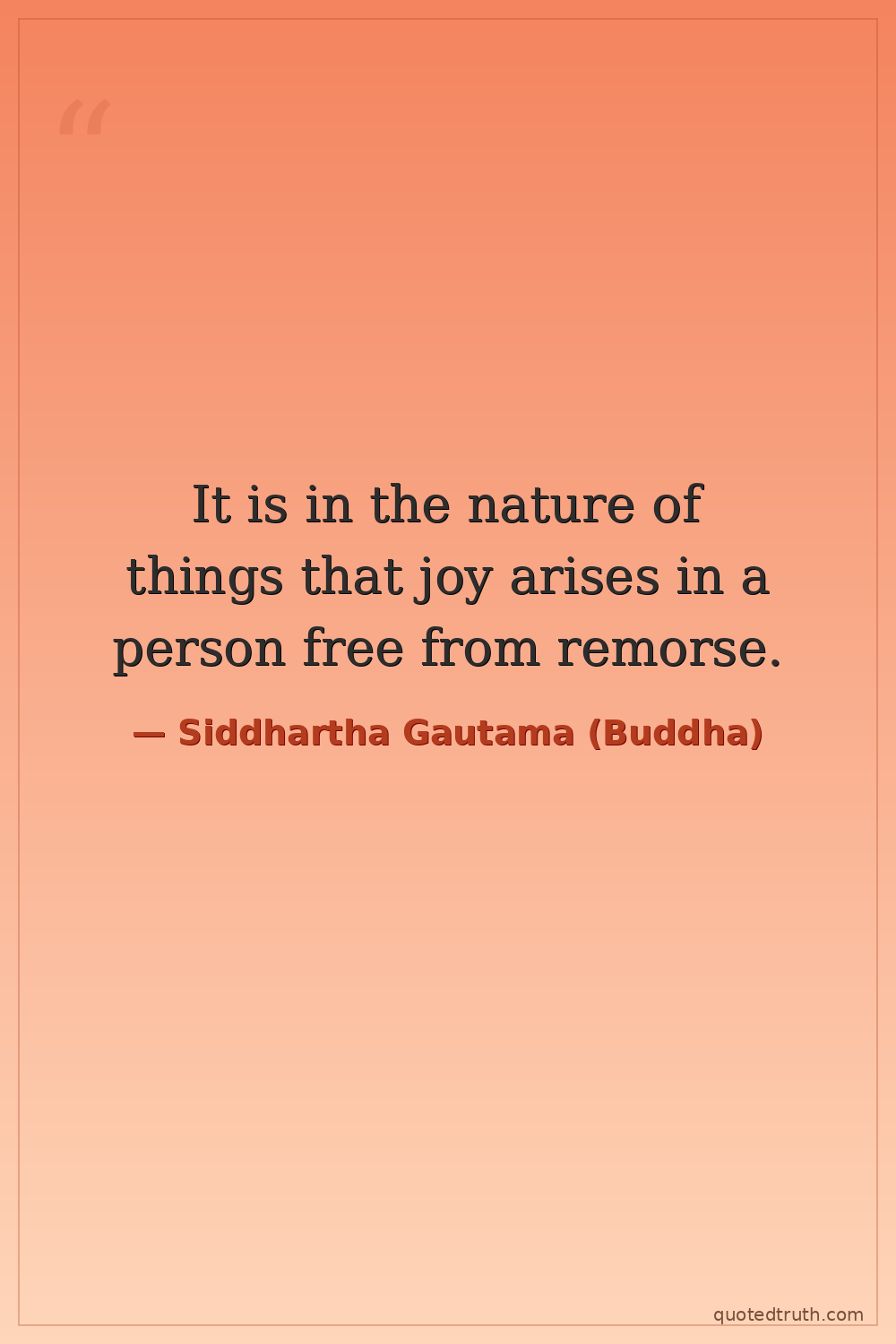
Siddhartha Gautama (Buddha) — "It is in the nature of things that joy arises in a person free from remorse."
It is in the nature of things that joy arises in a person free from remorse.
It is in the nature of things that joy arises in a person free from remorse.
Click any product to generate a realistic preview. Up to 3 at a time.
* Initial load can take up to 90 seconds — revising the preview in another color is nearly instant.
"Let them not do the slightest thing that the wise would later reprove."
"You are what you think. All that you are arises from your thoughts. With your thoughts, you make your world."
"Believe nothing, no matter where you read it, or who said it, no matter if I have said it, unless it agrees with your own reason and your own common sense."
"Better than a thousand hollow words, is one word that brings peace."
"Drop by drop is the water pot filled. Likewise, the wise man, gathering it little by little, fills himself with good."
Found in 1 providers: grok
1 source checked
When you live without guilt or regret about your actions, happiness comes naturally. You don't have to chase joy or manufacture it through external pleasures. A clear conscience is itself the foundation of contentment. By acting ethically and avoiding behaviors that would haunt you later, you create the internal conditions where genuine peace and gladness simply emerge on their own, without effort.
The Buddha taught this after abandoning his princely life, where material pleasures failed to bring lasting happiness. His Eightfold Path centers right action, right speech, and right livelihood precisely because he observed that ethical conduct (sila) is the prerequisite for meditative concentration and wisdom. Having witnessed suffering firsthand during his legendary four sights, he recognized that inner peace cannot coexist with a troubled conscience, making remorselessness foundational to awakening.
In 5th-century BCE northern India, the Vedic priestly caste emphasized ritual sacrifice and external purification to secure favorable rebirth. The Buddha's era saw shramana movements challenging this, arguing that inner ethical transformation mattered more than ceremony. Urbanization along the Ganges created new moral anxieties as traditional village bonds weakened. Teaching that joy followed naturally from blameless conduct offered a democratic alternative to Brahmanical ritualism, accessible to anyone regardless of caste.
AI-generated insights based on extensive research and information for context. Factual errors? Email [email protected].
Your cart is empty