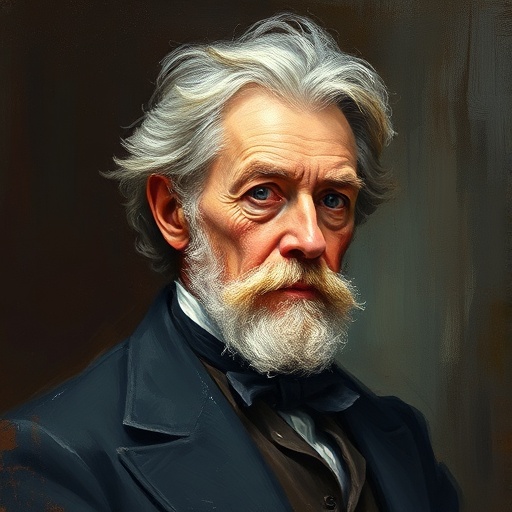
Michael Faraday — "The true scientist is a man who is always learning, and never assumes that he kn…"
The true scientist is a man who is always learning, and never assumes that he knows everything.
The true scientist is a man who is always learning, and never assumes that he knows everything.
Click any product to generate a realistic preview. Up to 3 at a time.
* Initial load can take up to 90 seconds — revising the preview in another color is nearly instant.
"The world little knows how many of the thoughts and theories which have passed through the mind of a scientific investigator have been crushed in silence and secrecy by his own severe criticism and ad…"
"But still try, for who knows what is possible?"
"The greatest pleasure in life is to discover something new."
"Nothing is too wonderful to be true if it be consistent with the laws of nature."
"The lecturer should give the audience full reason to believe that all his powers have been exerted for their pleasure and instruction."
Attributed, emphasizing continuous learning and humility.
Date: Mid 19th Century (approx.)
EducationalFound in 1 providers: grok
1 source checked
Real scientists stay curious and humble. They never stop asking questions or think they have all the answers. Instead of defending what they already believe, they keep testing ideas, admit when they are wrong, and treat every discovery as a starting point for the next question. Confidence that you know everything shuts down learning; genuine expertise means accepting that understanding is always incomplete and open to revision.
Faraday embodied this. A self-taught bookbinder's apprentice with almost no formal schooling, he rose to discover electromagnetic induction, the laws of electrolysis, and the magnetic field concept by patient experiment and meticulous notebooks. He declined a knighthood and the presidency of the Royal Society, refusing to rest on reputation. His lifelong habit of questioning assumptions and revisiting experiments directly shaped this view of science as humble, ongoing inquiry.
Faraday worked in early-to-mid 19th-century Britain, when science was professionalizing out of gentleman-amateur culture and the Industrial Revolution was rewarding confident, authoritative 'experts.' Royal Society figures often defended entrenched theories. Against that backdrop, electricity and magnetism were barely understood, and dogmatic physics was being upended. Faraday's insistence on humble, experimental learning pushed back on credentialism and set the tone for modern empirical science emerging alongside Darwin, Maxwell, and the rise of public lectures at the Royal Institution.
AI-generated insights based on extensive research and information for context. Factual errors? Email [email protected].
Your cart is empty