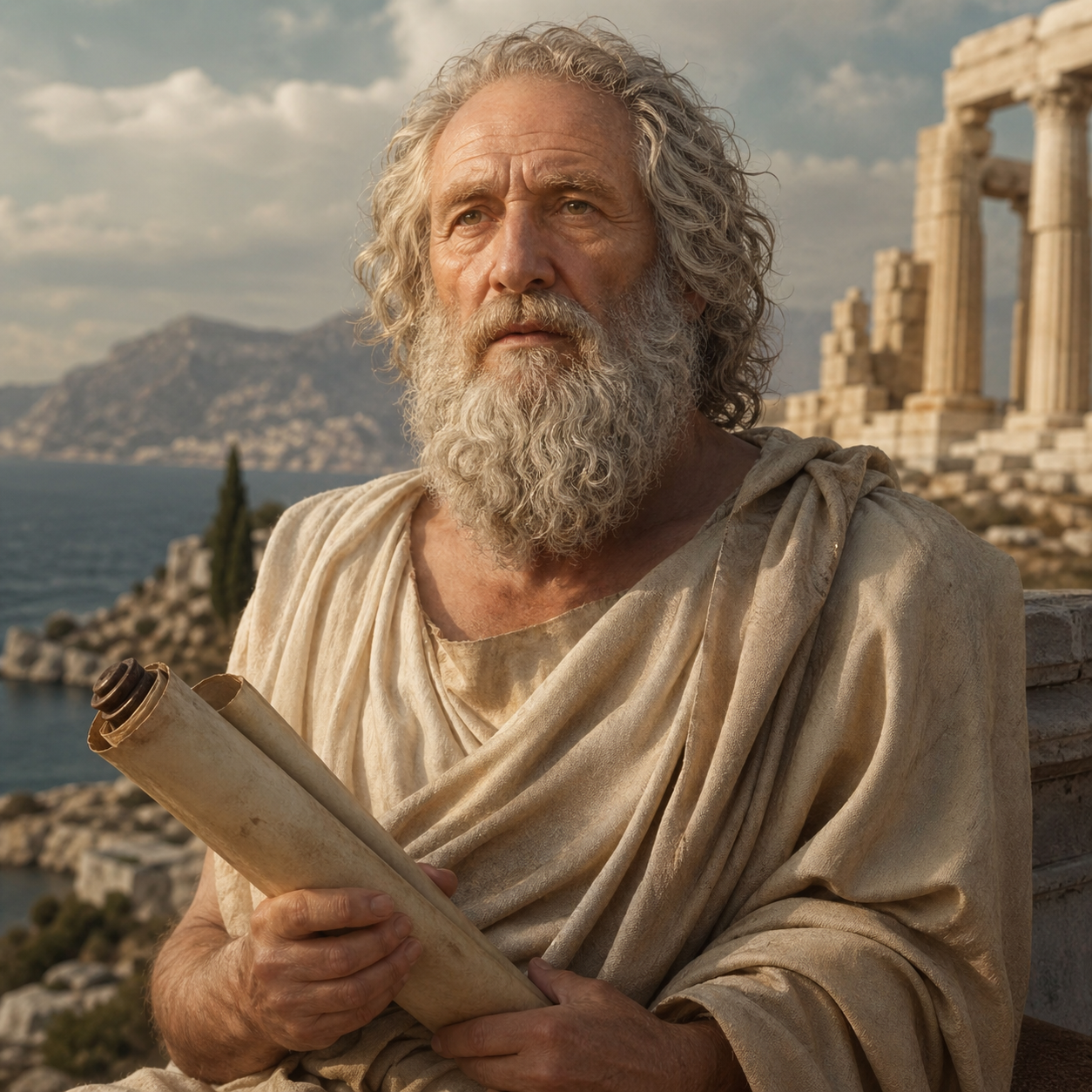
Homer — "It is not for us to judge."
It is not for us to judge.
It is not for us to judge.
Click any product to generate a realistic preview. Up to 3 at a time.
* Initial load can take up to 90 seconds — revising the preview in another color is nearly instant.
"Because they're stupid, that's why. That's why everybody does everything."
"So please go home and tend to your own tasks, / the distaff and the loom, and keep the women / working hard as well."
"Why so much grief for me? No man will hurl me down to Death, against my fate. And fate? No one alive has ever escaped it, neither brave man nor coward, I tell you - it's born with us the day that we a…"
"The gods have sent me on a long and difficult journey."
"Agamemnon…cuts off his arms, and then kicks the body to send it rolling into the throng of Trojan fighters, 'like a log'."
Greek epic poet traditionally credited with the Iliad and the Odyssey, the foundational works of Western literature. Closely associated with Hesiod (near-contemporary Greek poet of Theogony and Works and Days). For an intellectual contrast, see Plato, Greek philosopher of the Republic — Republic Book X bans the poets from the ideal city, with Homer as the explicit target — Plato argued Homer's gods set immoral examples and that poetry corrupts moral education. The founding philosophy-versus-poetry quarrel of Western thought.
Your cart is empty