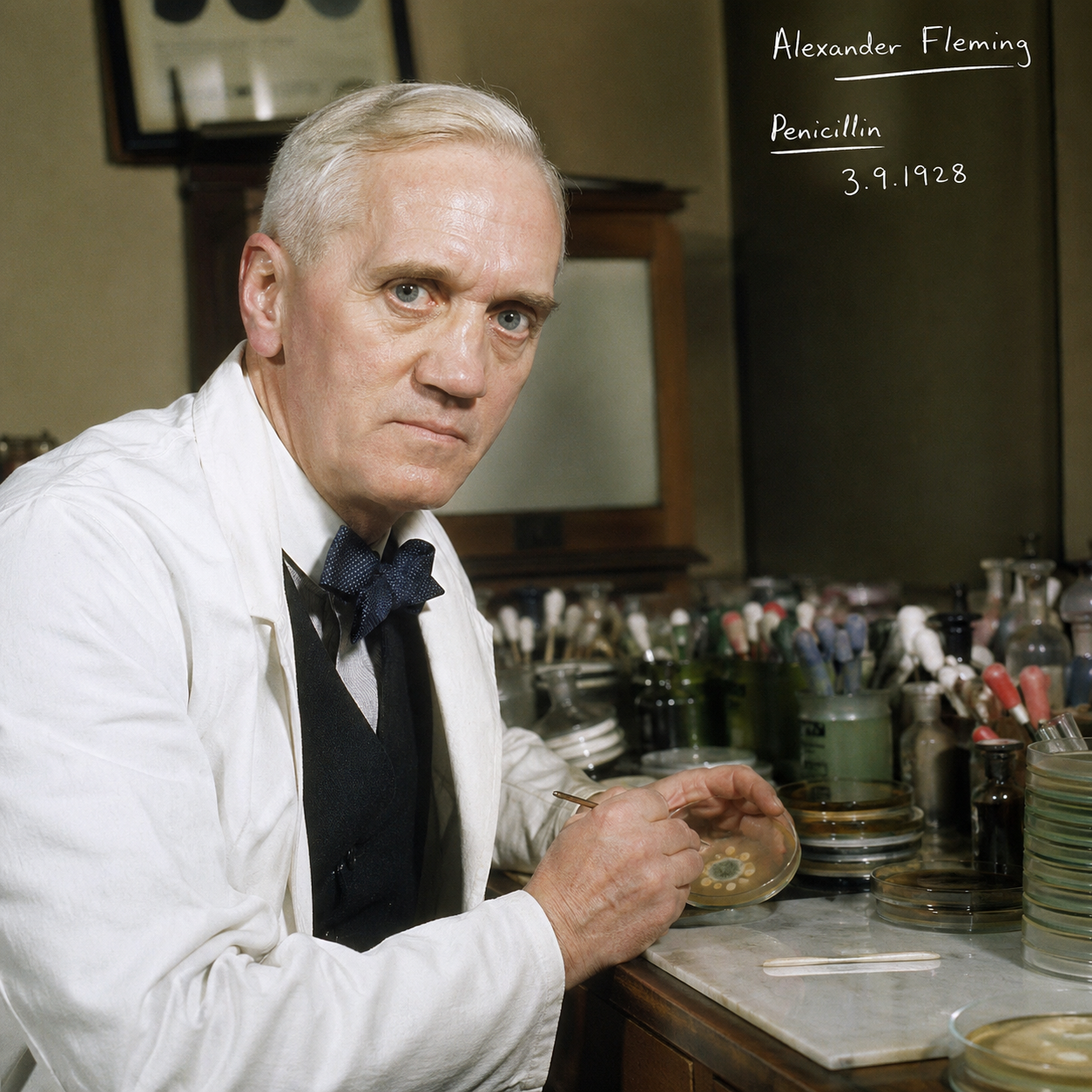
Alexander Fleming — "It is not often that one finds a substance that is both highly bactericidal and …"
It is not often that one finds a substance that is both highly bactericidal and non-toxic to animal tissues.
It is not often that one finds a substance that is both highly bactericidal and non-toxic to animal tissues.
Click any product to generate a realistic preview. Up to 3 at a time.
* Initial load can take up to 90 seconds — revising the preview in another color is nearly instant.
"One sometimes finds what one is not looking for."
"That's funny."
"When I woke up just after dawn on September 28, 1928, I certainly didn't plan to revolutionize all medicine by discovering the world's first antibiotic, or bacteria killer. But I suppose that was exac…"
"It is not the man who first sees a thing who is the discoverer, but he who sees into a thing."
"I did not invent penicillin. Nature did that. I only discovered it by accident."
Found in 1 providers: grok
1 source checked
Finding an agent that kills bacteria while remaining harmless to human tissue is extraordinarily rare. Most potent antibacterial compounds are toxic to living cells — the very property that destroys microbes often damages the host. Fleming is stating why penicillin was a genuine breakthrough: it killed pathogens with high efficiency yet left animal cells unharmed. This selectivity — lethal to bacteria, safe for humans — is the essential prerequisite for any medicine that can actually be used inside a living body.
Fleming witnessed WWI surgeons applying harsh antiseptics — iodine, carbolic acid — that damaged wounds as badly as infection. This drove his lifelong hunt for gentler bactericides. His 1922 lysozyme discovery showed nature could produce selective killers, but it was too weak clinically. His 1928 penicillin finding — a mold's own defensive secretion — finally delivered the ideal: highly lethal to bacteria yet harmless to tissue, precisely the rare combination this quote describes.
In the early 20th century, bacterial infections — pneumonia, sepsis, infected wounds — killed tens of millions with no internal remedy. Existing treatments used harsh chemical disinfectants that burned tissue and could not be administered into the bloodstream. WWI proved this catastrophically: more soldiers died of infected wounds than combat injuries. By the 1920s, medicine urgently needed a systemic cure. Fleming's observation captured the field's core unsolved challenge, and penicillin's answer to it launched the entire modern antibiotic era.
AI-generated insights based on extensive research and information for context. Factual errors? Email [email protected].
Your cart is empty