Alexander Fleming — "It is not the discovery of a new substance that is important, but the recognitio…"
It is not the discovery of a new substance that is important, but the recognition of its properties.
It is not the discovery of a new substance that is important, but the recognition of its properties.
Click any product to generate a realistic preview. Up to 3 at a time.
* Initial load can take up to 90 seconds — revising the preview in another color is nearly instant.
"I am sometimes asked what I think of the future of penicillin. I think it has a great future, but it must be used wisely."
"The therapeutic value of penicillin is enormous, but its indiscriminate use could lead to disaster."
"The purification of penicillin was a major triumph of chemistry."
"A good gulp of hot whisky at bedtime—it's not very scientific, but it helps."
"It is not often that one finds a substance that is both highly bactericidal and non-toxic to animal tissues."
Found in 1 providers: grok
1 source checked
Finding something new matters less than understanding what it actually does. True progress comes from careful observation and analysis of what you've found, not the initial stumble upon it. Many discoveries happen by accident, but their value only emerges when someone takes time to study, test, and grasp the full implications of what they've encountered. Recognition — not novelty — is where science becomes useful.
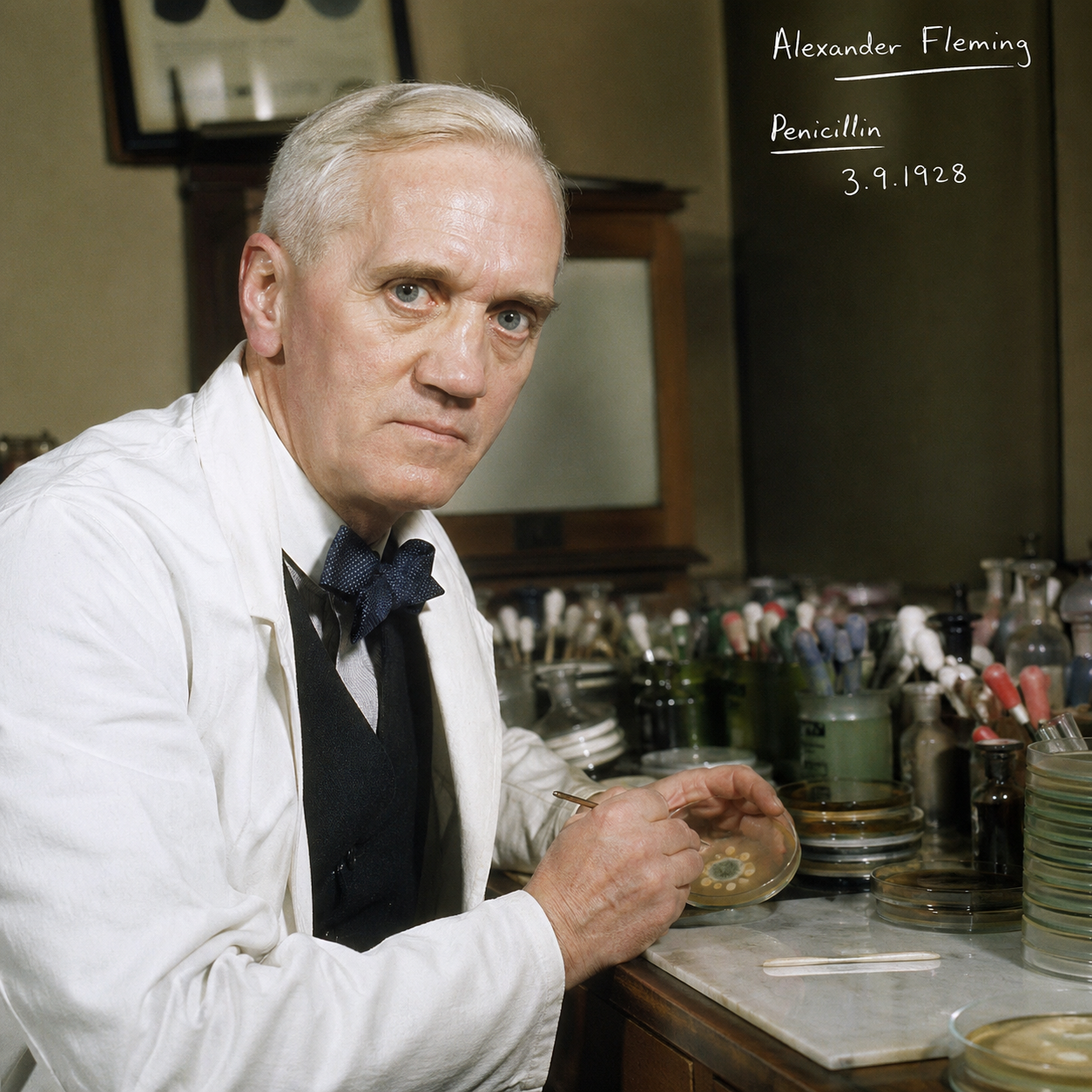
Fleming famously noticed mold contaminating a petri dish — an accident others would have discarded. His genius wasn't in spotting it but in recognizing penicillin's antibacterial properties. A bacteriologist trained in meticulous lab work, he spent years studying wound infections in WWI, which primed him to understand bacterial killing mechanisms. Without that analytical mindset, penicillin would have been a ruined experiment, not a world-changing antibiotic.
Fleming worked in the early 20th century when labs were producing new compounds rapidly, yet most languished unexplored. The interwar period saw enormous pressure for practical medical breakthroughs as bacterial infections killed millions and antibiotics didn't yet exist. Germ theory was still maturing and pharmaceutical science was primitive. His era demanded translation of raw discovery into usable medicine, making the leap from 'found it' to 'understood it' the critical bottleneck.
AI-generated insights based on extensive research and information for context. Factual errors? Email [email protected].
Your cart is empty