Francis Crick — "It is notoriously difficult to get rid of a bad idea once it is firmly establish…"
It is notoriously difficult to get rid of a bad idea once it is firmly established.
It is notoriously difficult to get rid of a bad idea once it is firmly established.
Click any product to generate a realistic preview. Up to 3 at a time.
* Initial load can take up to 90 seconds — revising the preview in another color is nearly instant.
"I would not trust any experiment in biology unless it was confirmed by a physicist."
"I have always been fascinated by the brain."
"The scientific method is a powerful tool, but it is not the only way to understand the world."
"I'm not a philosopher, I'm a scientist."
"The truth is rarely pure and never simple."
Found in 1 providers: grok
1 source checked
Once a wrong idea gets widely accepted and taught, institutional momentum, ego investment, and confirmation bias make it nearly impossible to dislodge — even with clear counter-evidence. People build careers, textbooks, and reputations around established ideas. Overturning them requires more than proof; it requires waiting for true believers to retire or finding evidence so overwhelming it cannot be ignored. Bad ideas outlive their expiration date.
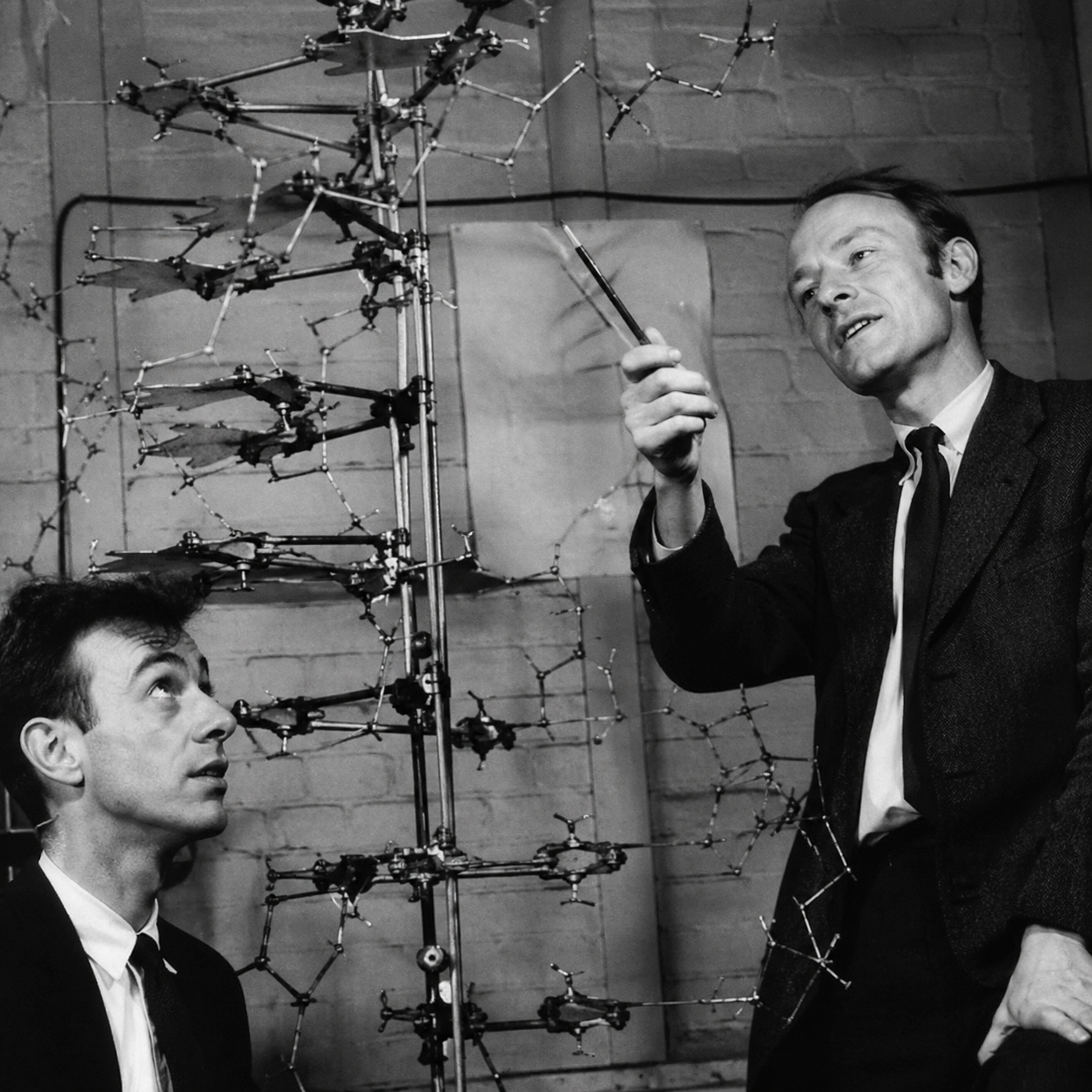
Crick spent his career dismantling entrenched biological dogmas. Before 1953, most scientists believed proteins — not DNA — carried genetic information; DNA was considered too simple a molecule. Crick and Watson overturned that firmly established misconception. He also fought lifelong against vitalism — the stubborn notion that life requires a non-physical force — and later challenged consciousness research dominated by philosophical dualism, repeatedly confronting communities unwilling to abandon foundational assumptions.
The mid-20th century brought rapid scientific upheaval yet fierce institutional resistance. Lysenko's pseudoscientific genetics held Soviet biology hostage for decades — a vivid, deadly example of a bad idea enforced by authority. Western biology clung to protein-centric theories of heredity well into the 1950s. Cold War pressures politicized scientific consensus. Thomas Kuhn's 1962 work on paradigm shifts later formalized what Crick already knew firsthand: established ideas protect themselves ferociously.
AI-generated insights based on extensive research and information for context. Factual errors? Email [email protected].
Your cart is empty