Enrico Fermi — "It is very hard to be famous and still do good work."
It is very hard to be famous and still do good work.
It is very hard to be famous and still do good work.
Click any product to generate a realistic preview. Up to 3 at a time.
* Initial load can take up to 90 seconds — revising the preview in another color is nearly instant.
"When asked what characteristics Nobel prize winning physicists had in common I cannot think of a single one not even intelligence."
"Don't ever tell anybody anything, or you'll never get anything done."
"We must always strive to use our knowledge for the betterment of humanity, and not for its destruction."
"I am not afraid of death, because I know that I have lived a full life."
"The universe is not only stranger than we imagine, it is stranger than we can imagine."
Found in 1 providers: grok
1 source checked
Fame pulls a person in every direction — interviews, appearances, committees, and admirers all compete for time and focus. Deep, meaningful work requires solitude, concentration, and the freedom to fail quietly. Once you're well-known, every mistake is public and every project carries the weight of expectation. The very recognition that confirms your past success becomes the obstacle standing between you and your next breakthrough.
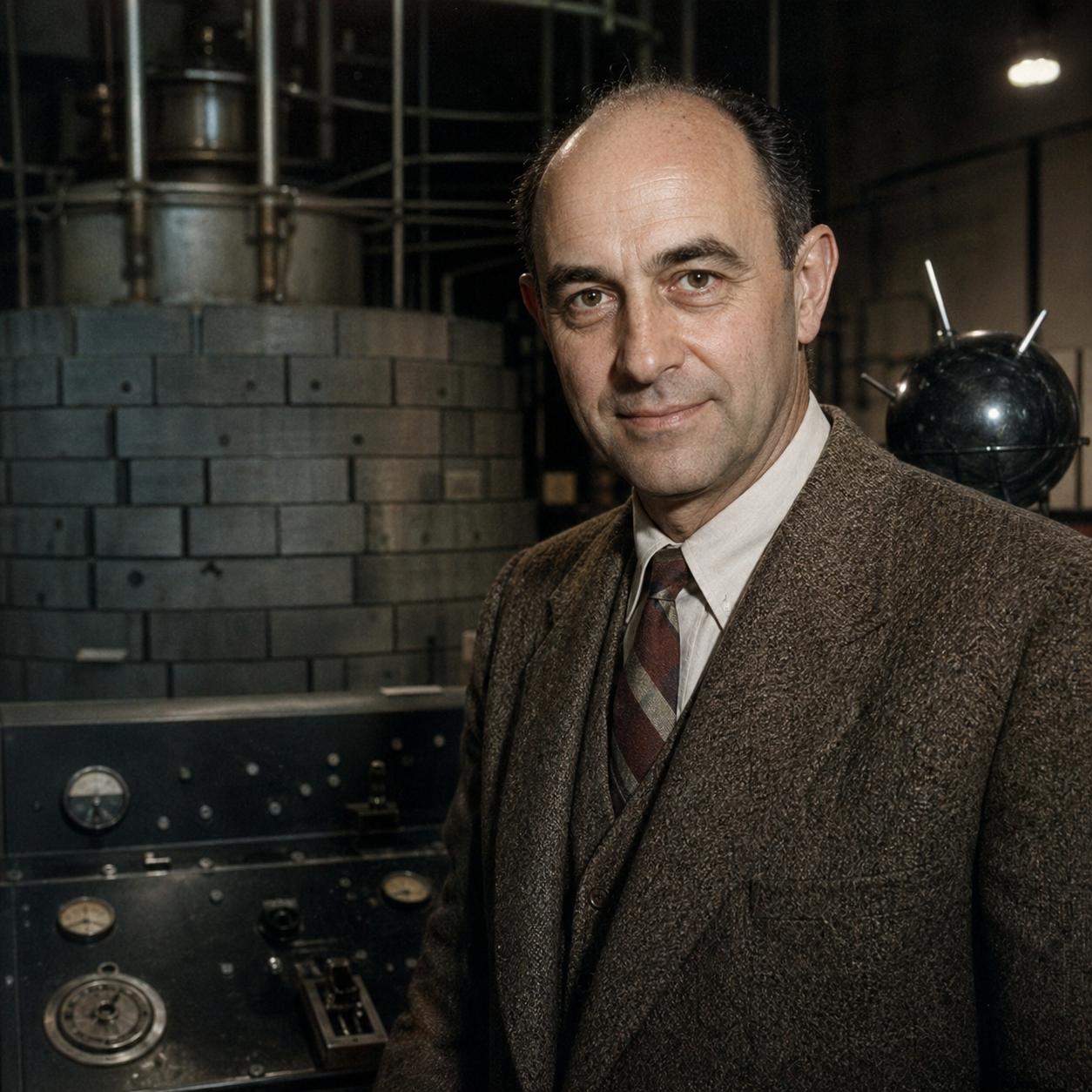
Fermi won the Nobel in 1938 and led construction of the first nuclear reactor in 1942, making him one of the most celebrated physicists alive. Post-Manhattan Project, he was pulled into government advisory roles, ethics debates, and public obligations. Despite the pressure, he kept producing original physics at Chicago — Fermi estimation, cosmic ray work — living proof that the struggle he named was real and personally felt.
After Hiroshima, atomic physicists became the most consequential — and visible — scientists in history. The Cold War turned nuclear research into a matter of national survival, making physicists into political figures and Senate witnesses. Oppenheimer's security hearing and McCarthy-era scrutiny showed how fame could destroy a career. Scientists who had thrived in quiet labs now navigated government demands, public scrutiny, and moral debates that consumed the energy research required.
AI-generated insights based on extensive research and information for context. Factual errors? Email [email protected].
Your cart is empty