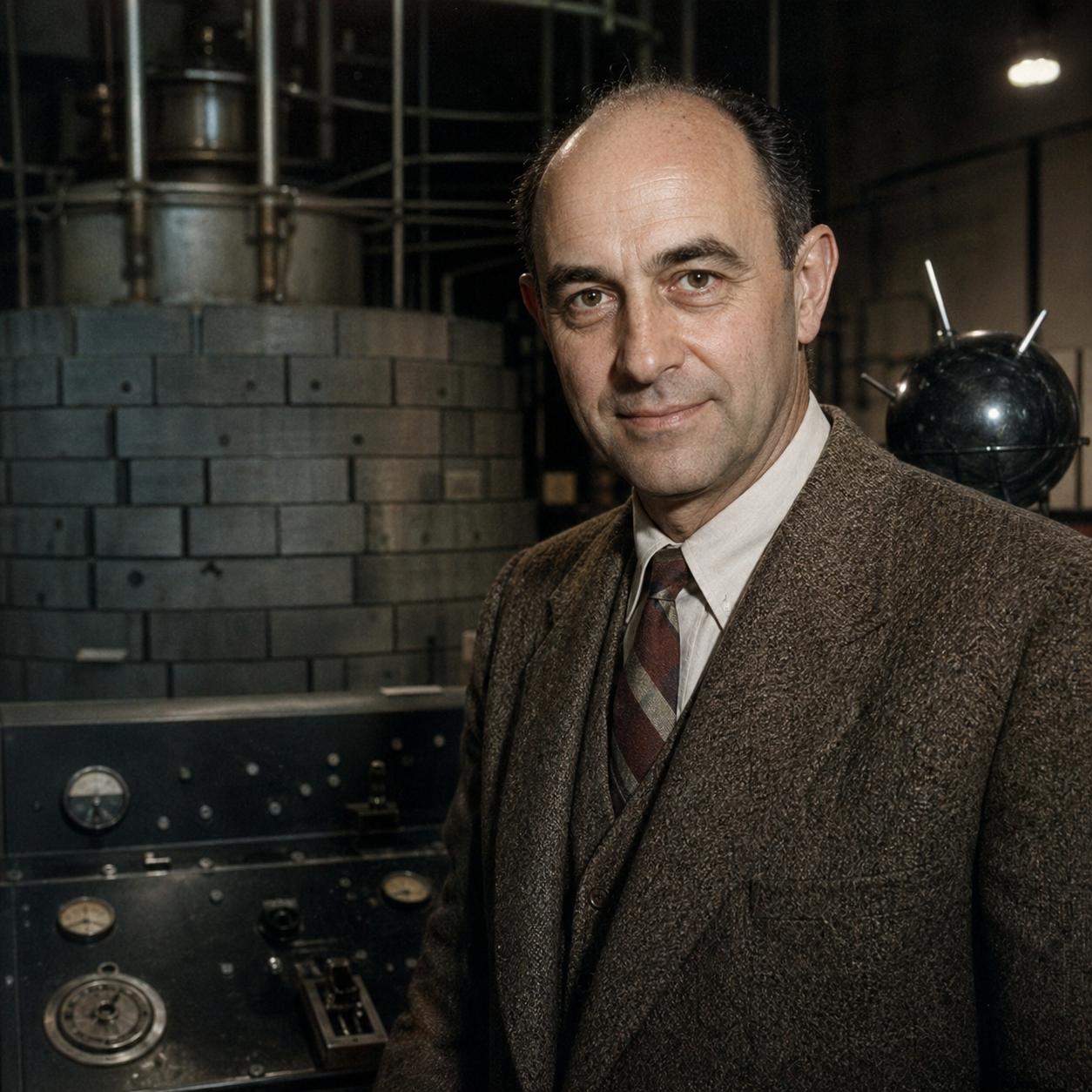
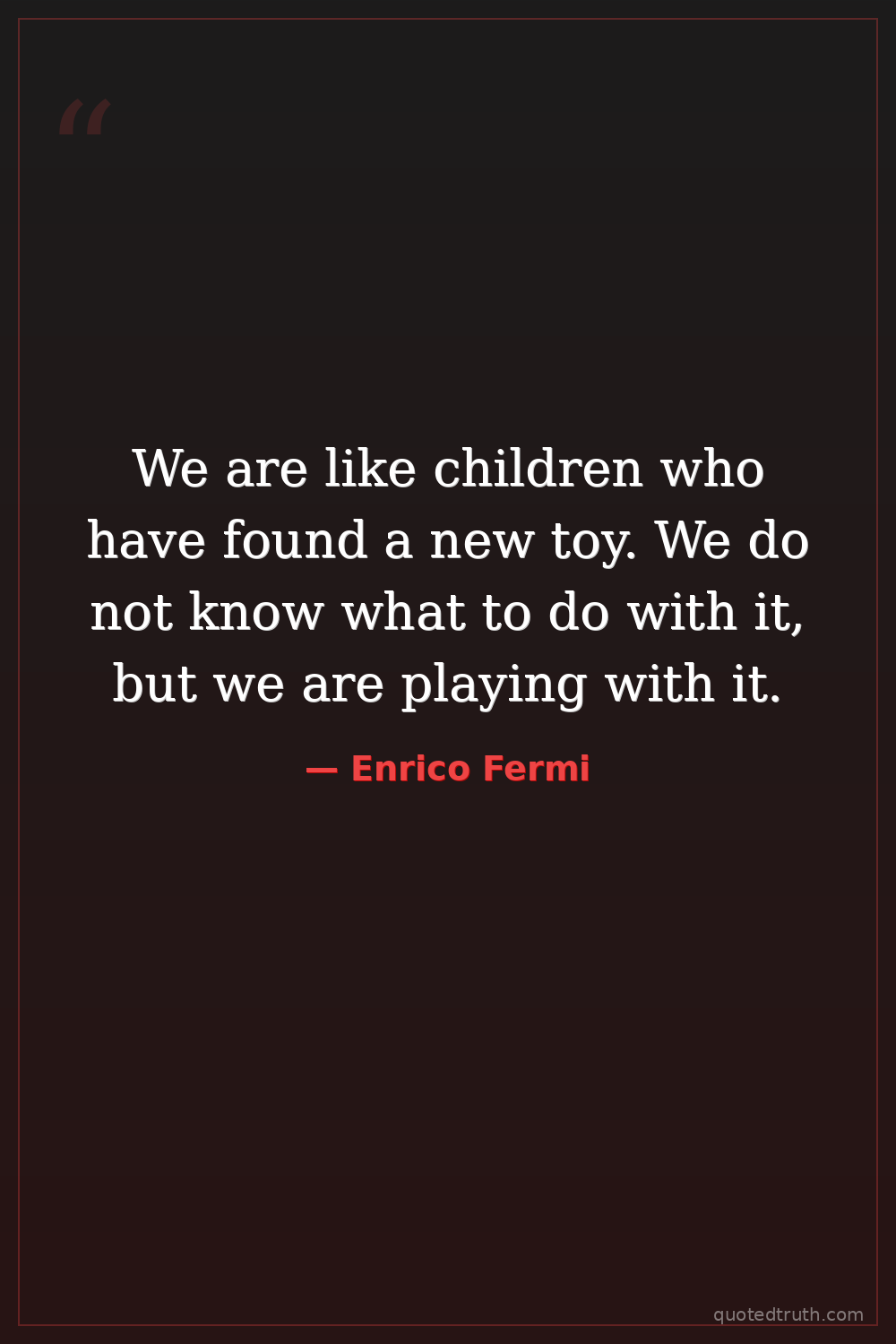
Enrico Fermi — "We are like children who have found a new toy. We do not know what to do with it…"
We are like children who have found a new toy. We do not know what to do with it, but we are playing with it.
We are like children who have found a new toy. We do not know what to do with it, but we are playing with it.
Click any product to generate a realistic preview. Up to 3 at a time.
* Initial load can take up to 90 seconds — revising the preview in another color is nearly instant.
"Science is a way of thinking much more than it is a body of knowledge."
"The bomb will never go off, and I speak as an expert in explosives."
"The future of nuclear energy is not in bombs, but in power."
"The greatest adventure of all is to explore the unknown."
"The atomic bomb is a terrible weapon, but it is also a source of great power."
Found in 1 providers: grok
1 source checked
Humanity has gained access to something enormously powerful — nuclear energy — but lacks the wisdom or framework to use it responsibly. Like a child captivated by a dangerous object, we're driven by curiosity and excitement rather than understanding. Possessing a capability doesn't mean possessing the judgment to wield it well. The quote is a quiet warning: enthusiasm and discovery are not the same as readiness or wisdom.
Fermi built the world's first self-sustaining nuclear reactor, Chicago Pile-1, in 1942, and led key work on the Manhattan Project. He watched atomic weapons destroy Hiroshima and Nagasaki after his own research made them possible. As the scientist who literally handed humanity nuclear fire, this quote reflects his personal reckoning — a man of extraordinary capability aware that the physics had outrun the ethics.
Fermi lived through the birth of the atomic age (1940s–early 1950s). After Hiroshima and Nagasaki in 1945, the U.S. and Soviet Union raced to build hydrogen bombs, with the first H-bomb test in 1952. Scientists faced intense public scrutiny over their moral responsibility. The era blended technological triumph with existential dread — humanity had split the atom but had no consensus on how to govern that power.
AI-generated insights based on extensive research and information for context. Factual errors? Email [email protected].
Your cart is empty