Grace Hopper — "It was much more fun to program the Mark I than to operate it."
It was much more fun to program the Mark I than to operate it.
It was much more fun to program the Mark I than to operate it.
Click any product to generate a realistic preview. Up to 3 at a time.
* Initial load can take up to 90 seconds — revising the preview in another color is nearly instant.
"Humans are allergic to change. They love to say, 'We've always done it this way.' I try to fight that. That's why I have a clock on my wall that runs counter-clockwise."
"I handed my passport to the immigration officer, and he looked at it and looked at me and said, 'What are you?'"
"My father always told me, 'Grace, you can do anything you want, you just have to work for it.'"
"I will not take what you need to give me. I will take what you want to give me."
"I'm going to retire when I'm 100."
Found in 1 providers: grok
1 source checked
Programming is more satisfying than operating because one creates the rules while the other merely follows them. To operate a machine is rote execution; to program it is to define what it can do. This quote captures the joy of intellectual and creative work over repetitive procedure, and argues that the programmer—the person shaping the machine's behavior—holds the more meaningful, engaging role.
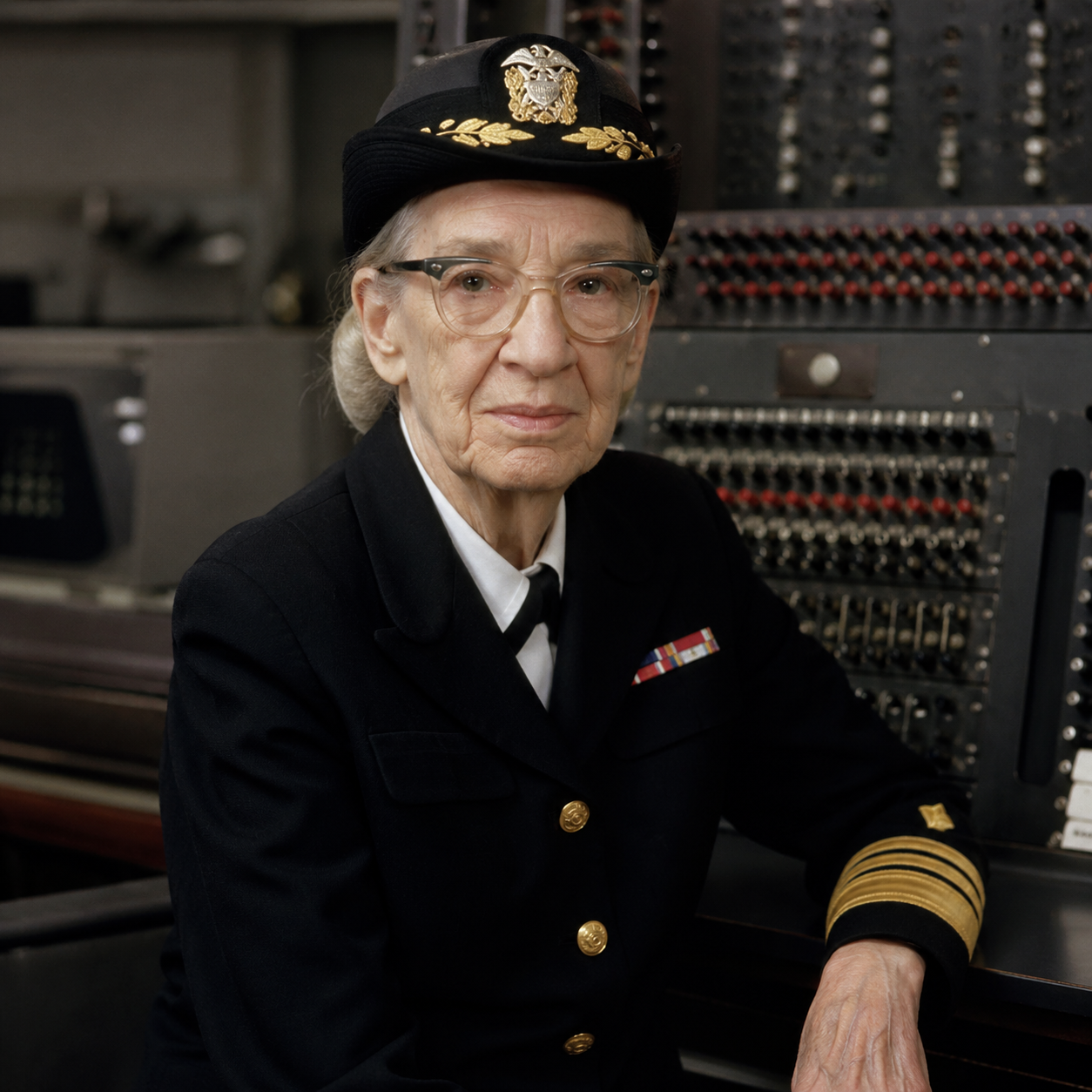
Hopper joined the Harvard Mark I project in 1944 as one of its first programmers, a Naval Reserve officer under Howard Aiken. She didn't just run the machine—she helped define what programming meant. That creative drive shaped her entire career: she built one of the first compilers, championed COBOL, and spent decades making computers speak closer to human language. Her legacy is built entirely on invention over operation.
In 1944, the Mark I was among the world's first large-scale automatic calculators, built for wartime ballistic and naval computation. There was no software industry, no programming languages, no formal discipline of computer science. The roles of programmer and operator were only just being separated. Hopper's expressed preference helped establish programming as skilled intellectual work—not clerical labor—at the precise historical moment that distinction was being invented.
AI-generated insights based on extensive research and information for context. Factual errors? Email [email protected].
Your cart is empty