Grace Hopper — "I never met a computer I didn't like."
I never met a computer I didn't like.
I never met a computer I didn't like.
Click any product to generate a realistic preview. Up to 3 at a time.
* Initial load can take up to 90 seconds — revising the preview in another color is nearly instant.
"I seem to do a lot of retiring."
"If you do something once, people will call it an accident. If you do it twice, they call it a coincidence. But do it a third time and you've just proven a natural law!"
"I had a running compiler and nobody would touch it. They told me computers could only do arithmetic."
"I don't know what the future holds, but I know who holds the future."
"I'm not interested in the past. I'm interested in the future."
Found in 1 providers: grok
1 source checked
A riff on Will Rogers' 'I never met a man I didn't like,' repurposed as a declaration of unconditional love for computers. It conveys that every machine—regardless of quirks, limitations, or era—offers something worth engaging with. More than humor, it signals a disposition: approach technology with enthusiasm and curiosity rather than frustration or fear. Every computer is an opportunity, not an obstacle.
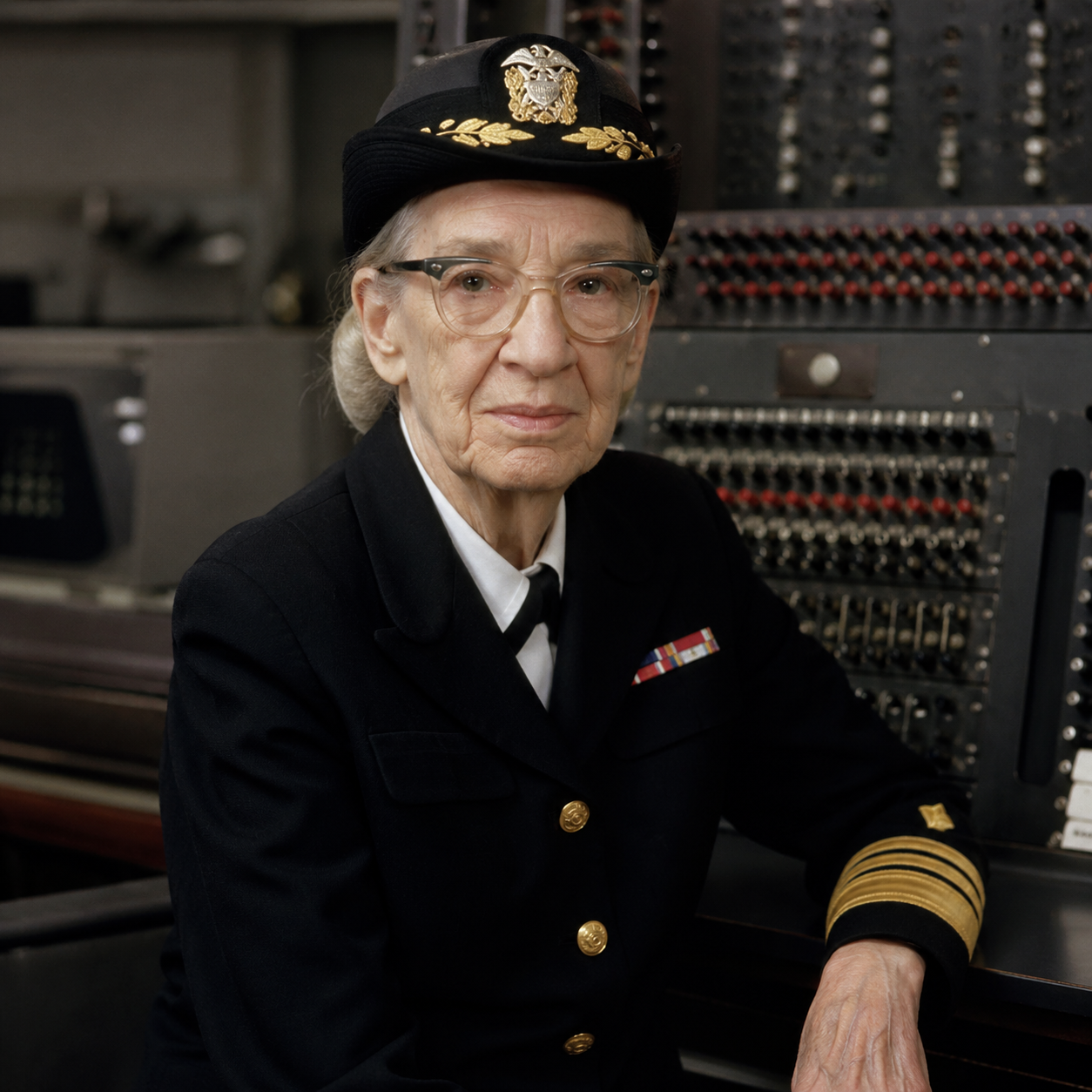
Hopper spent her career with machines others found intimidating—from the Harvard Mark I in 1944 to UNIVAC in the 1950s. She invented the first compiler, championed COBOL for business use, and famously debugged a relay by removing an actual moth. Her entire professional mission was making computers accessible. This quote captures her authentic enthusiasm—she genuinely saw every machine, however primitive or flawed, as a partner worth knowing.
During Hopper's active decades (1940s–1980s), computers were expensive, unreliable, and widely feared. Early vacuum-tube machines filled entire rooms and broke constantly. Institutional skepticism was pervasive—executives resisted computerization, and the personal computing boom of the late 1970s–80s brought public anxiety about automation. Against this backdrop, Hopper's unconditional affection for every machine was quiet advocacy: normalizing the idea that humans and computers could have a productive, even joyful, relationship.
AI-generated insights based on extensive research and information for context. Factual errors? Email [email protected].
Your cart is empty