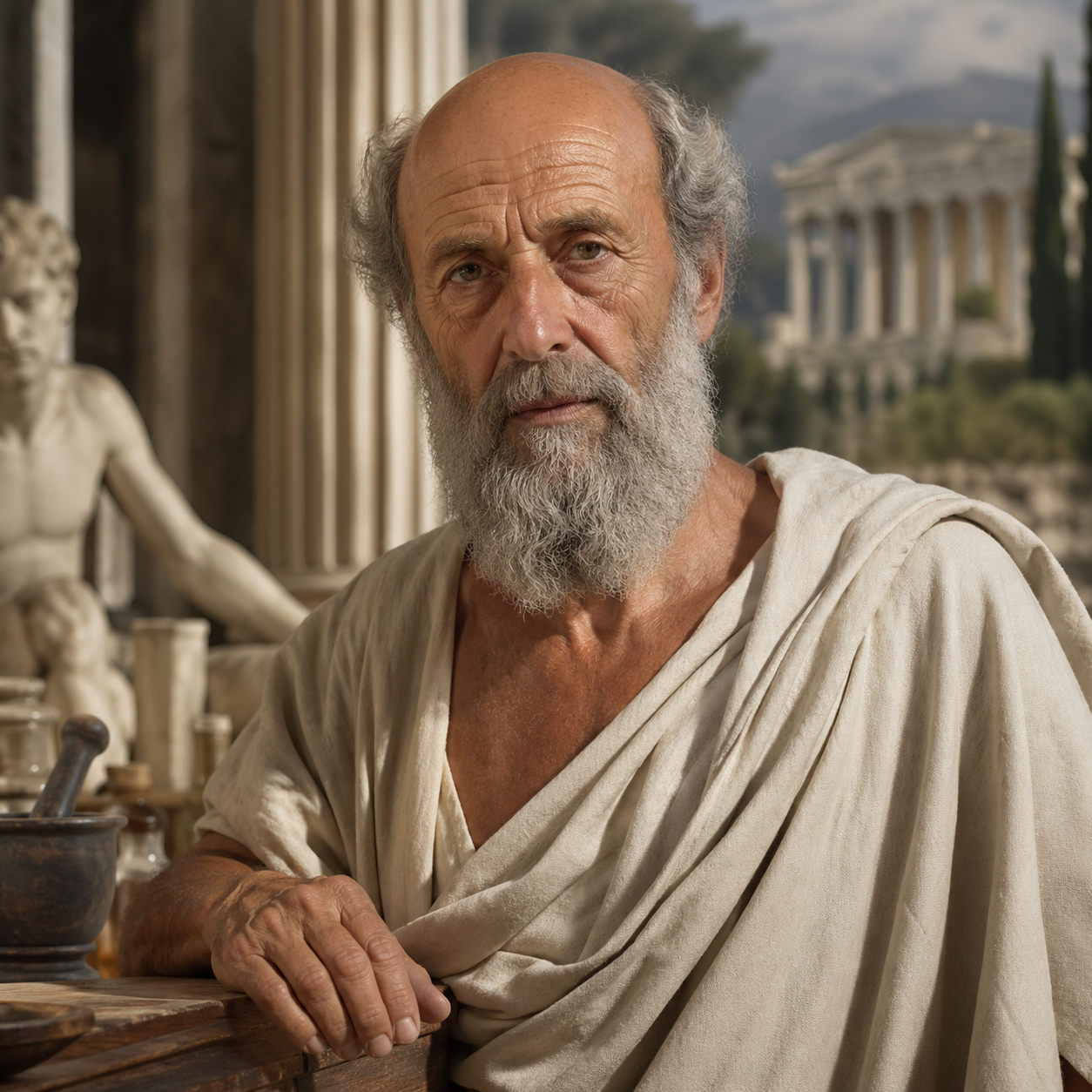
Hippocrates — "Leave your drugs in the chemist's pot if you can cure the patient with food."
Leave your drugs in the chemist's pot if you can cure the patient with food.
Leave your drugs in the chemist's pot if you can cure the patient with food.
Click any product to generate a realistic preview. Up to 3 at a time.
* Initial load can take up to 90 seconds — revising the preview in another color is nearly instant.
"The greatest remedy for anger is delay."
"The healthy stomach makes a good digestion."
"The natural forces within us are the true healers of disease."
"Prayer indeed is good, but while calling on the gods a man should himself lend a hand."
"The art of medicine is to restore health, not to take life."
Found in 1 providers: grok
1 source checked
When diet and lifestyle changes can restore a patient's health, skip the medication entirely. Food is the first and preferred treatment; drugs are a last resort, not a default. This reflects a hierarchy of intervention: start with the most natural, least invasive remedy available before reaching for pharmaceutical solutions.
Hippocrates built medicine on observation and natural causes, rejecting supernatural explanations for disease. He developed dietary regimens as core therapy, documenting how food, exercise, and environment shaped health. His Hippocratic writings repeatedly emphasize regimen over drugs, making this quote central to his clinical philosophy and his break from priest-medicine traditions.
In ancient Greece around 400 BCE, physicians competed with temple healers who used rituals and potions. Herbal drugs were poorly understood, often toxic, and inconsistently prepared. Food, by contrast, was controllable and observable. Hippocrates lived when Greek agriculture and philosophy were both flourishing, enabling a rational, empirical approach to treating illness through natural means rather than mystical remedies.
AI-generated insights based on extensive research and information for context. Factual errors? Email [email protected].
Your cart is empty