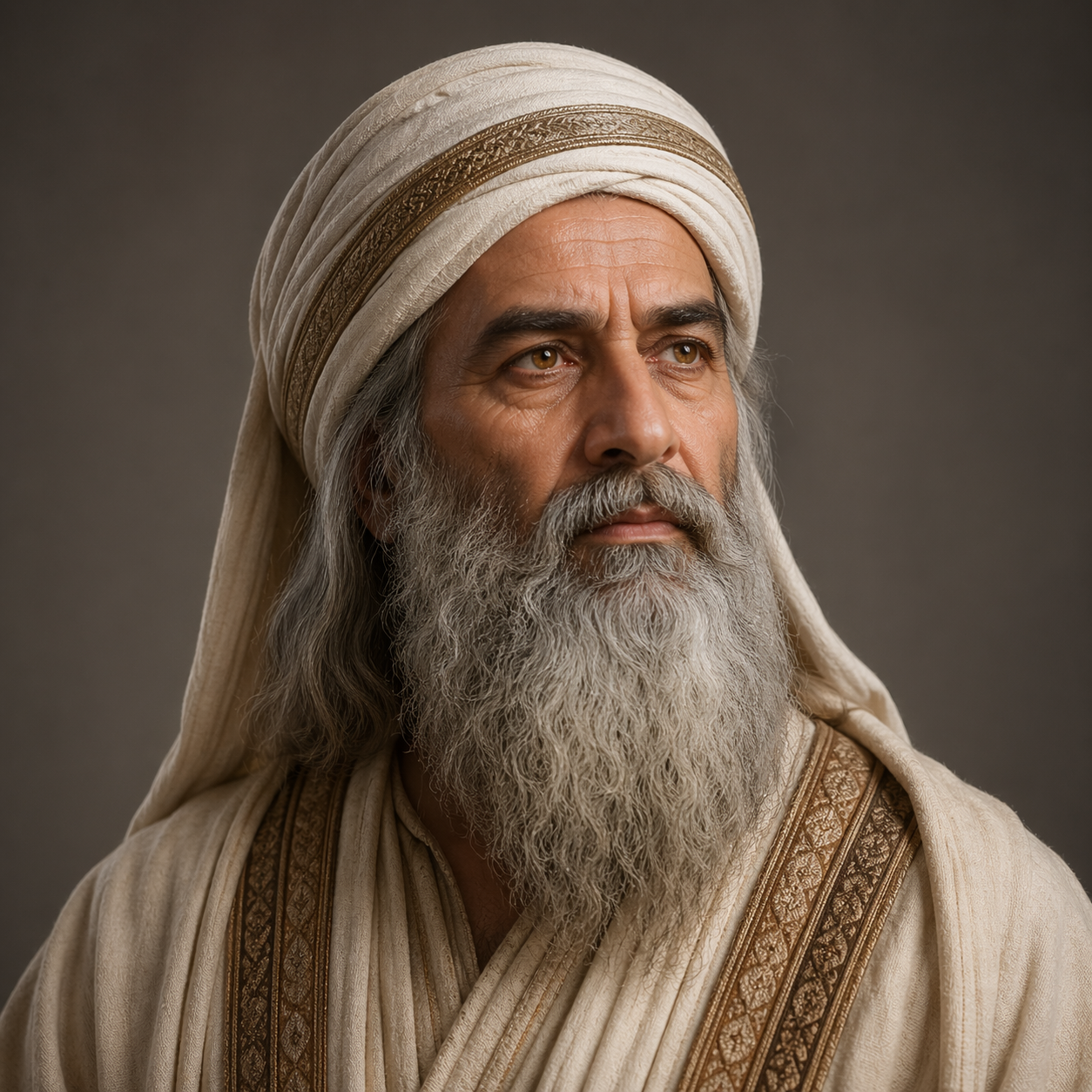
Zoroaster — "May we be those who shall heal this world."
May we be those who shall heal this world.
May we be those who shall heal this world.
Click any product to generate a realistic preview. Up to 3 at a time.
* Initial load can take up to 90 seconds — revising the preview in another color is nearly instant.
"Do not hold grain waiting for higher prices when people are hungry."
"Oh Mazda, I shall reveal your message to the seekers of knowledge. And shall tell them that the destiny of a false doer is pain. And the destiny of a righteous doer is happiness."
"And the evil ones shall be led to their ruin, but the good ones shall come to their reward."
"Indeed, I shall speak forth concerning this world’s two spirits, of which the one is good, the other evil, as to thought, as to word, as to deed. Between these two, the discerning have chosen aright, …"
"Whoso follows the teachings of Ahura Mazda, him Ahura Mazda will guide."
Iranian prophet who founded Zoroastrianism, the first major religion of cosmic dualism between good (Ahura Mazda) and evil (Angra Mainyu). Closely associated with The Buddha (near-contemporary Eastern moral-cosmological revolutionary). For an intellectual contrast, see Friedrich Nietzsche, German philosopher of 'beyond good and evil' — Nietzsche appropriated Zarathustra's name for Thus Spoke Zarathustra (1883) precisely to invert the original's moral cosmology — the historical Zoroaster founded the good-versus-evil framework Nietzsche's character announces the end of.
Found in 1 providers: gemini
1 source checked
This is a call to take active responsibility for repairing what is broken in the world around us. Rather than waiting for someone else or a higher power to fix things, the speaker urges people to see themselves as agents of restoration. It frames healing as a collective mission, something we choose and commit to, aligning our lives with the work of making existence better, more whole, and more just.
Zoroaster founded a religion built around the cosmic struggle between truth (asha) and the lie (druj), teaching that humans are partners with Ahura Mazda in renewing creation. The concept of frashokereti, the final making-wonderful of the world, anchors his theology. As a priest-prophet who broke with older Iranian ritual traditions, he called followers to righteous thought, word, and deed, making them co-workers in healing existence itself.
Zoroaster lived in the Iranian Bronze or early Iron Age, likely between 1500 and 1000 BCE, among pastoral tribes on the Central Asian steppes. Raiding, cattle theft, and polytheistic blood sacrifice shaped daily life. Older Indo-Iranian religion emphasized appeasing many gods through ritual. Against this backdrop, Zoroaster's ethical monotheism, his demand for personal moral choice, and his vision of cosmic renewal were radical departures that reframed religion as world-repair.
AI-generated insights based on extensive research and information for context. Factual errors? Email [email protected].
Your cart is empty