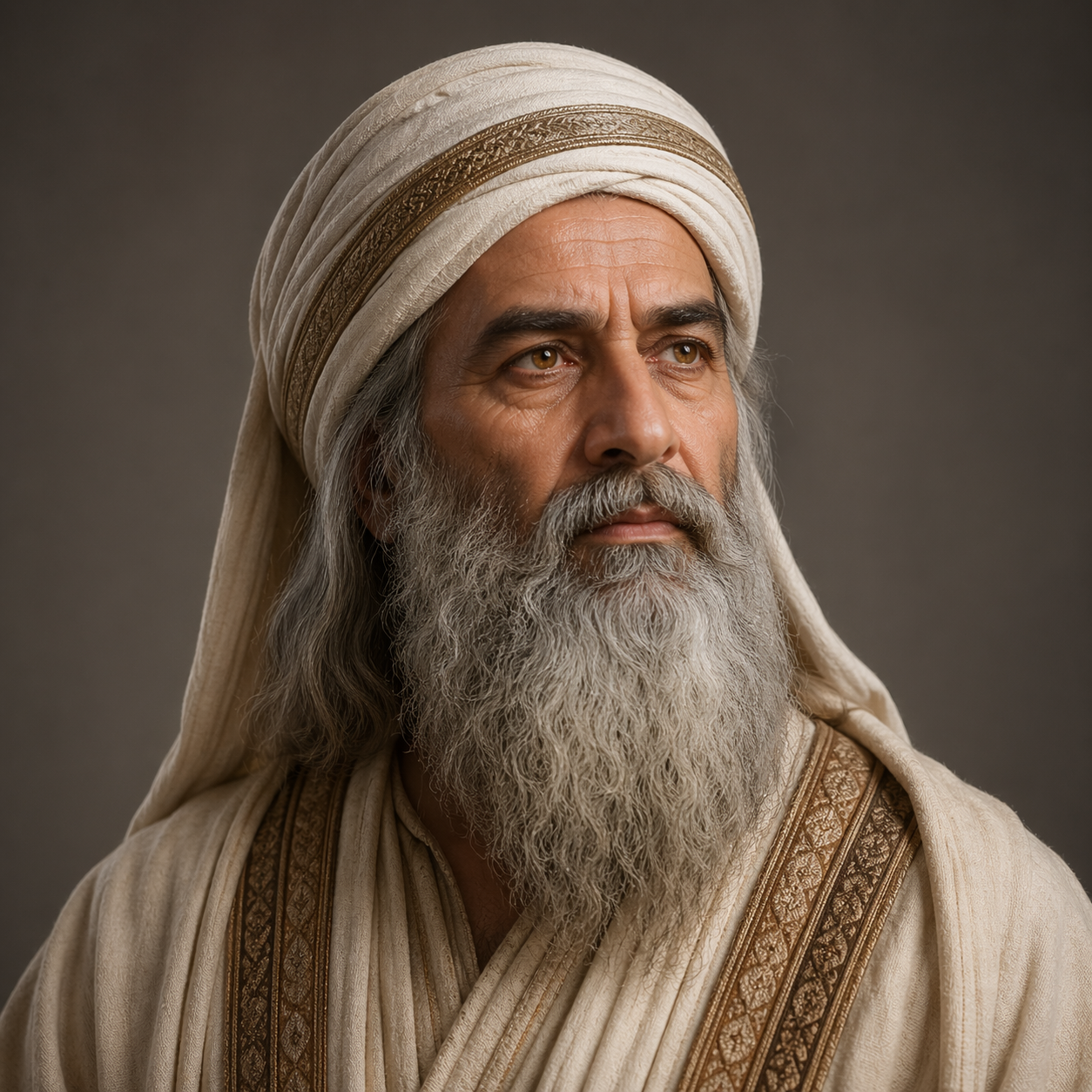
Zoroaster — "The evil shall be cast into darkness, but the righteous shall walk in light."
The evil shall be cast into darkness, but the righteous shall walk in light.
The evil shall be cast into darkness, but the righteous shall walk in light.
Click any product to generate a realistic preview. Up to 3 at a time.
* Initial load can take up to 90 seconds — revising the preview in another color is nearly instant.
"I will sing praises to You, O Ahura Mazda, with good thoughts and truthful words."
"Satisfaction linked with dishonor or with harm to others is a prison for the seeker."
"He who holds the righteous man dear, and the evil man far from him, he is a friend to Ahura Mazda."
"Good and evil are so real that humans are to partake in this cosmic battle by selecting sides."
"There are two fundamental spirits, twins which in waking hours are heard, but in thought are not seen. They are the better and the bad. Of these two, the wise have chosen rightly, not so the foolish."
Iranian prophet who founded Zoroastrianism, the first major religion of cosmic dualism between good (Ahura Mazda) and evil (Angra Mainyu). Closely associated with The Buddha (near-contemporary Eastern moral-cosmological revolutionary). For an intellectual contrast, see Friedrich Nietzsche, German philosopher of 'beyond good and evil' — Nietzsche appropriated Zarathustra's name for Thus Spoke Zarathustra (1883) precisely to invert the original's moral cosmology — the historical Zoroaster founded the good-versus-evil framework Nietzsche's character announces the end of.
Found in 1 providers: deepseek
1 source checked
Those who choose cruelty, deception, and harm end up isolated, confused, and cut off from clarity, while people who live honestly and do good move through life with understanding and purpose. The line frames morality as a binary with real consequences: wrongdoing dims a person's awareness and future, while integrity illuminates the path forward. It is less a threat than a description of how ethical choices shape the quality of one's existence.
Zoroaster built his entire teaching around the cosmic struggle between Ahura Mazda, the wise lord of light and truth, and Angra Mainyu, the spirit of deception and darkness. As a reforming priest who rejected older polytheistic rituals, he insisted every person must actively choose good thoughts, good words, and good deeds. This quote distills his signature dualism, where light and darkness are not just imagery but the literal moral fabric he preached across ancient Iran.
Zoroaster lived in the Bronze or early Iron Age Iranian plateau, likely between 1500 and 1000 BCE, among semi-nomadic tribes practicing ritual sacrifice and venerating many deities. Ethical teaching tied to a single supreme god was radical then, predating Jewish, Christian, and Islamic monotheism. His light-versus-darkness framework later shaped Persian imperial religion under the Achaemenids and influenced concepts of heaven, hell, judgment, and a final savior that spread throughout the Near East.
AI-generated insights based on extensive research and information for context. Factual errors? Email [email protected].
Your cart is empty