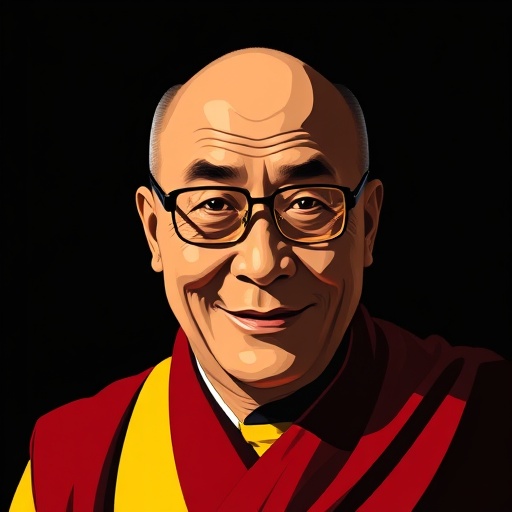
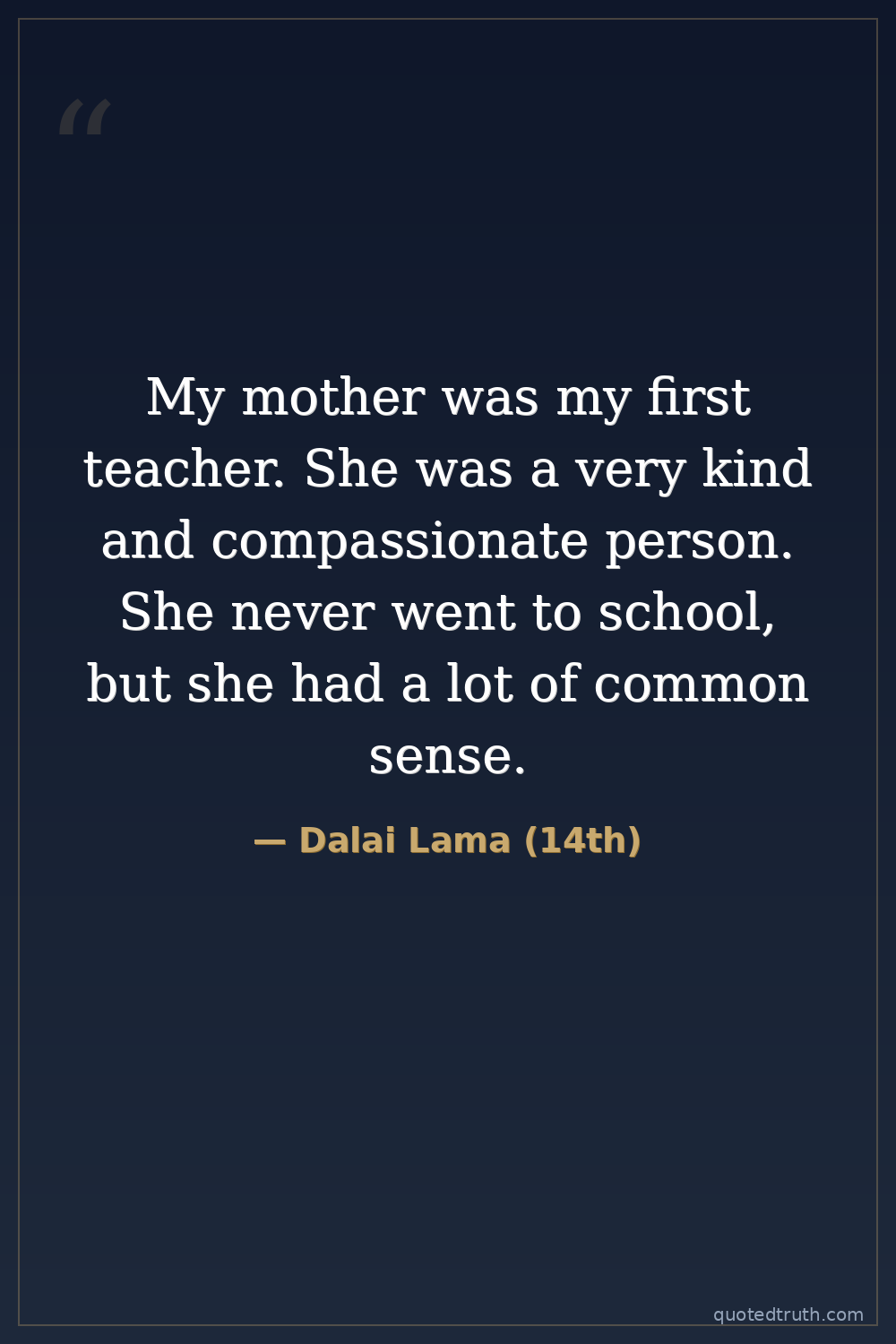
Dalai Lama (14th) — "My mother was my first teacher. She was a very kind and compassionate person. Sh…"
My mother was my first teacher. She was a very kind and compassionate person. She never went to school, but she had a lot of common sense.
My mother was my first teacher. She was a very kind and compassionate person. She never went to school, but she had a lot of common sense.
Click any product to generate a realistic preview. Up to 3 at a time.
* Initial load can take up to 90 seconds — revising the preview in another color is nearly instant.
"If a new Dalai Lama comes, that female must be attractive. Otherwise, not much use."
"We need to understand that inner peace is the key to world peace."
"When we meet real tragedy in life, we can react in two ways — either by losing hope and falling into self-destructive habits, or by using the challenge to find our inner strength."
"Our prime purpose in this life is to help others. And if you can't help them, at least don't hurt them."
"My message is always the same: love, compassion, and forgiveness."
Found in 1 providers: grok
1 source checked
A mother's greatest teachings aren't academic—they come through lived example. Kindness and practical wisdom don't require formal education. Common sense, earned through real experience and genuine compassion, shapes who we become more profoundly than any classroom ever could. The first person who molds our character is often someone who never held a degree but understood what truly matters in life.
Tenzin Gyatso was born in 1935 to a farming family in Taktser, Tibet. His mother, Diki Tsering, was illiterate but renowned for her warmth—she reportedly never turned away a beggar. He has repeatedly credited her compassion as the foundation of his own lifelong emphasis on kindness, calling her his earliest and most influential spiritual teacher before he was even recognized as Dalai Lama at age two.
The 14th Dalai Lama came of age in rural mid-20th century Tibet, where formal schooling was inaccessible to most villagers—especially women. After China's 1950 invasion and his 1959 exile to Dharamsala, India, he built global institutions preserving Tibetan culture. In an era valuing credentials, his consistent honoring of an uneducated mother challenges modern assumptions that wisdom requires institutional validation.
AI-generated insights based on extensive research and information for context. Factual errors? Email [email protected].
Your cart is empty