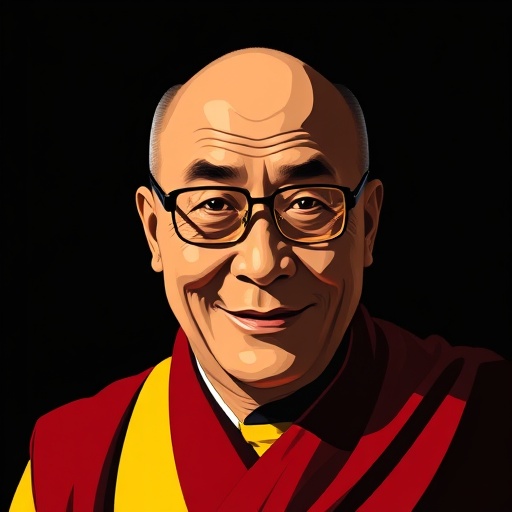
Dalai Lama (14th) — "The ultimate authority must always rest with the individual's own reason and cri…"
The ultimate authority must always rest with the individual's own reason and critical analysis.
The ultimate authority must always rest with the individual's own reason and critical analysis.
Click any product to generate a realistic preview. Up to 3 at a time.
* Initial load can take up to 90 seconds — revising the preview in another color is nearly instant.
"I am a professional laugher."
"I am open to guidance from the universe, and I don’t let my limited perception of reality get in the way."
"I hope that my life will be of benefit to all sentient beings."
"I believe that all human beings are fundamentally good. Sometimes they just get confused."
"When we meet real tragedy in life, we can react in two ways — either by losing hope and falling into self-destructive habits, or by using the challenge to find our inner strength."
Found in 1 providers: grok
1 source checked
No external authority—religious, political, or social—should override a person's own rational thinking. True understanding comes from personal inquiry, not blind acceptance of doctrine or tradition. Each person must examine claims critically and reach their own conclusions. It is a call for intellectual independence, even toward revered teachings, asserting that reason and personal discernment are the final arbiters of truth for any individual.
Tenzin Gyatso has consistently emphasized Buddhism's compatibility with science, famously stating he would revise Buddhist teachings if science definitively contradicted them. As Tibet's exiled leader since China's 1959 invasion, he faced enormous pressure demanding compliance over conscience. His Middle Way approach—neither rigid dogmatism nor wholesale rejection of tradition—directly embodies this belief that personal reasoning, not institutional authority, must guide spiritual and ethical decisions.
China's ongoing suppression of Tibetan culture represents exactly the imposed authority this quote resists. The contemporary era brought Cold War aftermath, digital information overload, and rising authoritarianism worldwide. The 21st century saw growing tensions between religious fundamentalism and secular rationalism globally. In an age of misinformation and ideological polarization, the call for individual critical analysis serves as a direct bulwark against manipulation by governments, media, and institutions demanding unquestioned compliance.
AI-generated insights based on extensive research and information for context. Factual errors? Email [email protected].
Your cart is empty