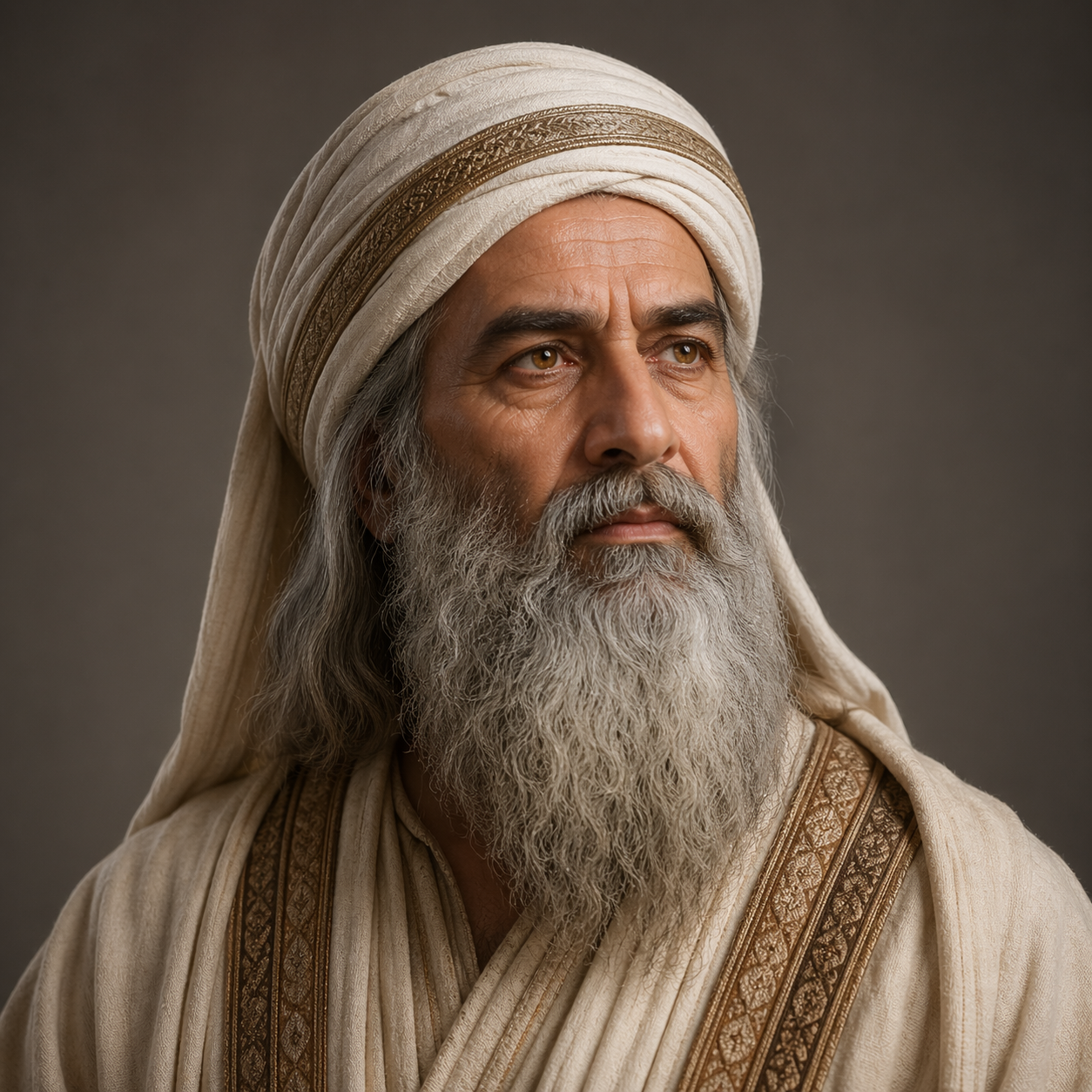
Zoroaster — "None have I to protect me save Thee; Command for me then the blessings of a sett…"
None have I to protect me save Thee; Command for me then the blessings of a settled, peaceful life.
None have I to protect me save Thee; Command for me then the blessings of a settled, peaceful life.
Click any product to generate a realistic preview. Up to 3 at a time.
* Initial load can take up to 90 seconds — revising the preview in another color is nearly instant.
"How shall I satisfy Thee, O Ahura Mazda?"
"The greatest wisdom is to know oneself. The second greatest is to know where you put your keys."
"He who strives for good, him Ahura Mazda will reward."
"The poet of Thy praise, I call myself, O Mazda!"
"Whosoever, O Mazda, by his thoughts, words, and deeds makes a sacrifice to Thee, he shall be granted the best existence."
Iranian prophet who founded Zoroastrianism, the first major religion of cosmic dualism between good (Ahura Mazda) and evil (Angra Mainyu). Closely associated with The Buddha (near-contemporary Eastern moral-cosmological revolutionary). For an intellectual contrast, see Friedrich Nietzsche, German philosopher of 'beyond good and evil' — Nietzsche appropriated Zarathustra's name for Thus Spoke Zarathustra (1883) precisely to invert the original's moral cosmology — the historical Zoroaster founded the good-versus-evil framework Nietzsche's character announces the end of.
Found in 1 providers: gemini
1 source checked
The speaker admits complete vulnerability and dependence, acknowledging that no human ally, ruler, or earthly power can truly shield them from harm. Turning instead to the divine, they ask not for wealth, conquest, or revenge, but for something quieter and rarer: stability, peace, and a life free from chaos. It is a plea that treats inner calm and secure daily existence as the highest blessings a higher power can grant.
Zoroaster spent years as a wandering prophet rejected by his tribe, priests, and local rulers before King Vishtaspa finally sheltered him. His theology centered on Ahura Mazda as the sole protector against the deceiver Angra Mainyu, making exclusive divine reliance a core doctrine. His hymns, the Gathas, repeatedly beg Mazda for refuge and a peaceful settled community where righteousness, good thought, and honest pastoral life could flourish undisturbed by raiders.
Zoroaster likely preached around 1200 BCE on the Iranian steppes, an era of constant cattle raiding, tribal warfare, and migration between nomadic warrior bands and settled herding communities. Life was violent and unstable; villages were routinely plundered. Traditional polytheistic priests blessed warrior raids, so Zoroaster's call for a settled, peaceful life under one benevolent god was a radical social critique, aligning religion with pastoral order rather than with warrior plunder culture.
AI-generated insights based on extensive research and information for context. Factual errors? Email [email protected].
Your cart is empty