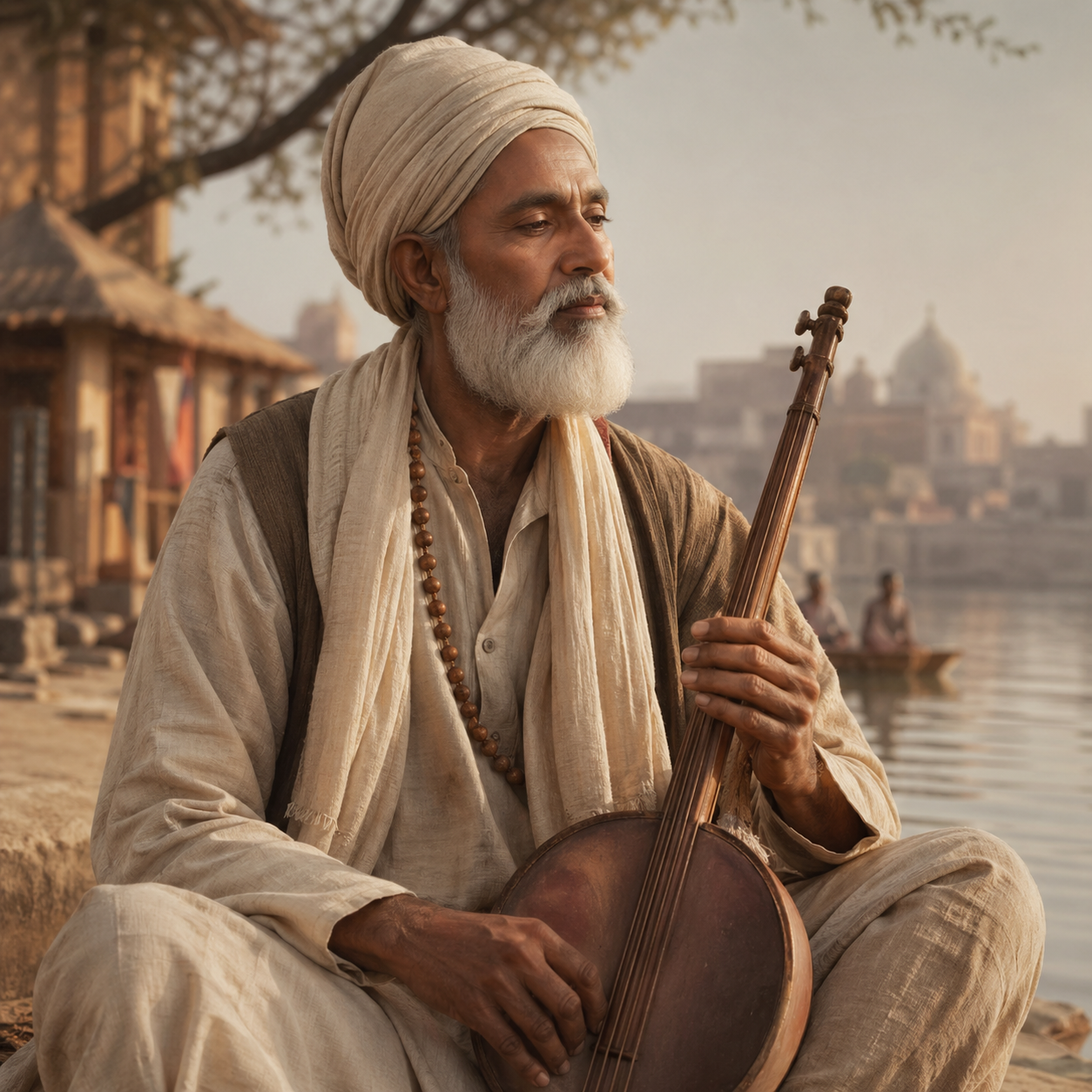
Kabir — "O servant, where dost thou seek Me? Lo! I am beside thee. I am neither in temple…"
O servant, where dost thou seek Me? Lo! I am beside thee. I am neither in temple nor in mosque: I am neither in Kaaba nor in Kailash.
O servant, where dost thou seek Me? Lo! I am beside thee. I am neither in temple nor in mosque: I am neither in Kaaba nor in Kailash.
Click any product to generate a realistic preview. Up to 3 at a time.
* Initial load can take up to 90 seconds — revising the preview in another color is nearly instant.
"The world is a stage, and we are its actors; let us play our roles with sincerity, for the show will soon be over."
"The wise man does not cling to anything, for he knows that everything is transient."
"Time asks no questions, but always answers with change."
"Take a pitcher full of water and set it down in the water-now it has water inside and water outside. We mustn't give it a name, lest silly people start talking again about the body and the soul."
"Aisi vani boliye, mann ka aapa khoye. Auron ko sheetal kare, aaphun sheetal hoye. (Speak such words that your ego is lost. They cool others, and you yourself become cool.)"
Indian mystic poet whose verses (preserved in the Sikh Guru Granth Sahib and the Hindu Bhakti tradition) attacked both Hindu and Islamic orthodoxy. Closely associated with Guru Nanak (founder of Sikhism, who incorporated Kabir's verses). For an intellectual contrast, see Brahmanical priesthood, the ritualistic Hindu establishment of his era — Kabir's poetry is the founding text of bhakti devotional rebellion against ritualistic Hinduism — his verses ridicule caste, ritual purity, and priestly mediation as religious theatre.
Your cart is empty