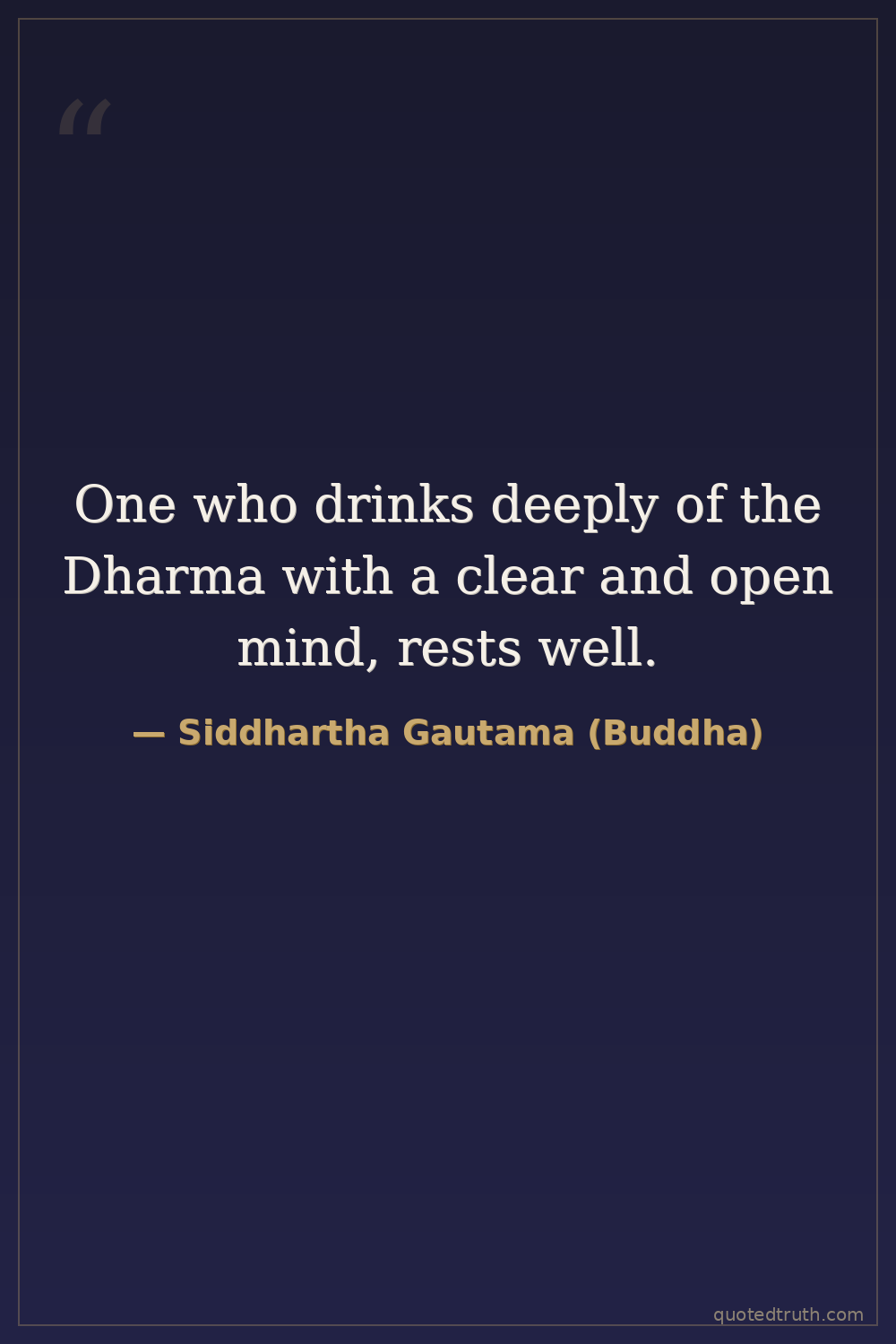
Siddhartha Gautama (Buddha) — "One who drinks deeply of the Dharma with a clear and open mind, rests well."
One who drinks deeply of the Dharma with a clear and open mind, rests well.
One who drinks deeply of the Dharma with a clear and open mind, rests well.
Click any product to generate a realistic preview. Up to 3 at a time.
* Initial load can take up to 90 seconds — revising the preview in another color is nearly instant.
"Do not dwell in the past, do not dream of the future, concentrate the mind on the present moment."
"It is during our darkest moments that we must focus to see the light."
"The thoughtless man, even if he can recite a large portion of the law, but is not a doer of it, has no share in the priesthood, but is like a cowherd counting the cows of others."
"Do not pursue the past. Do not lose yourself in the future. The past no longer is. The future has not yet come. Looking deeply at life as it is in the very here and now, the practitioner dwells in sta…"
"I will not look at another's bowl intent on finding fault: a training to be observed."
From the Dhammapada, a teaching on understanding the Dharma
Date: c. 5th-6th Century BCE
PhilosophicalFound in 1 providers: gemini
1 source checked
Taking in spiritual teaching with full attention and an unguarded mind brings genuine peace. When you absorb wisdom deeply instead of skimming it, and approach it without defensiveness or preconception, your mind settles. The result is real rest, not just sleep, but a calm that pervades your whole existence. Surface engagement with truth leaves you restless, while deep, honest reception of it produces ease.
Siddhartha abandoned palace comforts to seek an end to suffering, and after his awakening under the Bodhi tree he taught the Dharma for forty-five years across northern India. Restful ease through clear understanding mirrors his core doctrine: craving and ignorance breed agitation, while insight brings nibbana's peace. The Buddha repeatedly praised listeners who grasped his teaching with attentive, unclouded minds, calling them heirs of the Dharma rather than mere followers.
The Buddha lived around the 5th century BCE during India's sramana movement, when wandering ascetics challenged Vedic ritual orthodoxy with new questions about suffering, rebirth, and liberation. Kingdoms like Magadha and Kosala were urbanizing, and a merchant class hungered for teachings beyond brahmin sacrifice. Against this ferment of competing philosophies, Jains, Ajivikas, and skeptics, the Buddha offered a practical path. Clear-minded reception of doctrine distinguished genuine seekers from ritualists or debaters chasing reputation.
AI-generated insights based on extensive research and information for context. Factual errors? Email [email protected].
Your cart is empty