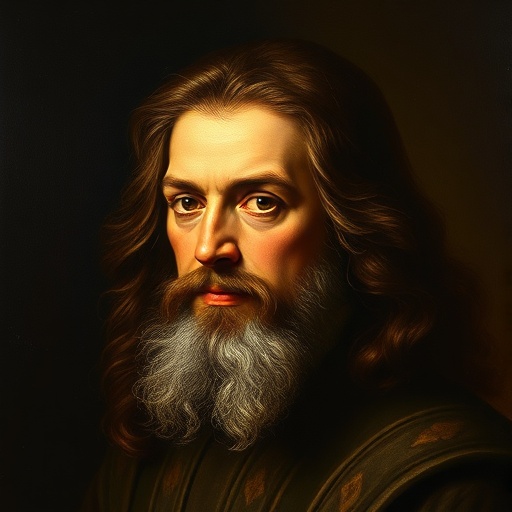
Leonardo da Vinci — "Poor is the pupil who does not surpass his master."
Poor is the pupil who does not surpass his master.
Poor is the pupil who does not surpass his master.
Click any product to generate a realistic preview. Up to 3 at a time.
* Initial load can take up to 90 seconds — revising the preview in another color is nearly instant.
"The greatest good is that which is desired by all."
"One can have no smaller or greater mastery than mastery of oneself."
"Oh, how many times have I been deceived by my own opinions!"
"He who possesses most must be most afraid of loss."
"Truth was the only daughter of time."
From his notebooks, a challenge to students.
Date: Undated, but from his lifetime (1452-1519)
GeneralFound in 2 providers: gemini,grok
2 sources checked
True learning means eventually exceeding your teacher, not merely replicating them. A student who only matches their master has failed to grow. Genuine mastery requires taking inherited knowledge further — building on foundations rather than worshipping them. Intellectual stagnation dishonors both student and teacher. Progress demands that each generation push beyond what came before.
Da Vinci was largely self-taught, apprenticed under Verrocchio but quickly surpassed him — reportedly causing Verrocchio to retire from painting. He relentlessly questioned inherited knowledge, challenging Aristotelian science and classical anatomy through direct observation. His notebooks reveal someone who treated every master's teaching as a starting point, never a ceiling.
Renaissance Italy celebrated the revival of classical antiquity, yet simultaneously witnessed unprecedented intellectual rupture. Guild apprenticeship systems formally bound students to masters, yet humanist philosophy championed individual genius. Da Vinci lived when printing was democratizing knowledge, undermining traditional master-student monopolies, and making independent scholarship newly possible across Europe.
AI-generated insights based on extensive research and information for context. Factual errors? Email [email protected].
Your cart is empty