John Wesley — "Preach not doctrines, but Christ."
Preach not doctrines, but Christ.
Preach not doctrines, but Christ.
Click any product to generate a realistic preview. Up to 3 at a time.
* Initial load can take up to 90 seconds — revising the preview in another color is nearly instant.
"I have been as much as possible upon the stretch for 70 years, and I bless God, I am not tired yet."
"I have often thought that the greatest proof of the goodness of God to man, is that he has given him a wife."
"I deny that I am an enthusiast in the common sense of the word. I am no visionary. I do not pretend to any new revelations, to any extraordinary gifts of the Holy Ghost, to any particular inspiration,…"
"I have often thought, that if I were to choose a time to live, it should be in the first ages of Christianity."
"My hair is much whiter than it was a year ago; but my eyes are not much dimmer, nor my natural strength much abated."
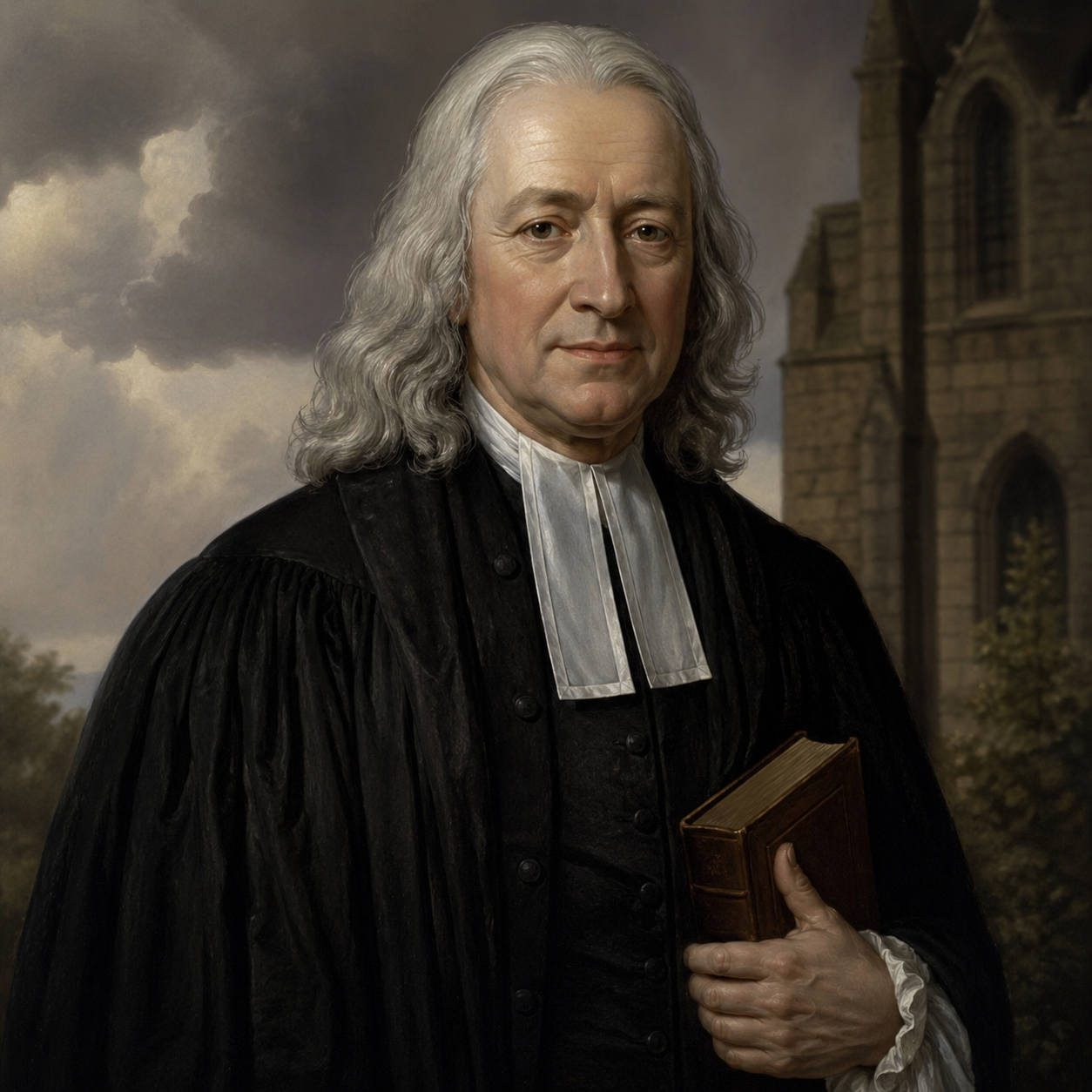
English Anglican cleric and founder of Methodism, whose open-air preaching and class-meeting structure created the largest 18th-century evangelical revival. Closely associated with Charles Wesley (his hymn-writing brother) and George Whitefield (early co-revivalist, later doctrinal opponent). For an intellectual contrast, see George Whitefield, Calvinist evangelical revivalist — Whitefield's predestinarian Calvinism vs Wesley's free-grace Arminian theology split the early Methodist movement permanently in the 1739-41 break. The founding evangelical Calvinist-Arminian schism — the two parallel evangelical traditions American Christianity descends from.
Found in 1 providers: grok
1 source checked
Focus your message on Jesus Christ as a living person rather than abstract theological systems or doctrines. Religion should center on a transformative relationship with Christ, not intellectual debate or denominational rules. Speak to people's hearts about who Christ is and what he does, not just what one ought to believe about him systematically.
Wesley founded Methodism as a movement of personal conversion and heartfelt faith, deliberately rejecting dry Anglican formalism. He preached outdoors to miners and laborers, prioritizing direct spiritual experience over scholarly theology. His doctrine of sanctification was always practical, aimed at transforming lives rather than winning arguments, making this quote central to his entire ministry philosophy.
Eighteenth-century England was gripped by theological faction fights between Calvinists, Arminians, and High Churchmen. The established Church had grown cold and institutional. The Enlightenment elevated rational argument over spiritual experience. Wesley's directive pushed back against both ecclesiastical formalism and rationalist theology, insisting that vital Christianity required encounter with a person, not mastery of a doctrinal system.
AI-generated insights based on extensive research and information for context. Factual errors? Email [email protected].
Your cart is empty