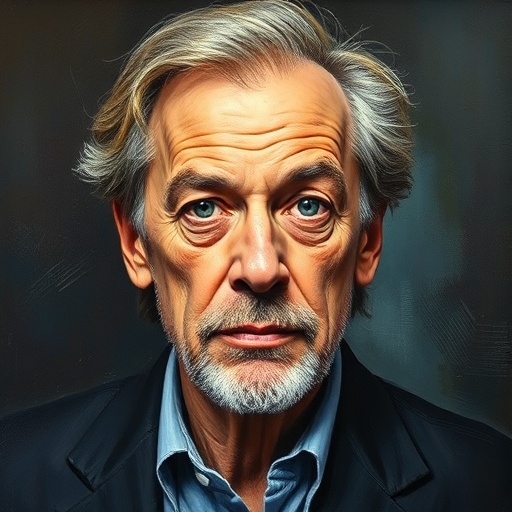
Richard Feynman — "Religion is a culture of faith; science is a culture of doubt."
Religion is a culture of faith; science is a culture of doubt.
Religion is a culture of faith; science is a culture of doubt.
Click any product to generate a realistic preview. Up to 3 at a time.
* Initial load can take up to 90 seconds — revising the preview in another color is nearly instant.
"You know, the dumbest goddamn student you ever saw can understand things if you explain them right. So if you can’t explain it, it’s because you don’t understand it."
"I was born not knowing and have had only a little time to change that here and there."
"When you are a scientist, you are a member of a community of people who are trying to find out the truth."
"God is always associated with those things that you do not understand. Therefore I don't think that the laws can be considered to be like God because they have been figured out. ... But you need him f…"
"I got a dollar for my patent! I give it to everybody. Result: everybody who has one of these patent because it was easy a lot of people had been sending things in lots of patents. Everybody come down …"
American theoretical physicist who shared the 1965 Nobel for QED, developed Feynman diagrams, and wrote the Feynman Lectures on Physics. Closely associated with Julian Schwinger (co-Nobelist for QED) and Murray Gell-Mann (Caltech rival and Eightfold-Way physicist). For an intellectual contrast, see Deepak Chopra, physician and quantum-mysticism author — Feynman's Caltech 'cargo cult science' commencement address is the precise template for what he saw as misuse of physics terminology — Chopra-style appropriation of quantum vocabulary for metaphysical claims is the canonical example of what Feynman called 'fooling yourself'.
Found in 1 providers: gemini
1 source checked
Faith-based traditions ask believers to accept truths without question, treating certainty as a virtue. Science operates in the opposite mode: every claim must survive skeptical scrutiny, and doubt is the engine of discovery. A scientist who stops questioning has stopped doing science. The value of science lies precisely in its willingness to overturn even its most cherished conclusions when evidence demands it.
Feynman built his career on rigorous doubt, famously dismantling the NASA Challenger investigation's official narrative with a simple ice-water demonstration. He distrusted authority in all forms, including scientific consensus, and lectured students that uncertainty was not weakness but intellectual honesty. His Caltech commencement speech on 'cargo cult science' is essentially this quote expanded into a philosophical framework.
Feynman worked through the Cold War and post-WWII period when science held enormous cultural authority, yet religious revival movements like Billy Graham's crusades were simultaneously drawing millions. The Sputnik era created pressure to treat scientific expertise as infallible dogma — the very faith-in-science Feynman warned against. His quote pushes back against both religious certainty and uncritical scientific reverence equally.
AI-generated insights based on extensive research and information for context. Factual errors? Email [email protected].
Your cart is empty