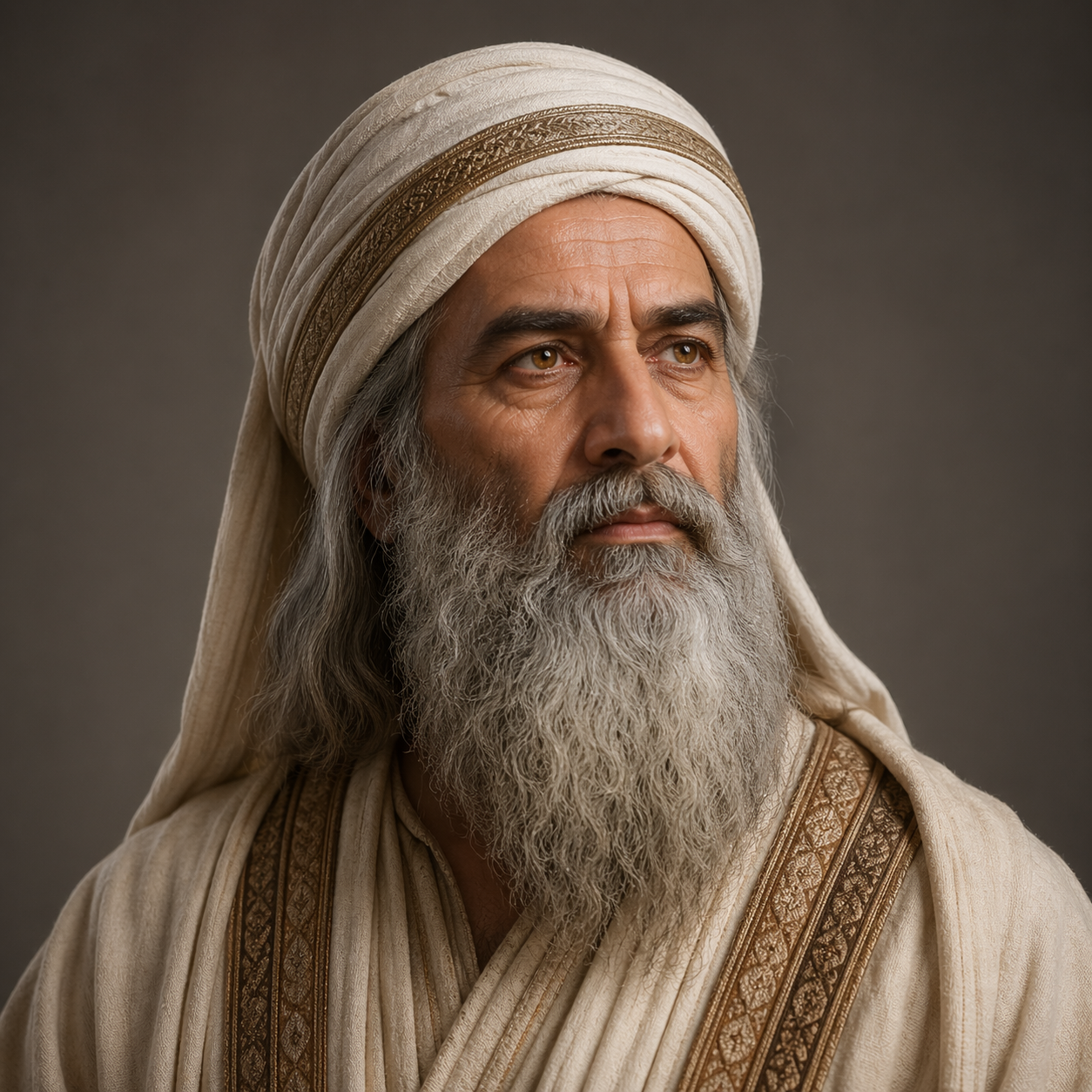
Zoroaster — "Seek your happiness in the happiness of all."
Seek your happiness in the happiness of all.
Seek your happiness in the happiness of all.
Click any product to generate a realistic preview. Up to 3 at a time.
* Initial load can take up to 90 seconds — revising the preview in another color is nearly instant.
"Evil is connected to lie or drûj. The Avestan word drûj means literally 'a tangle of trickery, deceit and lies.' Evil is what is not original and real."
"The future is unwritten. Which is good, because my handwriting is terrible."
"Who created light and darkness? Who created sleep and waking?"
"May the good thoughts, good words, and good deeds of those who strive for righteousness be manifested in this world."
"He who upholds Truth with all the might of his power, He who upholds Truth the utmost in his word and deed, He, indeed, is Thy most valued helper, O Mazda Ahura!"
Iranian prophet who founded Zoroastrianism, the first major religion of cosmic dualism between good (Ahura Mazda) and evil (Angra Mainyu). Closely associated with The Buddha (near-contemporary Eastern moral-cosmological revolutionary). For an intellectual contrast, see Friedrich Nietzsche, German philosopher of 'beyond good and evil' — Nietzsche appropriated Zarathustra's name for Thus Spoke Zarathustra (1883) precisely to invert the original's moral cosmology — the historical Zoroaster founded the good-versus-evil framework Nietzsche's character announces the end of.
Found in 1 providers: gemini
1 source checked
True fulfillment does not come from chasing your own pleasure in isolation or at others' expense. Instead, you find genuine satisfaction when you actively work to lift up everyone around you. Your well-being is bound up with the community's well-being, so pursuing shared flourishing is not a sacrifice but the most reliable path to personal joy. Selfish happiness is shallow and temporary; communal happiness is deep and lasting.
Zoroaster taught that each person must freely choose Asha (truth and right order) over Druj (deceit and chaos), and that good thoughts, good words, and good deeds actively strengthen the world against evil. As a prophet-reformer, he rejected priestly self-interest and framed ethics as cosmic cooperation, where helping others advances the universal struggle toward renewal. This saying captures his conviction that individual salvation is inseparable from collective moral labor.
Zoroaster lived in Bronze Age eastern Iran (commonly dated roughly 1500–1000 BCE), amid tribal cattle-raiding cultures, polytheistic Indo-Iranian rituals, and harsh pastoral life. Clan loyalty and blood vengeance governed conduct, and priests often served warrior elites. By preaching a single wise creator (Ahura Mazda), individual moral accountability, and communal responsibility across tribes, he challenged raid-based economics and ritualistic religion, offering an early ethical monotheism that tied personal virtue to the welfare of the whole settled community.
AI-generated insights based on extensive research and information for context. Factual errors? Email [email protected].
Your cart is empty