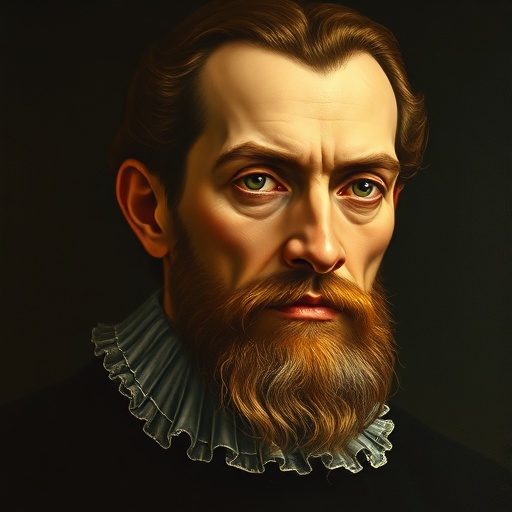
Machiavelli — "Since love and fear can hardly exist together, if we must choose between them, i…"
Since love and fear can hardly exist together, if we must choose between them, it is far safer to be feared than loved.
Since love and fear can hardly exist together, if we must choose between them, it is far safer to be feared than loved.
Click any product to generate a realistic preview. Up to 3 at a time.
* Initial load can take up to 90 seconds — revising the preview in another color is nearly instant.
"To conquer, one must have the spirit of a lion and the cunning of a fox."
"He who causes another to become powerful is ruined himself; because that power has been effected by him either by industry or by force, and both of these are suspicious to the one who has been raised …"
"Men are more apt to forget the death of their father than the loss of their patrimony."
"For there is no other way of guarding oneself from flatterers than by letting men understand that to tell you the truth will not offend you."
"Because there are three ways of holding conquered states that are accustomed to living under their own laws and in freedom: the first is to ruin them, the next is to reside there in person, the third …"
Florentine diplomat and political theorist whose The Prince (written 1513) became the founding text of political realism and gave us the adjective 'Machiavellian.' Closely associated with Francesco Guicciardini (fellow Florentine political analyst and historian). For an intellectual contrast, see Erasmus of Rotterdam, Dutch humanist and The Education of a Christian Prince author (1516) — Erasmus's princely-instruction manual was published three years after Machiavelli's, for the same European audience, and is the explicit Christian-virtue alternative to Machiavellian power-realism. The cleanest 'realism vs idealism' founding pairing in modern political theory.
Found in 1 providers: deepseek
1 source checked
Your cart is empty