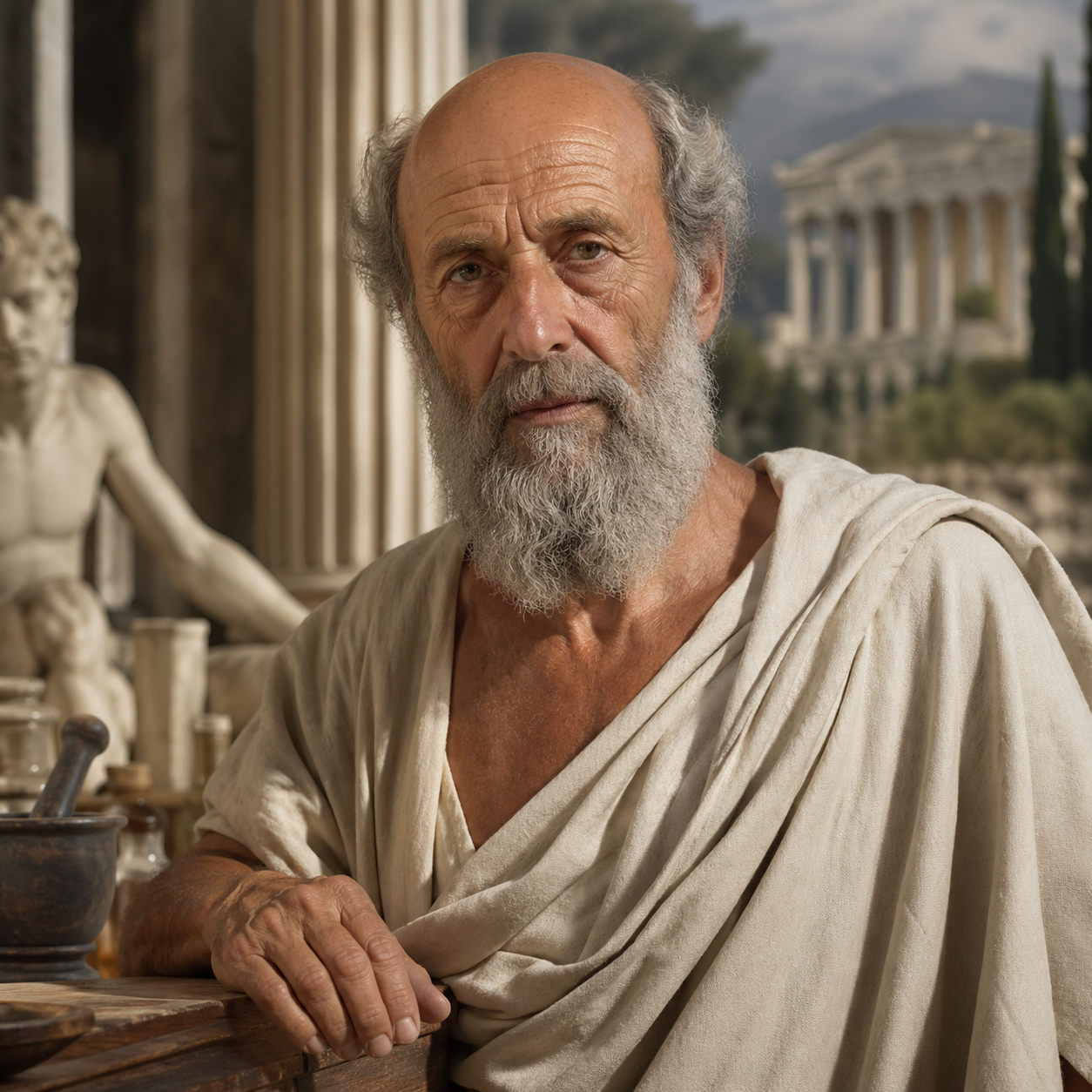
Hippocrates — "The best medicine is love and care."
The best medicine is love and care.
The best medicine is love and care.
Click any product to generate a realistic preview. Up to 3 at a time.
* Initial load can take up to 90 seconds — revising the preview in another color is nearly instant.
"When a fever is present, the bowels should be loose; when absent, they should be costive."
"The powers of the elements are shown in the seasons."
"That which is used - develops. That which is not used wastes away."
"The causes of disease are in the air, the water, and the place."
"The physician must be a friend to his patient."
A humanistic approach to healing, emphasizing emotional support.
Date: Uncertain (attributed)
Love & RelationshipsFound in 1 providers: gemini
1 source checked
Love and care are not supplements to medicine—they are its foundation. Compassion, attention, and emotional connection between healer and patient drive healing at its deepest level. Technical remedies treat symptoms; love and care treat the whole person. It captures what we now call the therapeutic relationship, the placebo effect of trust, and the measurable impact of empathy on patient outcomes and recovery speed.
Hippocrates revolutionized medicine by shifting it from divine intervention to rational, empirical practice—yet he never abandoned the human element. His Hippocratic Oath enshrines commitment to patient welfare above profit or power. He observed patients at the bedside, recorded histories, and believed diet, environment, and the physician's personal relationship with the patient were inseparable from physical treatment. This reflects his conviction that healing requires the healer's full human presence, not just technique.
In 5th-century BC Greece, illness was largely attributed to divine punishment—Asclepius temples offered prayer and ritual as cures. Hippocrates practiced during the Peloponnesian War, when plague ravaged Athens in 430 BC, killing thousands. Against this backdrop of religious medicine and mass death, asserting that human compassion was the highest remedy was radical. It repositioned the physician as an empathetic, rational caregiver rather than a priest interpreting the gods' will.
AI-generated insights based on extensive research and information for context. Factual errors? Email [email protected].
Your cart is empty