Laozi — "The best way to manage is to manage very little."
The best way to manage is to manage very little.
The best way to manage is to manage very little.
Click any product to generate a realistic preview. Up to 3 at a time.
* Initial load can take up to 90 seconds — revising the preview in another color is nearly instant.
"If you want to awaken all of humanity, then awaken all of yourself. If you want to eliminate the suffering in the world, then eliminate all that is dark and negative in yourself. Truly, the greatest g…"
"Those who know when to halt are unharmed."
"To yield is to be preserved whole. To be bent is to be straightened. To be empty is to be filled. To be worn out is to be renewed. To have little is to gain. To have plenty is to be perplexed."
"When gold and jade fill the hall, their possessor cannot keep them safe. When wealth and honors lead to arrogance, this brings disaster upon itself. When the work is done and the name is established, …"
"The wise man's food is that which nourishes, not that which pleases the eye."
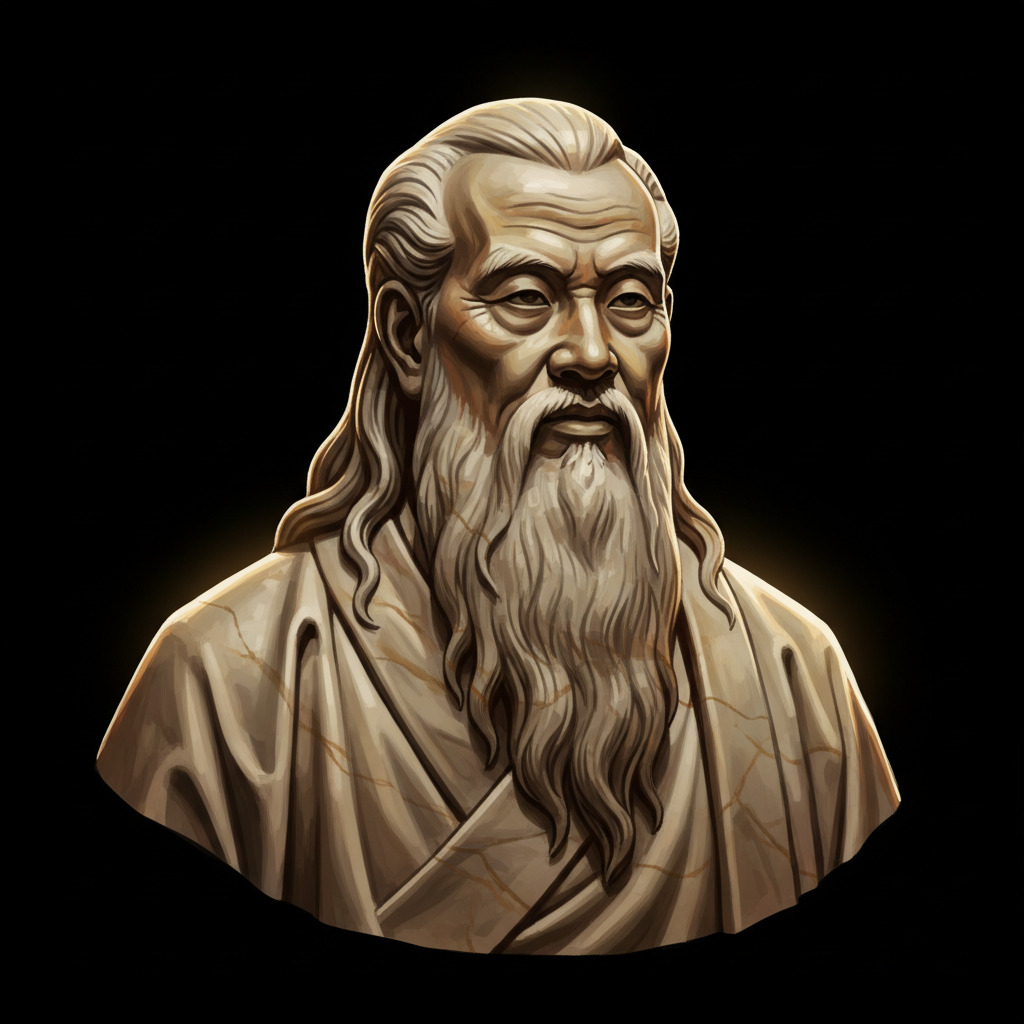
Reputed founder of Taoism and author of the Tao Te Ching, whose wu wei (effortless action) shaped East Asian philosophy. Closely associated with Zhuangzi (later Taoist who extended Laozi's framework). For an intellectual contrast, see Confucius, near-contemporary Chinese sage of social ritual and duty — Confucius systematized social order through ritual and hierarchy; Laozi argued that all such systems were the disease, not the cure — the two founding poles of Chinese moral philosophy.
Found in 1 providers: grok
1 source checked
Effective leadership means stepping back rather than micromanaging. When you constantly intervene, direct, and control, you create resistance, dependency, and inefficiency. People perform best when given space to act on their own judgment. The skilled manager sets the conditions, then lets things unfold naturally. Over-management signals distrust and exhausts everyone, including the manager. Less interference produces better outcomes because it respects the natural capabilities and self-organizing tendencies of people and systems.
Laozi reportedly served as a keeper of royal archives in the Zhou court, observing rulers and bureaucrats firsthand before withdrawing from public life in disillusionment. His core teaching, wu wei, or effortless action, argues that forcing outcomes backfires while yielding aligns with the Tao. This saying captures his belief that sages govern by restraint, not assertion. His legendary departure westward on a water buffalo embodied his own refusal to cling to power or position.
Laozi lived during the late Zhou dynasty around the 6th century BCE, an era of collapsing central authority, warring feudal states, and heavy-handed rulers imposing harsh laws and taxes to maintain control. Scholars debated how to restore order: Confucians pushed ritual and hierarchy, Legalists pushed strict punishment. Laozi's minimalist governance offered a radical counterpoint, arguing that aggressive statecraft caused the very chaos rulers feared. His ideas later shaped Chinese political philosophy for millennia.
AI-generated insights based on extensive research and information for context. Factual errors? Email [email protected].
Your cart is empty