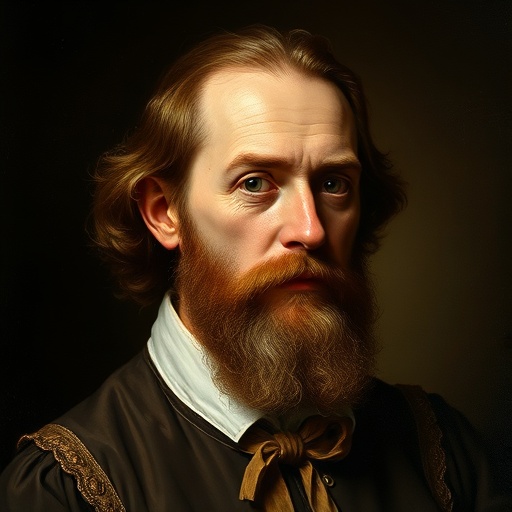
William Harvey — "The blood is the source of life, and the heart is the fountain thereof."
The blood is the source of life, and the heart is the fountain thereof.
The blood is the source of life, and the heart is the fountain thereof.
Click any product to generate a realistic preview. Up to 3 at a time.
* Initial load can take up to 90 seconds — revising the preview in another color is nearly instant.
"Only by understanding the wisdom of natural foods and their effects on the body, shall we attain mastery of disease and pain, which shall enable us to relieve the burden of mankind."
"I profess to learn and to teach anatomy not from books but from dissections."
"Nature is a free and open book, to be read and understood by all who have the patience and the power to do so."
"The arteries are the channels through which the blood is driven from the heart."
"Nature is nowhere accustomed to exhibit herself more openly than in her failures."
English physician whose On the Motion of the Heart and Blood in Animals (1628) demonstrated blood circulation, overturning 1,400 years of Galenic medicine. Closely associated with Francis Bacon (his contemporary in the new English empiricism). For an intellectual contrast, see Galenic medicine, the 2nd-century Greek medical tradition (humors, blood-as-consumed-fuel) — Harvey calculated that the heart pumps more blood per hour than the body could possibly produce as fuel — a single quantitative observation that demolished the entire Galenic-Aristotelian medical worldview. The cleanest example in medical history of arithmetic disproving 14 centuries of authority.
Found in 1 providers: grok
1 source checked
Blood sustains every living function in the body, and the heart is the central engine that drives it. Life depends entirely on this continuous movement — stop the heart, stop the blood, stop life itself. This is a straightforward claim about biological priority: among all organs and fluids, blood and heart hold supreme importance to existence.
Harvey dedicated his career to proving blood circulates continuously through the body, published in De Motu Cordis (1628). This quote crystallizes his revolutionary finding: the heart is a pump, not a passive vessel. His meticulous dissections and quantitative reasoning overturned Galenic medicine and made him the father of modern physiology.
In early modern Europe, Galenic theory still dominated medicine, teaching that blood was consumed by tissues rather than recirculated. Harvey's era saw the Scientific Revolution challenging ancient authority through observation and experiment. His claim was radical — it implied the heart had a mechanical, measurable function, laying groundwork for experimental medicine and challenging Church-backed classical scholarship.
AI-generated insights based on extensive research and information for context. Factual errors? Email [email protected].
Your cart is empty