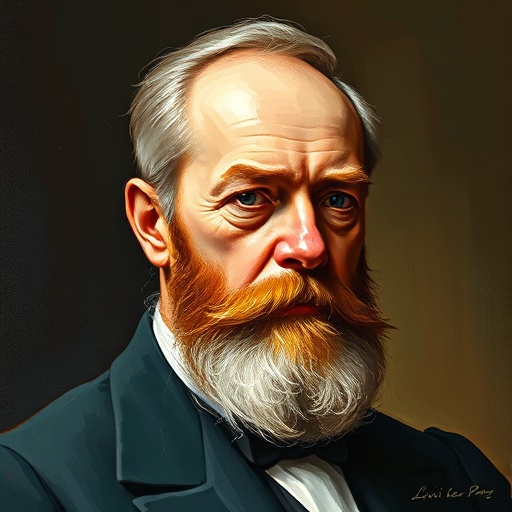
Louis Pasteur — "The cultivation of the soil is the noblest occupation of man."
The cultivation of the soil is the noblest occupation of man.
The cultivation of the soil is the noblest occupation of man.
Click any product to generate a realistic preview. Up to 3 at a time.
* Initial load can take up to 90 seconds — revising the preview in another color is nearly instant.
"The role of the infinitely small in nature is infinitely large."
"In the fields of observation chance favors only the prepared mind."
"Without laboratories, men of science are soldiers without arms."
"The Greeks understood the mysterious power of the hidden side of things. They bequeathed to us one of the most beautiful words in our language—the word 'enthusiasm'—en theos—a god within."
"If I had the honor of being a surgeon… I would not only use absolutely clean instruments, but after having cleaned my hands with the greatest care, I would subject them to a rapid flaming."
Attributed, showing a surprising appreciation for agriculture, perhaps linked to his work on fermentation.
Date: Late 19th Century (approx.)
WisdomFound in 1 providers: grok
1 source checked
Working the land—farming, gardening, tending crops—is the most dignified and worthwhile job a person can do. It produces food that sustains life, connects people directly to nature, and demands honest labor, patience, and skill. Unlike occupations focused on profit or status, agriculture serves humanity at its most basic level, feeding communities and stewarding the earth, which the speaker considers morally superior to other pursuits.
Pasteur, though famous for microbiology, devoted much research to agricultural problems—saving French silkworms, wine, beer, and livestock from disease. His work on fermentation and anthrax vaccination directly protected farmers' livelihoods. Raised in rural Dole and Arbois among tanners and vintners, he respected manual producers. Pasteurization itself was an agricultural rescue. Honoring soil cultivation aligns with his lifelong mission of applying science to serve farmers and rural France.
In 19th-century France, agriculture still employed most of the population, but industrialization was pulling workers to cities. Crop blights, phylloxera devastating vineyards, and livestock epidemics threatened rural economies. French national identity remained tied to peasant farming and terroir. Scientists, romantics, and politicians alike celebrated the cultivateur as moral backbone of the Republic. Pasteur worked during this tension between industrial modernity and agrarian tradition, and his laboratory repeatedly answered calls from struggling farmers.
AI-generated insights based on extensive research and information for context. Factual errors? Email [email protected].
Your cart is empty