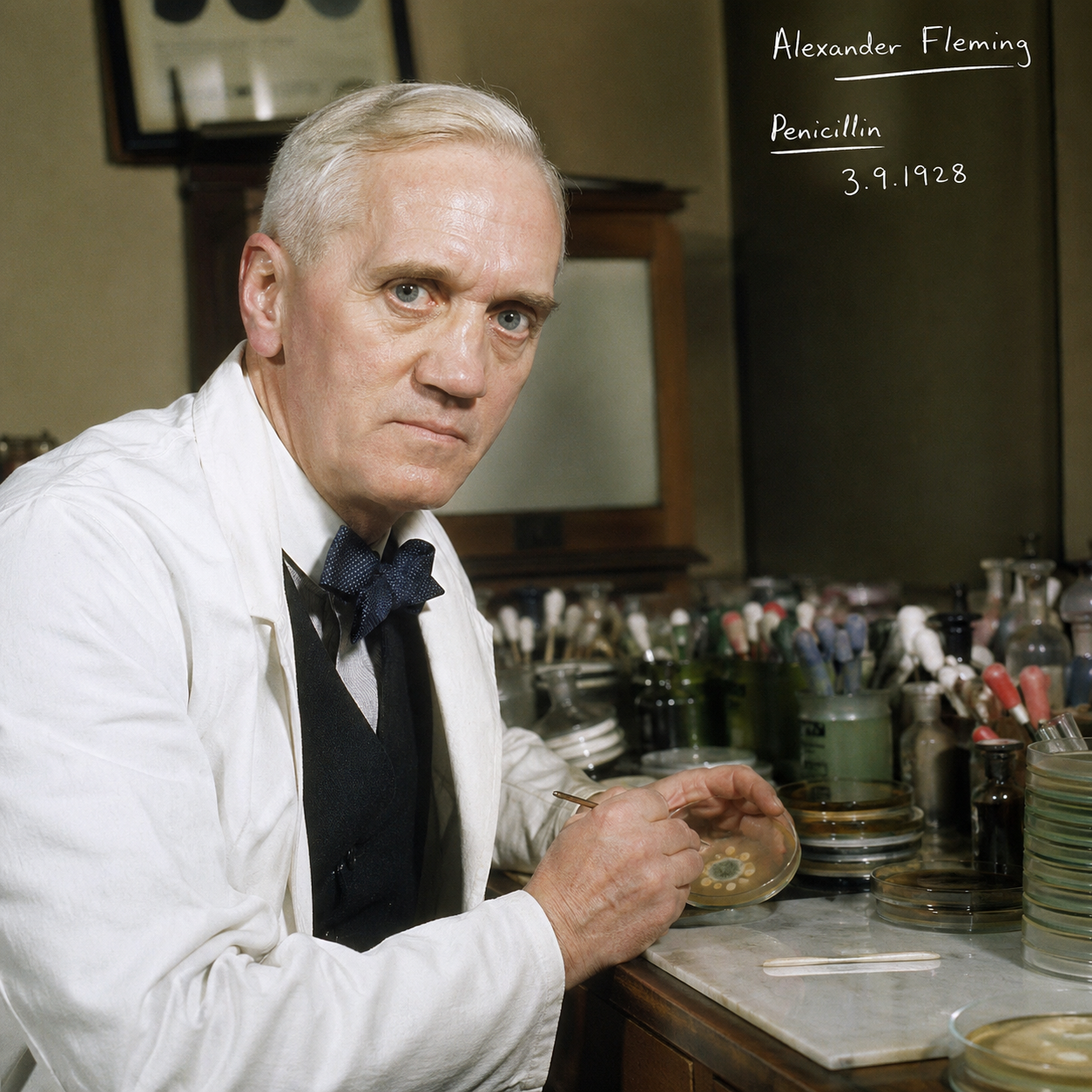
Alexander Fleming — "The discovery of penicillin was a stroke of luck, but it was also the result of …"
The discovery of penicillin was a stroke of luck, but it was also the result of many years of hard work.
The discovery of penicillin was a stroke of luck, but it was also the result of many years of hard work.
Click any product to generate a realistic preview. Up to 3 at a time.
* Initial load can take up to 90 seconds — revising the preview in another color is nearly instant.
"My laboratory was always a bit chaotic, but I knew where everything was."
"I had no idea that I would be involved in such a great discovery. It was purely accidental."
"Penicillin sat on my bench for ten years while I was called a quack."
"The public will not understand the dangers of using penicillin indiscriminately."
"I have been asked to say a few words about the discovery of penicillin. I must confess that I have been asked to do this so often that I am beginning to be a little tired of it."
Found in 1 providers: grok
1 source checked
Great breakthroughs require both chance and preparation working together. This quote captures a core truth about discovery: accidents only become meaningful when someone trained enough recognizes their significance. Pure luck without expertise produces nothing; expertise without a fortunate break may stall indefinitely. Fleming is being honest about how science actually works — not through relentless grinding or divine inspiration alone, but through readiness meeting opportunity at exactly the right moment.
Fleming's 1928 penicillin discovery literally resulted from a contaminated petri dish he noticed after returning from vacation — a textbook lucky accident. But he had spent years studying bacterial resistance and wound infections, including World War I field experience watching soldiers die from sepsis. His 1922 discovery of lysozyme showed he was already hunting natural antibacterials. Only his trained eye recognized that mold killing bacteria was extraordinary rather than merely a ruined experiment.
In Fleming's era, bacterial infections were leading killers with no reliable treatments. Pre-antibiotic medicine saw millions die from pneumonia, tuberculosis, sepsis, and infected wounds — WWI made this devastatingly visible when more soldiers died from infection than combat injuries. The 1920s–1940s saw intense scientific competition to find antibacterials. Penicillin's eventual mass production during WWII saved hundreds of thousands of lives, making Fleming's seemingly accidental discovery one of medicine's most consequential moments.
AI-generated insights based on extensive research and information for context. Factual errors? Email [email protected].
Your cart is empty