William Harvey — "The egg is the common origin of all animals."
The egg is the common origin of all animals.
The egg is the common origin of all animals.
Click any product to generate a realistic preview. Up to 3 at a time.
* Initial load can take up to 90 seconds — revising the preview in another color is nearly instant.
"What remains to be said is of so novel and unheard of a character that I not only fear injury to myself from the envy of a few, but I tremble lest I have mankind at large for my enemies, so much to wo…"
"The art of medicine is to prolong life, not to shorten it."
"I began to think whether there might not be a motion as it were in a circle."
"The book of nature is the only book that offers a wealth of content on every one of its pages."
"All we know is still infinitely less than all that still remains unknown."
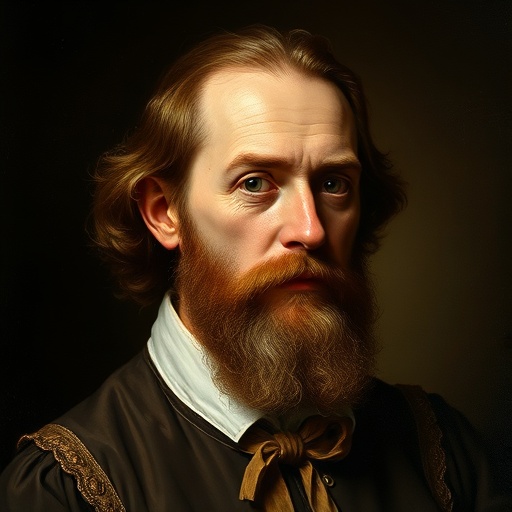
English physician whose On the Motion of the Heart and Blood in Animals (1628) demonstrated blood circulation, overturning 1,400 years of Galenic medicine. Closely associated with Francis Bacon (his contemporary in the new English empiricism). For an intellectual contrast, see Galenic medicine, the 2nd-century Greek medical tradition (humors, blood-as-consumed-fuel) — Harvey calculated that the heart pumps more blood per hour than the body could possibly produce as fuel — a single quantitative observation that demolished the entire Galenic-Aristotelian medical worldview. The cleanest example in medical history of arithmetic disproving 14 centuries of authority.
Found in 1 providers: grok
1 source checked
All animals, regardless of how different they appear, begin their existence from an egg. This challenges assumptions about spontaneous generation and asserts a universal biological starting point — that life does not arise from nothing or from non-living matter, but from a reproductive structure common across the animal kingdom.
Harvey, who revolutionized medicine by demonstrating blood circulates continuously through the body, applied the same empirical rigor to reproduction. His 1651 work 'Exercitationes de Generatione Animalium' directly challenged Aristotle's spontaneous generation theory, extending his evidence-based methodology beyond circulation to embryology and the fundamental origins of animal life.
In the early modern period, Aristotle's ancient belief that some creatures arose spontaneously from mud, rotting matter, or simple elements still dominated natural philosophy. Harvey's era saw the Scientific Revolution challenging inherited classical authority through observation and dissection. Asserting universal egg-based origins was a radical empirical claim that helped lay groundwork for modern developmental biology.
AI-generated insights based on extensive research and information for context. Factual errors? Email [email protected].
Your cart is empty