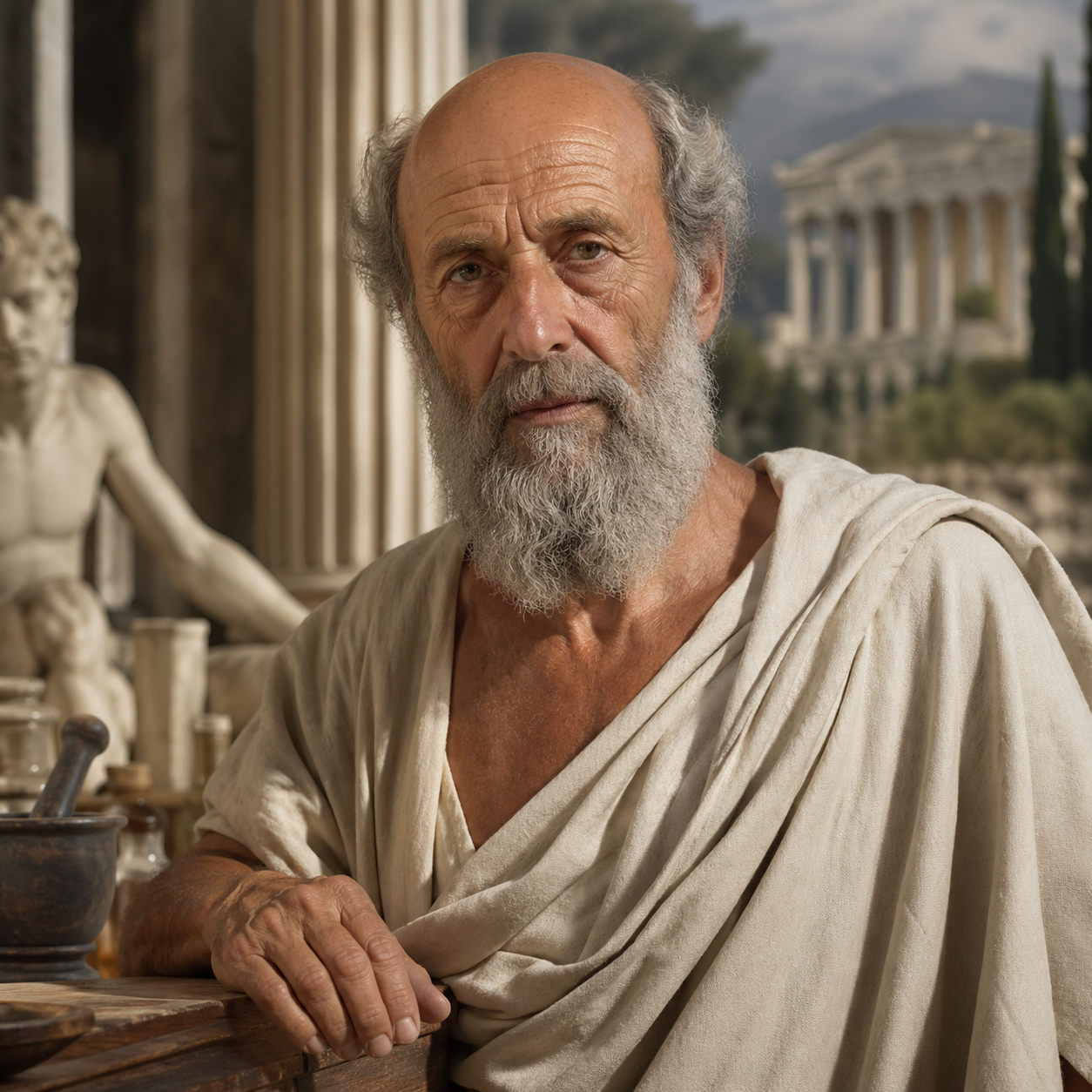
Hippocrates — "The flesh of the hedgehog, when eaten, cures incontinence of urine."
The flesh of the hedgehog, when eaten, cures incontinence of urine.
The flesh of the hedgehog, when eaten, cures incontinence of urine.
Click any product to generate a realistic preview. Up to 3 at a time.
* Initial load can take up to 90 seconds — revising the preview in another color is nearly instant.
"Let food be thy medicine and medicine be thy food."
"Positive health requires a knowledge of man's primary constitution and of the powers of various foods, both those natural to them and those resulting from human skill. But eating alone is not enough f…"
"The physician treats, but nature heals."
"Into whatsoever houses I enter, I will go into them for the benefit of the sick, and will abstain from every voluntary act of mischief and corruption."
"The greatest remedy for anger is delay."
Found in 1 providers: deepseek
1 source checked
Eating hedgehog meat was believed to treat loss of bladder control — what we now call urinary incontinence. This is a dietary prescription rooted in ancient food-as-medicine thinking, where specific animals were matched to specific ailments through observation and tradition. No modern evidence supports hedgehog consumption as a treatment, but the claim reflects a pre-scientific framework in which nature's creatures were seen as reservoirs of targeted healing power for parallel bodily functions.
Hippocrates built medicine on observation and diet rather than prayer or magic, and the Hippocratic Corpus is filled with animal-based remedies pairing creatures to specific conditions. His humoral theory held that foods alter the body's balance of blood, phlegm, and bile. Prescribing hedgehog flesh fits his empirical-but-pre-scientific method: observe what appears to work, record it, prescribe it. The quote reveals both his break from superstition and the hard limits of medicine without controlled trials or anatomy.
In 5th–4th century BC Greece, medicine was shifting from temple healing by priests of Asclepius toward rational naturalistic practice. Pharmacopoeia drew from available animals, plants, and minerals. Physicians observed correlations between diet and health without controlled experiments. Urinary disorders were common and poorly understood. The ancient Mediterranean had no germ theory, no chemistry, no systematic anatomy — healers worked from pattern recognition and inherited folk knowledge systematized by schools like Hippocrates' on the island of Cos.
AI-generated insights based on extensive research and information for context. Factual errors? Email [email protected].
Your cart is empty