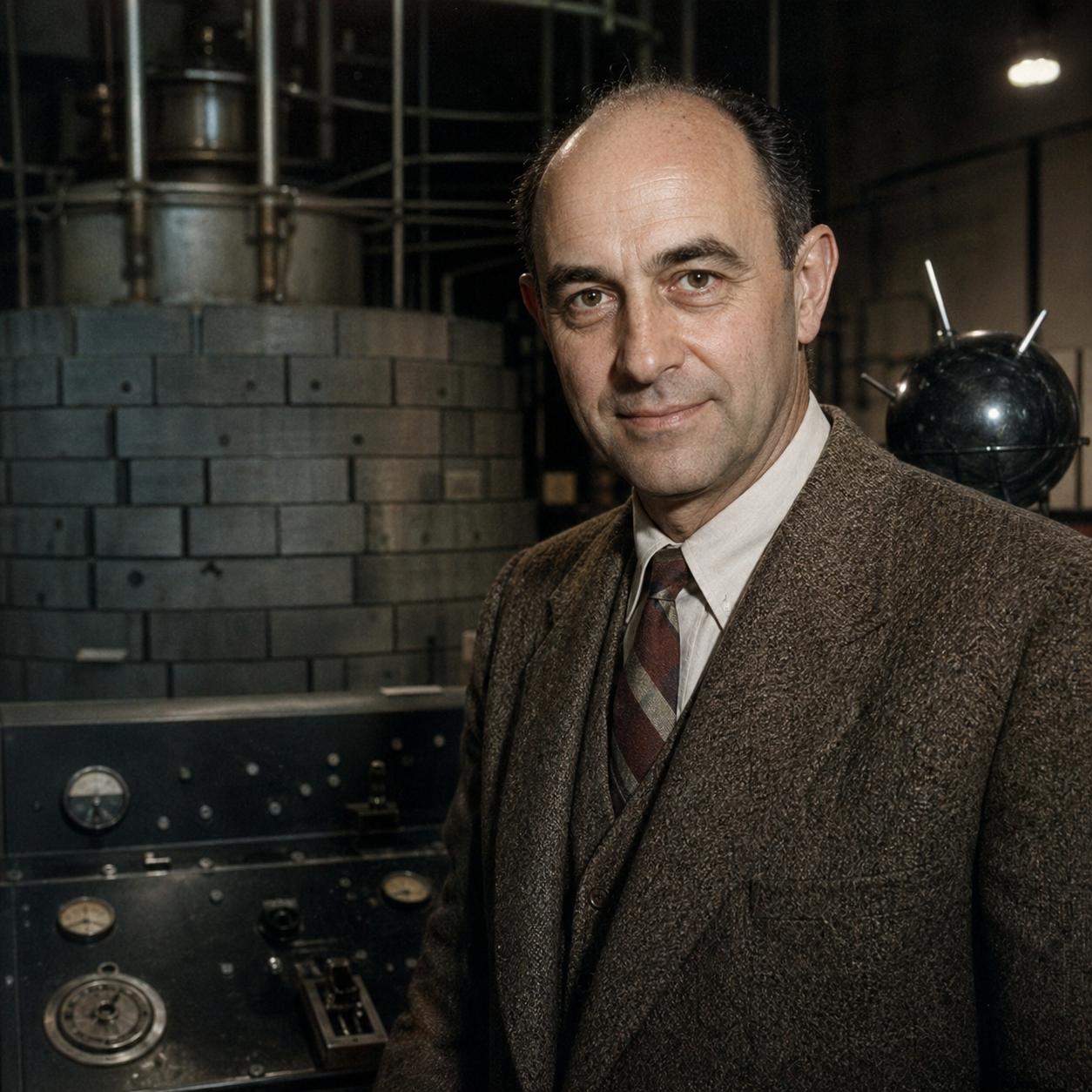
Enrico Fermi — "The future of nuclear energy is not in bombs, but in power."
The future of nuclear energy is not in bombs, but in power.
The future of nuclear energy is not in bombs, but in power.
Click any product to generate a realistic preview. Up to 3 at a time.
* Initial load can take up to 90 seconds — revising the preview in another color is nearly instant.
"The greatest discovery yet to be made is the discovery of what we do not know."
"The only constant in life is change."
"Ignorance is never better than knowledge."
"There is no limit to the futility of human endeavor."
"The best way to predict the future is to create it."
Found in 1 providers: grok
1 source checked
Nuclear technology holds the potential to power entire civilizations through electricity generation rather than destroy them through weapons. This quote calls for redirecting humanity's mastery of atomic energy toward constructive ends — heating homes, running factories, and advancing medicine — instead of building ever-larger arsenals. It frames nuclear science as fundamentally about human advancement, insisting the truest measure of scientific achievement is what it builds, not what it destroys.
Fermi built the world's first artificial nuclear reactor, Chicago Pile-1, in 1942 beneath the University of Chicago's Stagg Field, proving controlled chain reactions were achievable. Though he contributed to the Manhattan Project, his identity remained that of a fundamental physicist. Witnessing nuclear destruction troubled him and colleagues deeply. Fermi believed science should serve human progress, making peaceful nuclear power generation a natural, meaningful extension of his breakthrough reactor work.
After atomic bombs devastated Hiroshima and Nagasaki in 1945, the world faced a defining choice about nuclear technology's trajectory. The early Cold War accelerated a US-Soviet arms race toward ever-deadlier weapons. Simultaneously, Eisenhower's 1953 Atoms for Peace initiative and construction of early commercial nuclear plants signaled an alternative path. This era determined whether nuclear science would be remembered as civilization's greatest energy tool or its most catastrophic mistake.
AI-generated insights based on extensive research and information for context. Factual errors? Email [email protected].
Your cart is empty