Laozi — "The gentlest thing in the world can ride through the hardest thing in the world."
The gentlest thing in the world can ride through the hardest thing in the world.
The gentlest thing in the world can ride through the hardest thing in the world.
Click any product to generate a realistic preview. Up to 3 at a time.
* Initial load can take up to 90 seconds — revising the preview in another color is nearly instant.
"Time is a created thing. To say 'I don't have time' is to say 'I don't want to.'"
"Stop thinking, and end your problems."
"He who knows does not speak. He who speaks does not know."
"When you realize there is nothing lacking, the whole world belongs to you."
"Fill your bowl to the brim and it will spill."
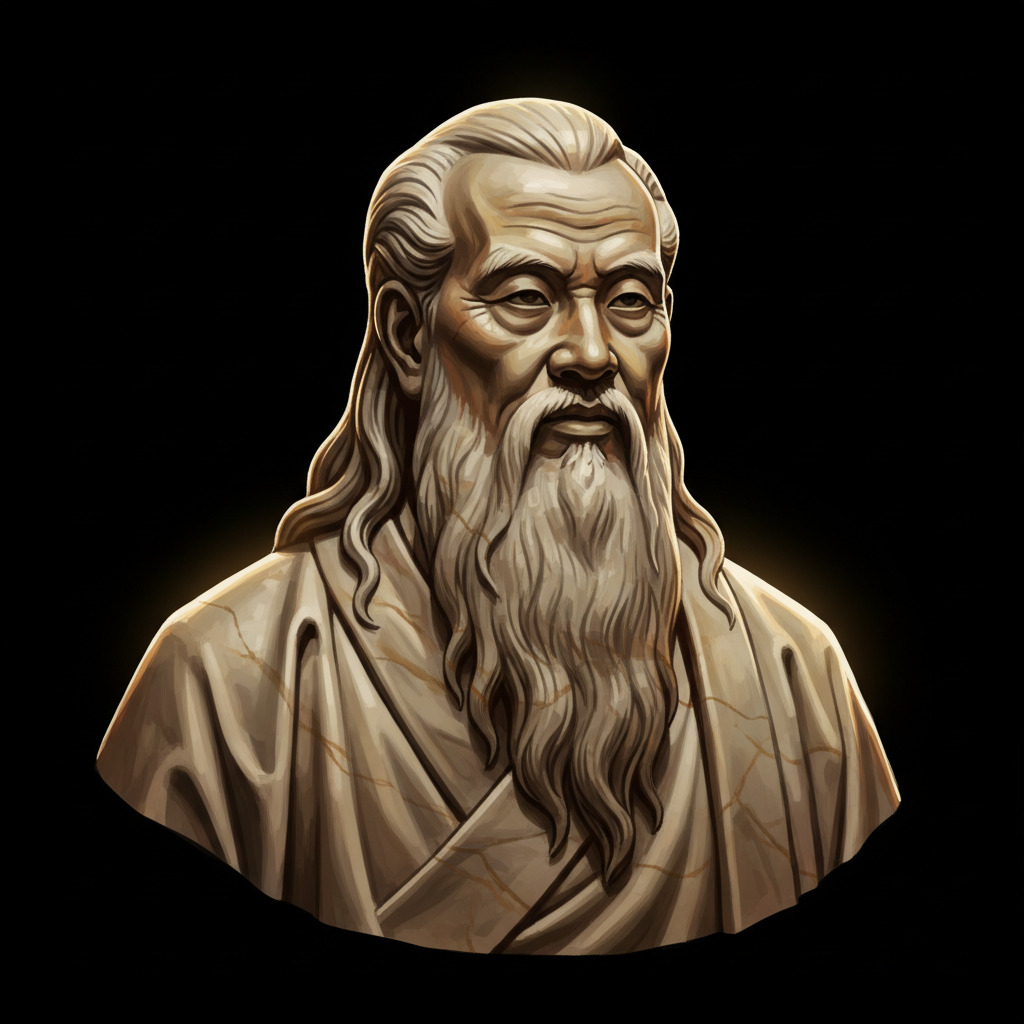
Reputed founder of Taoism and author of the Tao Te Ching, whose wu wei (effortless action) shaped East Asian philosophy. Closely associated with Zhuangzi (later Taoist who extended Laozi's framework). For an intellectual contrast, see Confucius, near-contemporary Chinese sage of social ritual and duty — Confucius systematized social order through ritual and hierarchy; Laozi argued that all such systems were the disease, not the cure — the two founding poles of Chinese moral philosophy.
Found in 1 providers: grok
1 source checked
Softness and flexibility can overcome what seems rigid and unbreakable. Water wears down stone, kind words defuse anger, and patient persistence outlasts brute force. What appears weak often has an advantage because it adapts, flows around obstacles, and finds openings that hardness cannot. Power does not always belong to the strongest or most aggressive; sometimes it belongs to whatever bends without breaking and keeps moving forward quietly.
Laozi taught wu wei, effortless action aligned with the natural flow of things rather than forced control. As the reputed author of the Tao Te Ching and a quiet archivist who reportedly left society rather than fight its corruption, he embodied yielding strength. Water is his recurring symbol, and this saying distills his core conviction that softness, humility, and non-resistance are more enduring and effective than rigid power or aggressive ambition.
Laozi lived during the late Zhou dynasty, around the 6th century BCE, as China fractured into warring states competing through military force, strict law, and rigid hierarchy. Confucian ritual and Legalist control were rising answers to the chaos. Against that backdrop of hardness, armies, and authoritarian rule, praising gentleness as the stronger force was a radical counter-philosophy, offering weary people an alternative rooted in nature rather than coercion.
AI-generated insights based on extensive research and information for context. Factual errors? Email [email protected].
Your cart is empty